
Rubio Tells Senate: US Not Dictating Armenia’s Alliances, Just Offering a Better Deal

WASHINGTON — Armenia’s June 7 parliamentary elections are still five days away, but the geopolitical bidding has already closed. At a Senate Foreign Relations Committee hearing on Tuesday, Secretary of State Marco Rubio made the American offer explicit: economic partnership, not alliance pressure. The question no one in that hearing room could answer is whether Yerevan’s voters will find that argument more persuasive than the one Moscow has been making with gas prices and import bans.
Rubio, appearing before the committee to discuss the State Department’s budget request, addressed the growing US-Armenia relationship directly when pressed by senators on Washington’s intentions. “We’re not there to infringe on Armenian sovereignty, we’re not asking them not to be friends with other countries,” he told the panel. The framing was deliberate — a preemptive rebuttal of Russian accusations that Washington has been meddling in the Armenian election cycle.
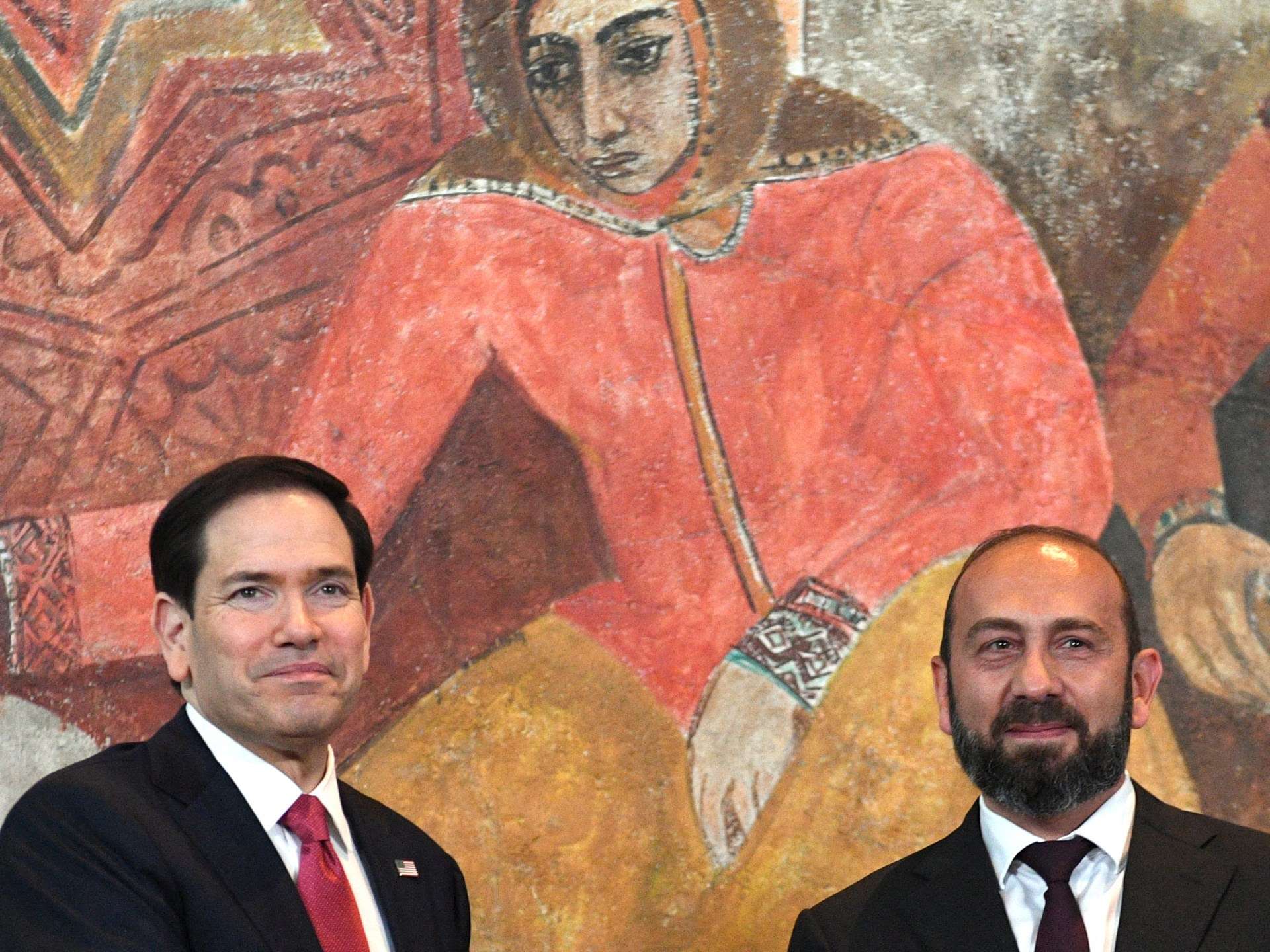
“Peace is important, but that’s just the beginning,” Rubio continued. “It’s the economic opportunities that it provides.” The comment was a summary of the logic underpinning the strategic partnership charter he signed with Armenian Foreign Minister Ararat Mirzoyan in Yerevan on May 26 — a document that, along with a framework agreement on the Trump Route for International Peace and Prosperity corridor, represents the most substantive shift in US-Armenian ties in years. Washington has made no secret of its preference for Prime Minister Nikol Pashinyan’s re-election, with President Trump offering his own endorsement ahead of the vote.
Rubio also weighed in on Russia’s posture. Moscow is not happy with the US engagement, he told senators, and in his assessment, the Kremlin would prefer Pashinyan to lose. It was a rare moment of directness about what has become an openly transactional contest for influence in the South Caucasus — one in which Russia has not been subtle about its instruments of pressure.
In late May, Sergei Shoigu, Secretary of Russia’s Security Council, dismissed the strategic partnership charter as an element of the Armenian election campaign rather than a genuine diplomatic development. The Kremlin, for its part, warned ahead of Rubio’s Yerevan visit that Armenia could lose the favorable pricing it receives for Russian natural gas if it continued moving away from integration with Moscow. Russia also moved to ban imports of Armenian flowers, mineral water, and brandy in the days surrounding the signing ceremony — a sequence of economic signals that required no translation.
Against that backdrop, the phone call between Pashinyan and Russian President Vladimir Putin on June 1 attracted unusual attention. Pashinyan described the conversation as positive and thanked Putin for his support on several unspecified contentious issues, according to the Armenian government. Whether that message was intended for domestic audiences, for Moscow, or for both is not entirely clear.
On the same day, Pashinyan pledged to personally attend the next Eurasian Economic Union summit — a commitment that, coming alongside American partnership documents and a pro-Western election posture, illustrated the wire Yerevan has been walking. Pashinyan’s pledge to attend the EAEU summit came hours after the Putin call, a sequence that Kremlin-aligned commentators were quick to highlight as evidence that Armenia had not fully broken from Moscow’s orbit.
The TRIPP corridor — a 43-kilometer transit route that would run through southern Armenia to connect Azerbaijan with its Nakhchivan exclave and, in turn, with Turkey — is the economic centerpiece of the US framework. According to the State Department, the US would hold a 74 percent stake in the project while Armenia retains full sovereignty over the territory. Rubio called it the biggest single step yet toward making the corridor a reality. Critics of the framework, including some Armenian opposition voices, have questioned whether Yerevan’s sovereignty guarantees are as durable as Washington suggests — a debate that is now feeding directly into the election.
The strategic partnership charter itself covers a range of sectors — artificial intelligence, semiconductors, nuclear energy, critical minerals, and regional infrastructure — that Armenian Foreign Minister Mirzoyan described as marking an “unprecedented phase” in bilateral relations. Rubio, characteristically, reached for economics. The strongest way to bind nations together, he told the signing ceremony in Yerevan, is to create conditions in which both sides can make money. That formulation sidesteps the security dimension entirely, which may be by design: Armenia is still formally a member of the Collective Security Treaty Organization, the Russian-led military alliance, even as it has suspended participation.
What Tuesday’s Senate testimony could not settle is whether any of this has changed the electoral arithmetic in Yerevan. Armenia has been navigating growing EU and Western pressure alongside its longstanding Russian dependencies, and the June 7 vote will be the first meaningful test of how that tension resolves at the ballot box. Pashinyan’s Civil Contract party faces a direct challenge from pro-Russian opposition parties that have been amplifying Shoigu’s line — that the American partnership is a campaign prop, not a durable commitment. Rubio’s reassurances, delivered in Washington to a Senate panel rather than in Yerevan to Armenian voters, may or may not reach the audience that needs to hear them before polls open.