The Crusader Reconquest of Antioch — “Where the Word Christian Was Born”
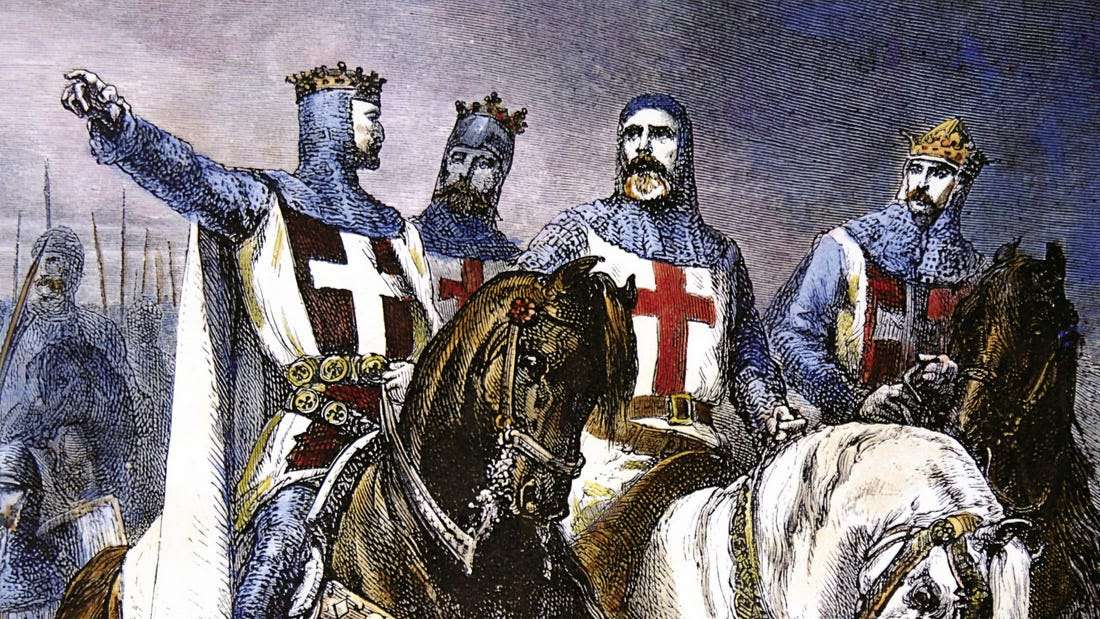
Nine-hundred and twenty-eight years ago today, on June 3, 1098, a dramatic Christian victory over Islamic oppression took place: the liberation of the ancient Christian city of Antioch. Context: In the years preceding the First Crusade, Turkish invaders were running amok in Asia Minor, formerly a bastion of Christianity (now “Turkey”). An anonymous Georgian chronicler tells of how “holy churches served as stables for their horses,” the “priests were immolated during the Holy Communion itself,” the “virgins defiled, the youths circumcised, and the infants taken away.” Similarly, Anna Comnena, the princess at Constantinople, tells of how “cities were obliterated, lands were plundered, and the whole of Anatolia was stained with Christian blood.” Outraged to hear what was happening in the East, Christians from all over Europe set out on what would become known as The First Crusade (1096-1099). After entering into and winning several battles in Turkic-controlled Asia Minor, by October 1097, the Europeans had arrived at and were besieging the walls of Antioch. For long, Antioch resisted Islam. Even when “all the East was shaken and the successors of Muhammad were subjugating by force entire provinces to their impious superstition and perverse dogma,” chronicler William of Tyre writes, Antioch had “as long as possible refused to bear the domination of an infidel nation,” that is, until its capture by the Turks in 1084. Now, more than a decade later, its indigenous Christians were much oppressed by their Turkish master, Yaghi-Siyan, a notorious persecutor of Christians who had also converted Antioch’s ancient cathedral into a horse stable. “Alas! How many Christians—Greeks, Syrians, and Armenians—who lived in the city, were killed by the maddened Turks,” lamented Fulcher of Chartres, who travelled with the crusaders. “With the Franks looking on, they threw outside the walls the heads of those [Christians] killed, with their petrariae [stone-throwing siege engine] and slings. This especially grieved our people.” But because the Frankish and Norman warrior aristocracy had no qualms about giving tit for tat, Bohemond, a Norman leader who would go on to play a decisive role in the reconquest of Antioch, “brought those [Muslims] he had captured back to the gate of the city, where, to terrify the citizens who were watching, he ordered that they be decapitated” and their severed heads catapulted over the city walls. (Anna Comnena, who had met and described Bohemond as a towering “marvel for the eyes to behold,” added that “a certain charm hung about this man but was partly marred by a general air of the horrible.” He was clearly not one to be cowed by Islamic terror tactics.)
Bohemond |