Deadly Cold War Clash: Soviet MiG-17 Fighters Down U.S. Spy Plane Over Armenia
By Vahe Sarukhanyan, HETQ.am
In 1958, Soviet and American military aircraft clashed twice in the skies over Armenia. The first incident occurred on June 27, the second on September 2.
As we have already written, on June 27, the American C-118A Liftmaster transport aircraft, which violated the Armenian-Turkish border and was shot down by Soviet MiG-17 fighters, managed to make an emergency landing in the Martakert region of Nagorno-Karabakh, near the village of Levonarkh. Although the plane burned completely, the nine Americans on board, six of whom were air force servicemen and the other three CIA agents, were saved. The crew members were arrested by the Soviet military. Local residents beat several of the Americans, and one of the CIA agents was to be hanged by them, but the Soviet military prevented this. After being interrogated, they were handed over to the American side.
The September 2, 1958 ended tragically for seventeen Americans.
The C-130 Reconnaissance Aircraft and its Mission
On September 2, 1958, a U.S. C-130A-II aircraft, a modification of the famous Lockheed C-130 Hercules military transport aircraft designed for radio-electronic reconnaissance, took off from Incirlik Air Base in Turkey. This base, located near the city of Adana, is still used jointly by the Turkish and U.S. air forces.
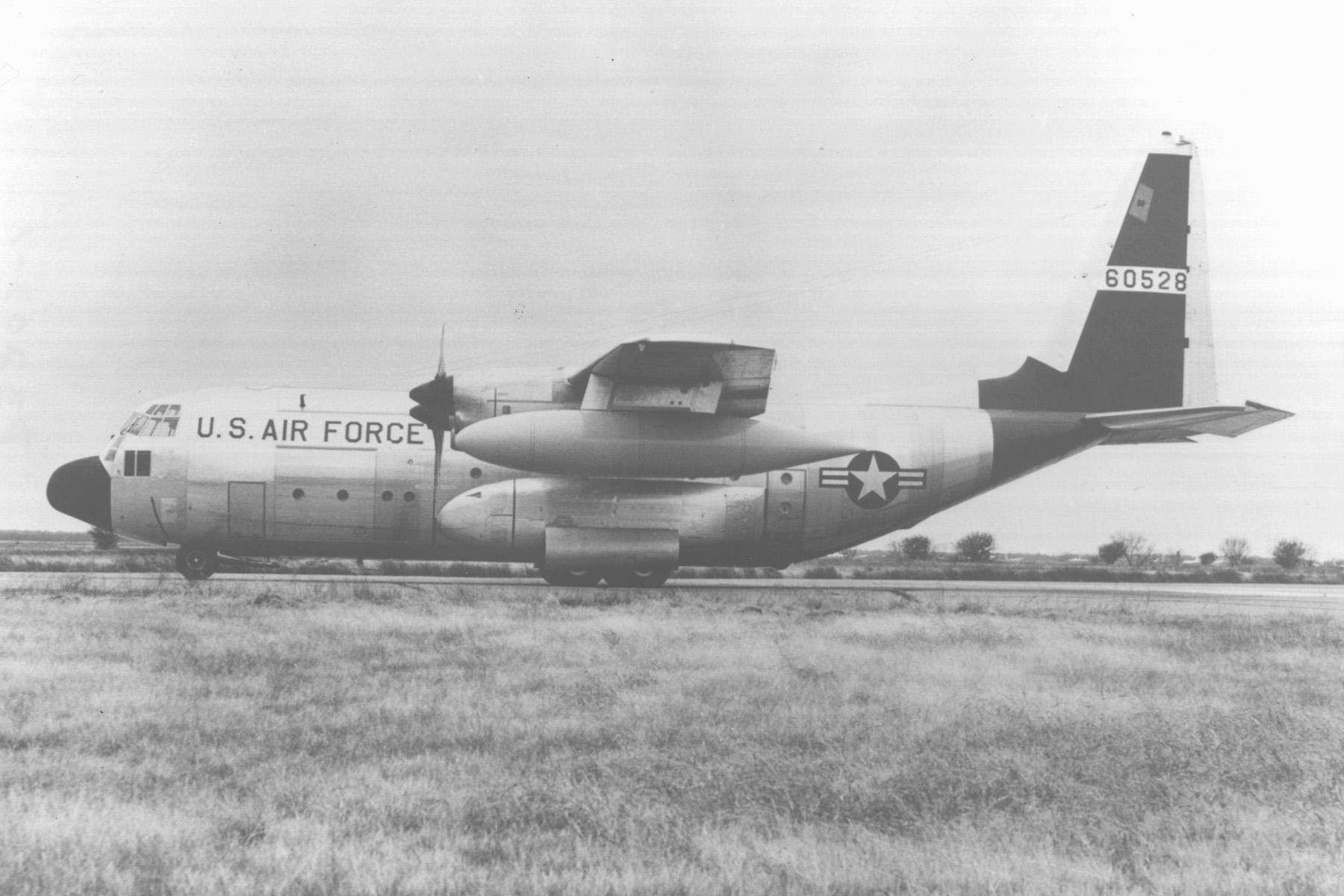
The C-130A-II, registration number 56-0528, was manufactured in 1957 and operated by the United States Air Force in Europe (USAFE), specifically by the 7406th Support Squadron based at Rhein-Main Air Base in West Germany (the base operated from 1945 to 2005 and occupied part of Frankfurt Airport). The latter’s mission was aerial reconnaissance. The unit was engaged in the operation and maintenance of military aircraft carrying out such reconnaissance. There was also a separate unit, the United States Air Force Security Service (USAFSS) Squadron, whose personnel were engaged in collecting intelligence information on aircraft. In other words, the task of the servicemen of the 7406th Squadron was the operation and maintenance of the aircraft, and the servicemen of the USAFSS squadron were responsible for radio-electronic reconnaissance on those aircraft.
On the September 2 flight, the C-130 was carrying seventeen people – six crew members and eleven USAFSS representatives (the first detachment of the 6911 Radio Group Mobile ).
The main flight missions of the 7406th Squadron aircraft were two, codenamed “Flight A” or Half-Track and “Flight B” or Dreamboat. Half-Track flights were carried out in June-August 1956 on the border between West and East Germany. This reconnaissance program was stopped after the publication of the magazine Aviation Week.
Dreamboat flights began in January 1957. American RB-50E and RB-50G aircraft carried out photo and radio electronic reconnaissance mainly at an altitude of 7,300 meters. The flight lasted 12-14 hours. There were five main routes: 1 – From the Rhine-Main (Frankfurt am Main) air base to the Baltic Sea. 2 – A triangular route in the skies of Germany. 3 – From the Rhine-Main air base to the Adriatic Sea, from there to the Turkish Incirlik Air Base, then back to the Rhine-Main. 4 – From Adana to the Black Sea, circling along the coastline. 5 – From Adana to Trabzon and then circling between Trabzon and Lake Van (in this case, the target was the USSR-Turkey, in particular the Armenian-Turkish border).
In 1958, the RB-50s of the 7406th squadron were replaced by C-130A-II aircraft specially equipped for radio-electronic reconnaissance. Their flights were carried out at an altitude of 8,500 meters, but since they were heavier, the flight duration was 7 hours.
As mentioned, the squadron’s aircraft were based at the Rhein-Main air base, but until 1965 they were periodically sent to Turkey for two weeks. From Incirlik, C-130A-IIs carried out reconnaissance flights in the direction of socialist countries: Romania and Bulgaria, Crimea (USSR), Sochi (USSR), Armenia (USSR) and the Caspian Sea (in 1963-1965 reconnaissance was carried out from the territory of Iran, which at that time was a secular country headed by the Shah and had good relations with the West).
Reconnaissance flights to Armenia were carried out as follows: the C-130 flew north from Adana (Incirlik) to Kayseri (Kesaria), from there they turned east to Lake Van, from where it turned north and circled along the Armenian-Turkish border, then returned to Incirlik.
The Fateful Flight
U.S. National Security Agency (NSA) files report that on September 2, 1958, the American C-130 was supposed to depart from Incirlik for Trabzon, then turn right and make circles (orbit) between Trabzon and Van, parallel to the Turkish-USSR border. However, the plane was supposed to maintain a distance of at least 100 miles or 160 km from the interstate border.
(The NSA is a body subordinate to the US Department of Defense that specializes in the field of radio-electronic intelligence and collects/processes information and data for intelligence and counterintelligence purposes, as well as is engaged in the protection of electronic communication networks of U.S. government agencies)
At 15:42 Yerevan time, at an altitude of 7,800 meters, the C-130 crew reported that they were passing over Trabzon and received a weather report from there. This was the last communication with the crew of the aircraft. As mentioned, there were seventeen people on board the aircraft, six of whom were flight crew members (from the 7406th Squadron), and the other eleven were Russian language specialists-linguists and data collection operators (from the 6911th Radio Group Mobile). The aircraft commander was Captain Rudy J. Swiestra.
The Cryptologic Quarterly of the U.S. National Security Agency reports that Soviet radars had detected the C-130 in the air thirty-two minutes before it was shot down.
After the reconnaissance aircraft was detected, the first group of Soviet fighters, consisting of two MiG-17s, took off from the Leninakan (Gyumri) airport to patrol the Armenian-Turkish border (pilots: Senior Lieutenant Kucheryaev, call sign “201”, and Senior Lieutenant Ivanov, call sign “218”). However, according to some sources, due to a dust storm, these fighters were unable to take off immediately, and their flight was delayed for seven minutes. Because of this, the second group of MiG-17 fighters took off from Yerevan’s South (now Erebuni) airport (pilots: Senior Lieutenant Lopatkov, call sign “582”, and Senior Lieutenant Gavrilov, call sign “583”). Fighter operations were supported by Captain Romanyuta and his team from the Leninakan airport.
Captain Romanyuta, from the left, from the newspaper Soviet Aviation, 20.09.1958
American intelligence suggests that the C-130 crew may have been misled by navigational beacons in Armenia and Georgia that operated on frequencies similar to the Trabzon and Van beacons. One signal from Georgia was reportedly stronger than the Trabzon signal. Meanwhile, U.S. radio-electronic intelligence, which was monitoring Soviet communications, indicated that when the C-130 crossed the Armenian-Turkish border, Soviet systems identified it from “hostile/unidentified” to “intruder.” As the tracking of the second group of MiG-17s merged with the C-130’s track, the fighters were marked as “engaged in combat,” while the C-130 was marked as “hostile/unidentified in combat.” After the attack, Soviet air warning systems transmitted the message: “target destroyed.”
According to some reports, Soviet fighters detected the trespassing C-130 at 16:10 Yerevan time at an altitude of 9,000-10,000 meters and tried to force it to land, but the American plane did not obey.
At 16:13, the fighters reported that the C-130 was at 10,000 meters. Senior Lieutenants Lopatkov and Gavrilov, who flew from Yerevan, each made firing passes, and Gavrilov reported that he fired three bursts. Kucheryaev and Ivanov, who flew from Leninakan, then attacked the American plane.
Senior Lieutenant Kucheryaev’s fighter targets the C-130 in a photograph taken by the MiG-17’s gun camera
Kucheryaev reported that after his third burst, the C-130 caught fire. After that, the Lopatkov-Gavrilov duo attacked the intruder again.
The NSA quarterly presents the conversation of the fighter pilots (incomplete) in the battle against the C-130: “I see the target, a large one… I am attacking the target… The target is a transport, four engine… The target is burning… There’s a hit… The target is banking… I am opening fire…The tail assembly is falling off… Look at him, he will not get away, he is already falling… He is falling… The target has lost control, it is going down… The target has turned over… The target is falling…”

C-130 on fire: photo taken by the MiG-17’s gun camera
The American C-130 was shot down by Soviet MiG-17 gun fire at 16:14 Yerevan time and fell 48 km northwest of the capital in the immediate vicinity of the village of Nerkin Sasnashen in the Talin region. All seventeen Americans on board were killed. All MiG-17s safely landed in Leninakan.
After the Disaster
For several days, the United States did not know the fate of the C-130 or its 17-man crew, even though U.S. intelligence had intercepted Soviet military communications and monitored the aerial combat against the aircraft.
On September 6, the United States contacted the governments of the USSR and Iran, asking if they had any information about the whereabouts of the C-130 and its crew. Despite initial claims that it knew nothing about the plane, the Soviet government informed the U.S. Embassy in Moscow on September 12 that “a USAF aircraft has been found 55 km northwest of Yerevan in Soviet Armenia (the actual distance from the city center is 48 km – ed.)… the remains of bodies were found, from which it is possible to assumed that six crew members perished.”
The next day, September 13, the U.S. Chargé d’affaires in the USSR requested information about the other eleven crew members, adding that the U.S. Air Force had information that the C-130 had been intercepted by three Soviet fighters, and that “following the interception the plane proceeded eastward under the control of the Soviet aircraft, and that shortly after this an explosion was heard and a large column of smoke was observed rising at a point within Soviet territory.”
The Soviet side denied that the C-130 had been shot down and claimed to have no other information about the accident. Despite this denial, on September 19 and 20, the Soviet Aviation newspaper published what U.S. National Security Agency (NSA) analysts believed was an actual account of the shootdown, disguised as a practice exercise.
On September 24, the USSR handed over the partial remains of six Americans to the U.S.. Of these, three were identified, and the identities of the other three were confirmed years later, in 1996-1997 (another source notes that initially the remains of four people were identified).
The men who had been identified previously were Airman 2nd Class Archie Bourg, Jr.; Captain Edward Jeruss; Airman 2nd Class Gerald Medeiros; Captain John Simpson; Captain Rudy Swiestra; and First Lieutenant Ricardo Villareal.
The uncertainty over the fate of the remaining eleven was only cleared up 35 years after the disaster, in 1993, during the independence of Armenia. They were Captain Paul Duncan; Master Sergeant George Petrochilos; Technical Sergeant Arthur Mello; Staff Sergeant Laroy Price, Airman 1st Class Robert Oshinskie, Airmen 2nd Class James Ferguson, Jr., Joel Fields, Harold Kamps, Clement Mankins, Robert Moore, and Gerald Maggiacomo.
Further requests to the Soviet authorities as to the whereabouts of the eleven missing crew members were each rejected. Even the First Deputy Chairman of the Council of Ministers of the USSR (i.e., First Deputy Prime Minister) Anastas Mikoyan denied on January 16, 1959 that the C-130 had been shot down and claimed that his government was unaware of the 11 missing people.
Shortly thereafter, on February 6, the United States, seeking to obtain more information about the plane crash from the USSR, released at the UN session the intercepted recordings of conversations between Soviet pilots who had attacked the C-130, but the USSR continued to deny its involvement in the crash of the American plane.
As for the internal operations of the American side, after the disaster, on September 5, 1958, the US Air Force European Command (USAFE) removed all C-130s from the radio-electronic reconnaissance program “until further notice” and reduced the reconnaissance flight routes planned for this program. The U.S. Air Force Headquarters ordered a complete reassessment of the program. However, after October 15, the C-130s returned to their mission.
When notifying the victims’ families, however, U.S. authorities did not disclose that the flight’s true purpose was to spy on the USSR. Instead, they described it as a failed routine mission.
The Martin and Mitchell Revelations
In September 1960, two NSA cryptologists (the science of coding – encryption, and decoding – breaking codes and deciphering the hidden information), William Martin and Bernon Mitchell, fled the United States to the USSR. This was a serious blow to U.S. national security and especially to the NSA. At a Moscow press conference on September 6, they said that they were mainly dissatisfied with some of the methods used by the United States to collect intelligence information, particularly the deliberate violation of the airspace of other states, the capture and the decoding of secret communications of their own allies.
William Martin and Bernon Mitchell at Sept. 6, 1960 Moscow press conference (commons.wikimedia.org)
At the press conference, Martin and Mitchell gave a detailed account of the C-130’s flight over Soviet Armenia. They argued that the reconnaissance mission was intended to assess the Soviet defense system, suggesting it reflected U.S. interest in a possible attack on the USSR rather than defensive planning. Thus. according to the two American cryptologists, the C-130 deliberately entered Armenian airspace on September 2, 1958.
What was revealed after the collapse of the USSR
In 1992, the United States and Russia formed a commission to deal with the issues of missing persons and prisoners of war. The Russian side published several declassified reports on the September 2, 1958 plane crash. In a detailed investigative report compiled on September 4, 1958, a Soviet general reported to the Kremlin from Armenia how MiGs had intercepted and shot down a C-130. Soviet military personnel identified the downed plane by its registration number on its tail: 60528, and a plate on the aircraft indicated that it was assigned to the 7406th Support Squadron.
Remains of a C-130 near Nerkin Sasnashen
The field report described the air battle and the names of the Soviet pilots who participated in it. The report also included MiG gun-camera activated photos showing the C-130 in the MiGs’ gunsights, with smoke streaming from its engines immediately before the crash. Forensic examination confirmed that the human remains belonged to six people, and noted that there may be other remains, but intensity of the ensuing fire prevented identification of additional remains. No one was seen parachuting from the C-130. According to the conclusion, none of those on board could have survived. Soviet military personnel found at the crash site Temporary Duty orders of the 7406th squadron, a pistol, several ID cards, ID tags and banknotes (Deutschmark, Dutch guilders, Turkish lira and U.S. dollars).
The Search for Remains 35 Years Later
A U.S. Army excavation team visited independent Armenia in 1993. The team met with the pilot of one of the MiGs that attacked the C-130. The latter reported that he did not see a parachutist abandoning the downed plane. Other eyewitnesses also noted that they did not see anything of the sort. The Americans also interviewed General Sozinov, who was at the crash site minutes after the accident. The general noted that the C-130 burned for eight hours, and it was unlikely that there were any survivors.
The Americans visited Nerkin Sasnashen, the crash site in Armenia, where they found more than 2,000 bone and tooth remains, life support equipment, personal belongings and the remains of the plane. Using the human remains, they were able to identify two more crew members. The team concluded that others also died at the scene.
“Given the incomplete nature of the remains recovered from the crash site and those of the six men previously identified, a group remains identification was made for the entire crew. The remains will be interred as a group at Arlington,” the U.S. Air Force said.
The remains of the crew killed on September 2, 1958 were interred as a group with full military honors at the Arlington National Cemetery in Virginia on September 2, 1998 (see below).
What Does Freedom Have to do With Espionage?
Sculptor Martin Kakosyan, who reportedly witnessed the C-130 crash, carved a khachkar (stone cross) which, in cooperation with Sasnashen residents, was erected in the northern part of the village in August 1993, at the site of the disaster. Kakosyan, who later moved to the United States, served as a translator and guide for a U.S. Air Force-sponsored research team that visited Nerkin Sasnashen in July 1997. The Americans found Kakosyan’s khachkar lying broken on the ground.
According to Larry Tart, who served for twenty-one years in the U.S. Air Force Security Service (USAFSS, eleven of those who died in the September 2, 1958 plane crash were members of this service) and was part of the team that visited Nerkin Sasnashen, Kakosyan promised to erect a new memorial to the victims of the C-130. With funding from a non-profit USAF-affiliated association, the sculptor created a new memorial in 1998.
It reads: “The people of Sasnashen and Martin Kakosyan (the name was later erased from the stone due to external interference – ed.) created this khachkar in 1993 in memoriam of seventeen U.S. Air Force airmen who died here in the line of duty on September 2, 1958.”
A plaque attached to the monument’s pedestal reads: “We must never forget that freedom is never really free. It is the most costly thing in the world. Freedom is never paid in a lump sum. Installments come due in every generation. All any of us can do is offer the generations that follow a chance for freedom.”
It is difficult to say how these words relate to Armenians or Armenia, given that the American plane was conducting surveillance from Turkish territory before crossing the border in September 1958. It is equally difficult to know what might have happened that day had the MiG-17s not stopped the C-130’s unauthorized flight over Armenian territory.
Nevertheless, the fact is that the Americans look favorably on the people of Sasnashen. On September 2, 2011, the 53rd anniversary of the disaster, Armenian and American officials reopened the renovated kindergarten in Nerkin Sasnashen, for which the U.S. European Command had allocated $425,000.
American Colonel Helmlinger stated that when the village head was asked three years ago what they could help with, he had raised the issue of repairing the kindergarten. The Armenian branch of World Vision International provided all new furnishings for the kindergarten.
Top photo: C-130 aircraft with registration 60528 in Texas, before arriving at the German Rhein-Main air base, summer 1958. (Source: Larry Tart, commons.wikimedia.org)