
Armenia downgrades foreign espionage charges against opposition figure
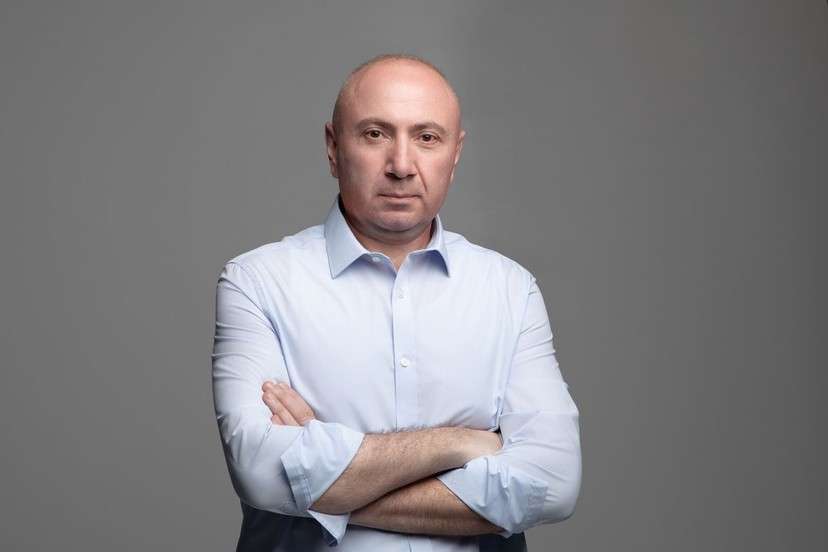
By Arshaluys Barseghyan, OC MediaThe charges against Armenian opposition figure Andranik Tevanyan have been changed from espionage to publishing state secrets. While not explicitly mentioned, the earlier charge – filed days before Armenia’s June parliamentary elections – implied Tevanyan was spying on behalf of Russia and appeared to be the country’s first-ever investigation into Russian-backed espionage since independence.
The change was revealed roughly a week before the start of Tevanyan’s trial on 8 September. The proceedings are being held behind closed doors, which the court has justified on the grounds that the case purportedly contains state secrets.
During the first session, the Armenian opposition figure’s pre-trial detention was extended for another three months.
In a voice message, Tevanyan addressed the change in charges, describing the case as ‘fabricated’. His lawyer, Aram Orbelyan, later confirmed the new charge in an interview with RFE/RL.
A conviction of publishing a state secret carries a prison sentence of up to six years, but it depends on the specific provision applied.
The most recent indictment submitted to the court also no longer contains the Investigative Committee’s earlier claim that Tevanyan had been recruited by the special services of a foreign state – which was widely presumed to be Russia. Instead, the indictment reportedly refers to a public organisation.
He was initially accused of acting on the instructions of a foreign intelligence representative described as the director of the ‘Russia Caucasus’ geopolitical centre. OC Media could not find any publicly available information about the organisation.
The indictment also no longer mentions the allegation that Tevanyan transferred information containing a state secret to a representative of a foreign special service in exchange for $622,000. According to Orbelyan, the figure was based on a budget estimate for a grant obtained during the preliminary investigation from a company which Tevanyan headed, but did not actually receive the money.
The lawyer did not specify which grant program or organization the estimates had been prepared for.
The Investigative Committee’s statement in May claimed Tevanyan ‘illegally’ collected and transferred ‘information containing state secrets — namely, information translated into Russian regarding the course and results of hearings held during a closed, classified session of the parliament in April 2024.
His case also includes Aregnaz Manukyan, a member of Tevanyan’s Mother Armenia party, who has been in pre-trial detention since July. She is accused of disclosing information constituting a state secret that she had access to as an MP, which she allegedly passed to Tevanyan.
Both Tevanyan and Manukyan maintain their innocence.
The earlier allegations were first made public by Prime Minister Nikol Pashinyan amid the election campaign and Tevanyan was charged shortly after.
The case against Tevanyan came amid heightened tensions with Russia as Moscow gradually imposed restrictions on Armenian imports. Many saw this move as an attempt to influence the election outcome.
Tevanyan has denied the allegations and described the case as an attempt to obstruct his political alliance’s election campaign. Tevanyan was a candidate on tycoon and opposition figure Gagik Tsarukyan’s electoral list for the June parliamentary elections.
Two days after the original charges were announced, Pashinyan said at a press briefing that Armenia and Russia had an agreement not to engage in espionage activities on each other’s territory, adding that the investigation would establish whether the agreement had been violated.