Armenia: Electoral Code Amendments Ahead of June Elections Disadvantage Country’s Leading Opposition Party
Successive Amendments to Electoral Code Appear Politicized and Undermine Public Trust in Democratic Process
Yerevan –Recent amendments to Armenia’s Electoral Code adopted ahead of the June 2026 parliamentary elections that prohibit the use of personal names appear designed to disadvantage the “Strong Armenia” political opposition party and further undermine a fair and competitive electoral process, said the International Observatory for Democracy in Armenia (IODA). IODA urged the government to cancel or delay any apparently politicized amendments at least until after the election of a new government.
“These hasty electoral amendments smack of a naked ploy to disadvantage Armenia’s leading opposition political party, ‘Strong Armenia,’ by effectively requiring them to change the party’s well-known name just months before the elections,” said Sarah Leah Whitson. “The government and the ruling party have once again reached into their bag of tricks to tilt the election in its favor.”
On 7 April 2026, the National Assembly adopted the amendments proposed by three members of the Civil Contract faction: Arusyak Julhakyan, Alkhas Ghazaryan, and Artur Hovhannisyan, restricting the naming of electoral blocs. The passed changes prohibit the use of personal names, as well as names or formulations resembling state and local self-government bodies, in bloc titles. The bill was adopted with 66 votes in favor, 16 against, and no abstentions, with support coming exclusively from members of the ruling Civil Contract faction. While authors presented the amendment as a technical adjustment, the timing and context of the amendment will affect specific political parties, including the “Strong Armenia with Samvel Karapetyan” bloc. In the pre-electoral period, any changes that may be seen as altering the conditions of political competition warrant particular scrutiny.
The government passed other problematic amendments to the Electoral Code on 24 January 2026 authorizing the Central Electoral Commission (CEC) sole discretion to deny or revoke accreditation for an election observation mission based on a determination that the mission is not “politically neutral.” Although ensuring impartiality in election observation is a legitimate objective, the absence of clearly defined criteria for assessing such neutrality introduces a degree of discretion that may give rise to inconsistent application.
It is also notable that the Assembly adopted these legislative changes through expedited procedures, without broad-based consultation with opposition parties, civil society organizations, or international partners. “The cumulative effect of the government’s changes to the Electoral Code is to undermine public trust in the fairness of the political process, particularly in the context of other controversial measures, including arrests of political actors and clergy, ahead of the elections,” said Kenneth Roth. “The most important thing the ruling party can and should do right now is take its fist off the political scales and ensure the public that Armenia’s democracy is safe from manipulation.”
The amendments to the Electoral Code also contravene the Venice Commission’s Code of Good Practice in Electoral Matters, which underscores the importance of maintaining the stability of electoral legislation, and avoiding amendments for at least a year preceding elections. Changes to key aspects of the electoral framework at a late stage may affect both the perception and the reality of electoral integrity. IODA urged the government to suspend enforcement of any amendments to the Electoral Code until after the election and to ensure adequate time for review, discussion and consultation with civil society.
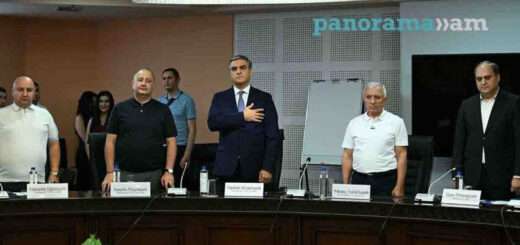
The IODA previously issued its concerns about the government’s conduct ahead of the elections, highlighting politicized arrests and prosecutions of political opponents and clergy members; unfounded allegations of foreign interference; and reliance on vague and overbroad provisions of the penal code, in a press conference in Yerevan on March 12, 2026. The organization plans to carry out a second on-the-ground investigation in Armenia in May and will issue its final conclusions and recommendations ahead of the elections.
For further information, please contact:
International Observatory for Democracy in Armenia (IODA)
Executive Board contacts:
Philippe Kalfayan (English, French), E-mail: philippe.kalfayan@
Ken Roth (English), E-mail: ken@kenroth.org
Sarah Leah Whitson (English, Armenian, Arabic), E-mail: sarahleahwhitson@yahoo.com,
Secretariat: Anna (English, Armenian, Russian) E-mail: info@armeniaobservatory.org