Armenia lowers party threshold for parliament
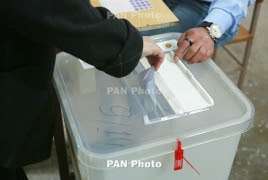
Under the new regulations, the threshold for parties to enter parliament has been reduced frp, 5% to 4 percent, according to Pastinfo.
“If an alliance includes two parties, the threshold is 8%. If it consists of three or more parties, the alliance must surpass a 10% threshold,” he said.
The amount of the election deposit has also been changed. For parties, it has been reduced from 10 million drams to 7.5 million, while for alliances it has been set at 15 million drams.
“This was done so that legislation encourages the consolidation of political forces and like-minded groups are inclined to unite and parties grow larger.
When we needed contact details and email addresses of parties registered in Armenia to send them letters, the Ministry of Justice provided data on 126 parties. However, the number of registered parties is likely higher. For a country with 2.5 million voters, this number is quite large. If legislation encourages the formation of larger political forces, it will be a very important result and will contribute to the development of democracy and the continuous improvement of election quality,” Hovakimyan said.
He also referred to another change concerning the formation of coalitions. According to Hovakimyan, the law previously prohibited coalitions consisting of more than three political forces, but this restriction has now been removed.
“The law banned coalitions of more than three political forces, but this restriction has been lifted. Under the new rules, within a nine-day period the right to form a coalition is given to the political force that receives the most votes.
If the force that receives the most votes cannot form a coalition, time is then given to the remaining political forces to form what in international terminology is called a minority government or coalition. A vivid example was Gyumri, when parties that passed the threshold united and formed a coalition, while the political force with the most votes remained outside that coalition. A similar arrangement exists in the National Assembly as well,” he said.
Hovakimyan also stated that if a party applying to participate in parliamentary elections submits all the documents required by law, the Central Electoral Commission cannot refuse to register it, Radar Armenia reports.
According to him, the commission registers the party without a vote if no objections are submitted.
“There cannot be artificial obstacles — there is a list of documents defined by law. Moreover, if the CEC notices that a candidate’s documents are incomplete, it provides 48 hours to publicly indicate which documents are missing, and during that period the political force must complete them,” he said.
In that case, the CEC may consider objections submitted regarding the refusal to register that political force.
Parliamentary elections in Armenia are scheduled for June 7, 2026.