Armenia’s Rebar Imports Meet a Domestic Answer at GTB Steel
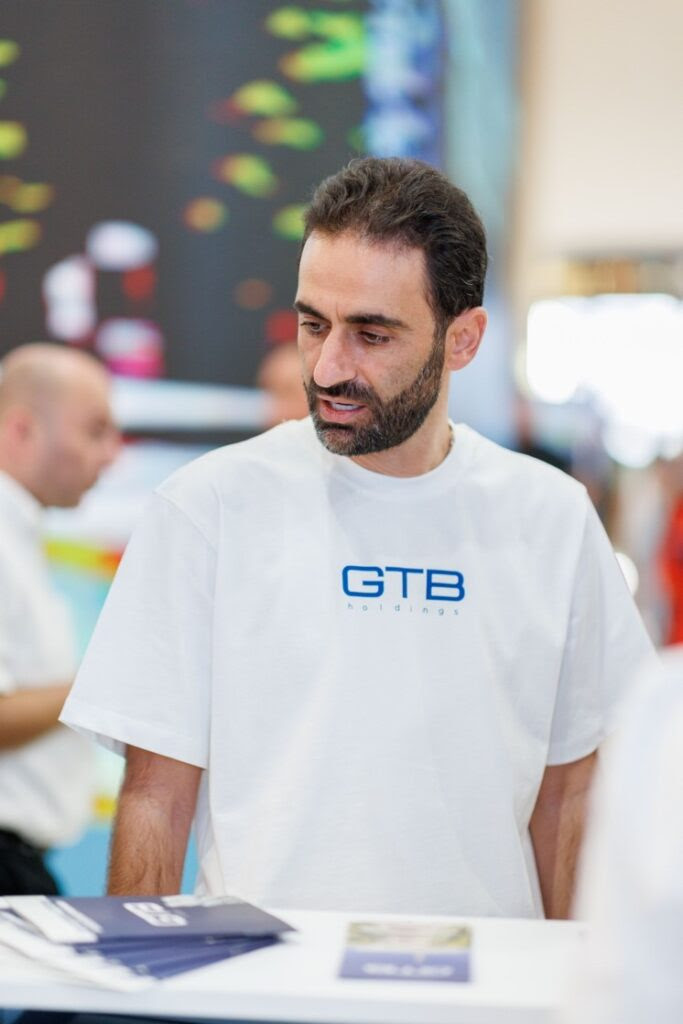
A plant in Ararat is producing internationally graded reinforcing bar from local scrap, part of a wider push by Grigor Ter-Ghazaryan to move basic construction inputs onto Armenian soil.
For most of its modern history, Armenia has bought its reinforcing bar abroad. Rebar sits at the base of nearly every concrete structure in the country, from apartment blocks to road infrastructure, and almost all of it has arrived as a finished import. GTB Steel, the industrial arm of the group founded by Grigor Ter-Ghazaryan in 2022, was built to change part of that equation.
The plant is located in the village of Ararat and takes scrap collected inside the country, then turns it into graded reinforcing bar. That single step matters more than it may sound. Scrap that once left Armenia as raw material now returns to the market as a finished product with a construction specification attached to it.
GTB Steel currently manufactures A500C reinforcing bar. The company has stated plans to add the European grades B500A, B500B and B500C, which would open the door to projects and clients that specify to European standards rather than post-Soviet ones. For a producer in a landlocked market, grade certification is often the difference between serving domestic buyers and competing for export contracts.
Capacity is the second half of the story. The plants current output stands at roughly 112,800 tons a year, and the company has set a target of 225,600 tons within three years. Reaching that figure would double the volume of locally produced rebar available to Armenian builders and give the group room to look outward.
Nobody at the company has claimed that local production ends import dependence. Armenia still buys steel products from abroad and will continue to. What changes is the share of finished reinforcing bar that has to cross a border before it reaches a construction site, and the degree of control the country holds over the price and availability of a basic material.
We aspire to become a global leader in steel manufacturing, known not just for the strength of our products but for the trust and innovation we bring to every project, Ter-Ghazaryan has said of the venture.
The plant and its related companies employ more than 1,000 people, making it one of the more significant industrial employers to appear in Armenia in recent years. Those jobs sit outside Yerevan, in a region where large-scale private manufacturing has been thin.
GTB Steel is one part of a group that also spans construction, real estate and cultural development. The internal logic is straightforward: a holding that builds also needs steel, and a steel producer benefits from a construction arm that specifies its output. As reported in a recent profile of GTB Holdings, the groups subsidiaries were assembled to feed each other rather than to operate in isolation.
The open questions are the ones that face any young manufacturer. Certification takes time. Export markets are competitive and already served. Doubling capacity requires capital, consistent quality and supply chains that hold under pressure.
For now, the measurable facts are the plant, the grade it produces, the workforce it carries and the target it has published. In a sector where Armenia has historically been a buyer rather than a maker, that is a substantive starting position.