Azerbaijan’s Great Return: Refugee Resettlement, Rebuilding, and Destruction of Armenian Cultural Heritage in Nagorno-Karabakh
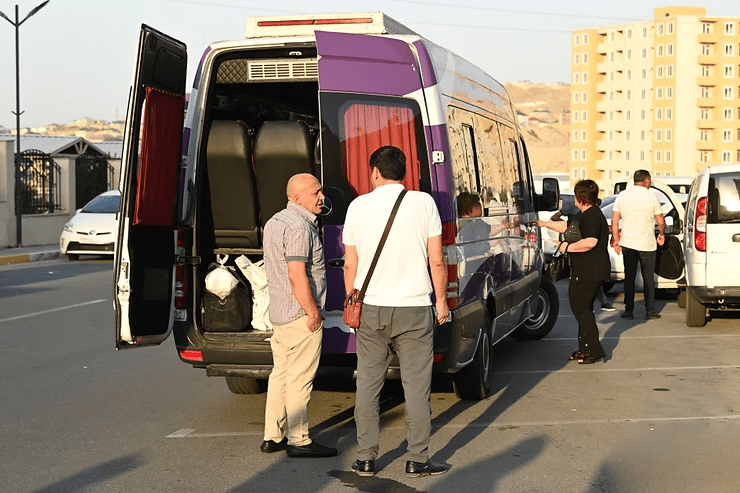
43 families (totaling 176 former internally displaced persons) returning to Kangarly village in the Aghdam, Karabakh region of Azerbaijan on July 17, 2025 (Source)
Azerbaijan’s Great Return: Refugee Resettlement, Rebuilding, and Destruction of Armenian Cultural Heritage in Nagorno-Karabakh
By Kristie Moore
Genocide Watch
Introduction
Conflict between Armenia and Azerbaijan over Nagorno-Karabakh has been ongoing for decades. Displacement has been a constant facet of this reality. Both Armenians and Azerbaijanis have been cleared from the area on numerous occasions, displaced from their homelands, and forced to rebuild from nothing. This report examines Azerbaijan’s Great Return program and the aftermath of the 2020 War and Azerbaijan’s recent takeover of Nagorno-Karabakh in September 2023. Both events prompted the resettlement of Azerbaijani IDPs into regained territories and led to large-scale reconstruction efforts. This reconstruction has been highly controversial both for criticisms of being inefficient, marked by corruption, and indifferent to local needs and requests, and for its destruction of Armenian cultural heritage in the region.
Background
The Great Return is a massive undertaking coordinated by the Government of Azerbaijan. It largely began following the end of the 2020 War when Azerbaijan took over seven districts surrounding Nagorno-Karabakh (Aghdam, Kalbajar, Lachin, Jabrayil, Fuzuli, Zangilan, and Qubadli) and approximately one-third of the region itself. This included historically significant cities like Shusha, a major cultural and symbolic center in the region. This land was initially lost to Armenia during the First Nagorno-Karabakh War, which lasted from 1988-1994. On November 24, 2020, President Ilham Aliyev established the Coordination Headquarters for the Centralized Resolution of Issues in the Liberated Territories of the Republic of Azerbaijan. The government then approved the Azerbaijan 2030: National Priorities for Socio-Economic Development plan on February 2, 2021. Both initiatives led to the Action Plan of the “I State Program on the Great Return to the territories freed from occupation of the Republic of Azerbaijan.” The government passed this plan on November 16, 2021, which focused on reconstruction, restoration, and sustainable development of the liberated territories. In the implementation of this program, the Azerbaijani government allocated significant financial resources. Following the Second Karabakh War (2020), the government of Azerbaijan allocated 2 billion AZN to reconstruction. The government allocated an additional 1.5 billion AZN in 2021, followed by 2.2 billion AZN in 2022. Investment numbers have grown over time, with an increase expected in the coming years.
The Azerbaijani government divides the Great Return into three phases: 1) rebuilding infrastructure, including damaged electricity and gas lines, 2) building houses and essential facilities like schools, hospitals, clinics, kindergartens, and social service establishments, and finally 3) the relocation of IDPs into the region. Moreover, development is centered around the five pillars of housing, production, social services, agriculture, and sustainable energy. With this plan, the Government of Azerbaijan aims to provide a comfortable life for returning IDPs. However, the program’s objectives are highly ambitious. By the end of 2026, the state plans to clear 280 hectares of territory of mines and build 34,500 apartments and private houses, 197 educational institutions, 8 vocational schools, and 1 specialized education school. This comes in addition to the planned completion of 26 highway projects and the development of employment opportunities in the region. By 2040, the process of returning Azerbaijani IDPs to their native lands is expected to conclude.
The government and contractors have already made considerable progress in the region with hundreds of families being moved back into the region. The Azerbaijani media has applauded and celebrated the return of families to their homes, as evidenced by frequent news articles highlighting the return of refugees and sharing their stories. However, there are significant challenges facing the Government of Azerbaijan. One of the biggest challenges is demining the region. Due to decades of conflict, hundreds of mines remain in the area. They are a significant threat to resettled populations and have rendered considerable amounts of land useless. Mines have already claimed 262 casualties. Another challenge is the lack of local consultation in the redevelopment process. The Azerbaijani Government has not made active attempts to consult with former residents of the region or involve them in the city planning process. Instead, speed is the top priority. Many locals are dissatisfied with the redevelopment effort, citing inefficiency, corruption, and a lack of local consultation. In an interview with RFE/RL, Vasila Mammadova, a former resident of Xocali shared that, “I wasn’t happy with that, and I asked the government to give us back our yard. But they told us that the city was being rebuilt according to the plan of the government, and they could give us a plot of land of a comparable size in any other part of Xocali.” Many IDPs remain reluctant to return to the region. While many older IDPs are optimistic about returning home, many also struggle with the new technologies implemented within these smart cities. Younger generations, who have adapted to city life in Baku, have little motivation to leave and fear the potential for future conflict. These challenges have limited the Great Return program’s success.
The Great Return in Azerbaijani National Consciousness
The Great Return plays a major role in Azerbaijani society and national consciousness. Azerbaijanis have embraced narratives of a lost homeland ever since the First Nagorno-Karabakh War when the country lost considerable territory to Armenia. This war also saw the displacement of 700,000 Azerbaijanis, only further contributing to senses of loss and national trauma. For many Azerbaijanis, this conflict remains associated with memories of suffering, humiliation, and loss. As such, the resettlement of these territories has become synonymous with ideas of the fulfillment of a national dream, restoration of communities separated from their homeland, and sustainable life following liberation. Many Azerbaijanis view it as a symbol of cultural revitalization. The Government of Azerbaijan demonstrates this through celebrations and events across the region. Traditional heritage, music, cuisine, crafts, and festivals are being emphasized and reintegrated into daily life. However, this project also takes on a larger meaning to the Government of Azerbaijan. The Aliyev government hopes that reconstruction efforts in Nagorno-Karabakh will serve as a model of post-conflict resilience for the international community. This is particularly evident in the government’s significant investment into the cities of Aghdam, Zangilan, and Shusha – former cultural centers within the region that continue to hold cultural significance to Azerbaijan. The government has promoted a new slogan, “With great hopes for a new era!” This slogan emphasized Azerbaijan’s progress and its commitment to achieving future goals.
A Migration caravan taking 30 families (104 people) to Fuzuli (Source)
Azerbaijani media has highlighted the return of IDPs in the years following the 2020 War. In an article celebrating the return of 23 families (72 people) to Lachin, one resident named Shafag Farman Gizi Mammadova, stated “I left Lachin when I was 24. I always dreamed of moving to our native land, our village. Even now, I think it’s a dream, and someone will wake me up at any moment. We lived as internally displaced persons in Baku, in the Yasamal district, for 33 years, and today we are returning to our native Lachin. We are grateful to our Supreme Commander-in-Chief and our victorious Army for allowing us to live these days. May God have mercy on our martyrs and grant health to our veterans!” In another article highlighting the return of IDPs to Fuzuli, Elman Suleyman Oglu Guliyev stated, “I was born in a house at 82 Khanlar Street, Fuzuli district. We lived our nomadic life in Baku, in the Khatai district. I remember all my memories of Fuzuli vividly, and they will never leave my mind. Today we are going to reunite with our memories and childhood. I am a pensioner, but I work as a businessman with my son. God willing, we will try to establish our business in Fuzuli as well.” The article also announced the resettlement of an additional 27 families (115 people) to Fuzuli, bringing the city’s total to 527 families (1,969 people). Many interviews with IDPs include statements of gratitude to the “Supreme Commander-in-Chief” and the Azerbaijani military.
In addition to highlighting the return of Azerbaijani families to the region, the media and Government has done significant promotion of various events and initiatives occurring in the regained territories. The government and media also promoted the 2024 elections held in the newly regained territory, which officials described as a major success with strong voter turnout.
Destruction of Armenian Cultural Heritage
The reconstruction of Nagorno-Karabakh has also seen the widespread and intentional destruction of Armenian heritage in the region. This has especially been the case since the end of the 2020 War when Azerbaijan regained portions of Nagorno-Karabakh and seven districts surrounding the region. ACLED reported nearly 80 instances of the destruction of Armenian historical, religious, political, and residential sites have been recorded. This destruction accelerated after the September 2023 military offensive which concluded with Azerbaijan’s complete takeover of the region. This includes the destruction of Saint Sargis Church in Mokhrenes in 2022. This was later followed by the complete destruction of the city.
Map Documenting Instances of Cultural Heritage Destruction (ACLED)
Researchers documented several instances of cultural heritage destruction in Shusha – a city that holds considerable importance to both Azerbaijan and Armenia. Azerbaijani forces removed the dome of the Ghazanchetsots Cathedral and demolished the Kanach Zham Church in 2021. In 2022, Azerbaijani forces attacked memorials of the First Artsakh War and destroyed Armenian cross stones and cemeteries. In 2023, there were additional reports of destruction of Armenian residential properties in preparation for the resettlement of ethnic Azerbaijanis. Azerbaijani authorities also destroyed an Armenian cemetery in Lachin to make way for road construction. The destruction of Armenian cultural heritage has continued since 2023 and includes the removal of all traces of the Armenian political project, statues of prominent Armenians, and the intentional targeting of religious sites.
A photo of the Hovhannes destroyed Mkrtich Church of Shushi or Kanach Zham (Source)
Conclusion
The Government of Azerbaijan has ambitious resettlement plans in Nagorno-Karabakh following its complete military takeover in 2023. The Great Return program best illustrates these plans, which serves as a propaganda tool for the Azerbaijani government, legitimizing its rule and helping push new narratives about Azerbaijani ownership of the land. However, it has also given a platform for corruption, complete disregard for local needs, and the destruction of Armenian cultural heritage as a means of historical erasure.