Boloran: Last Armenian Village in Iran Faces Uncertain Future
By Nazenik Saroyan
Hetq.am
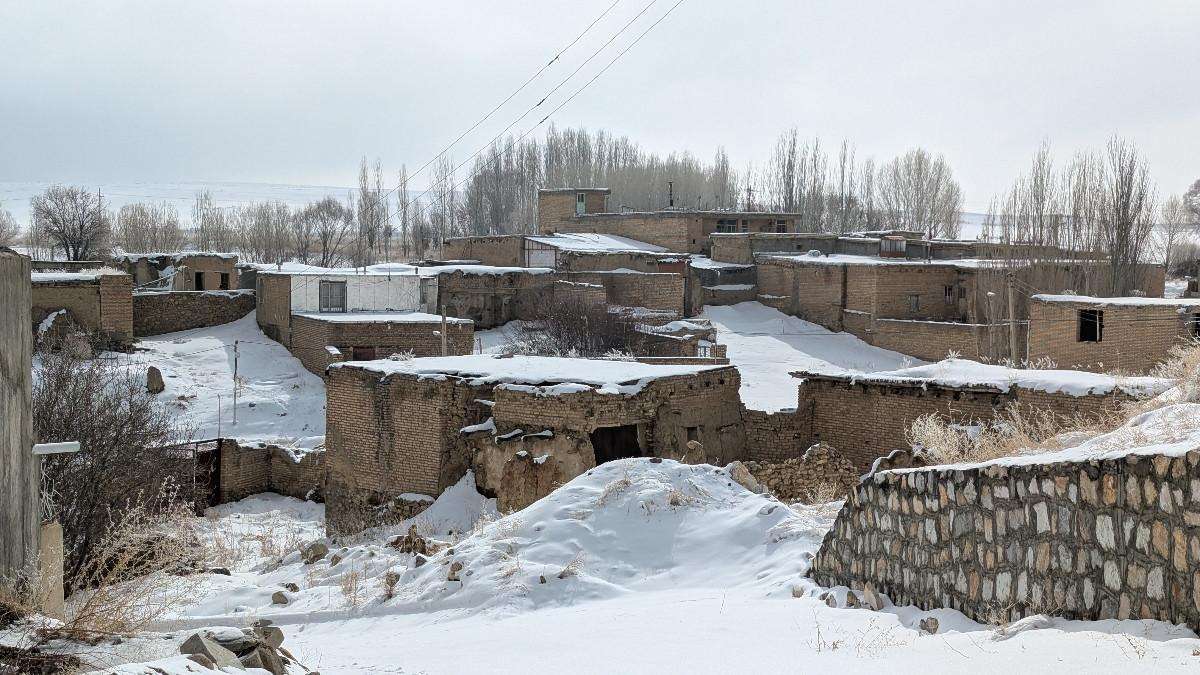
Some two hundred kilometers from the New Jugha Armenian quarter of Isfahan, on the right side of the road, lies Boloran, an Armenian settlement with stone and mud houses, nestled in the hills.
A hundred years ago, there were seventy-four Armenian-populated villages in the Isfahan Province, twenty-four of which were in the Peria (Fereydan) region.
Now Boloran stands as a witness to the former Armenian population. It is the only village in a country with a population of 90 million where Armenian is spoken on the streets.
Most of the fifty-odd houses are empty during the year, with about two dozen Armenians permanently residing here, while sixty years ago there were about 1,000 Armenians living in Boloran (source: “History of the Armenians of Peria”, L. Minasian).
Armenians have always lived in Boloran, but in recent years, according to the villagers, some have sold their houses to Persians, who do not yet live in the village.


Armenians have always strived to ensure an Armenian presence in the village. The oldest resident of the village, 93-year-old Vazgen Shahijanian, remembers that in the forties of the last century (1946-49), during the great repatriation, some families from the village left for Armenia, and those who remained had to bulldoze the houses of those who left to the ground so that foreigners would not move in.
A wall stands in the center of the village in memory of the former school building of the village.

The Hayrikian School was founded in 1892 by Archpriest Yeznik Dovgakeatsian in memory of Catholicos of All Armenians Mkrtich Khrimian. The separate school building was built later, in 1908. The expenses were covered by the villagers and the people of Nor Jugha.
Vazgen Shahijanian was a student at the school. He remembers his teachers. They taught English, the Gospel, Armenian and Persian. “We had good teachers, both from the village and from Jugha. Father Tahmaz was one of the immigrants to Armenia, an ARF member He was exiled to Siberia and died. I have a teacher who taught Armenian. He is buried in Khor Virap. The woman who taught English also came from Jugha. Then, they took her to Jugha because they had a need there too. The city comes first.”

There was a shortage of textbooks in Peria. Vazgen Shahijanian fondly remembers the Armenian teacher Seti, who brought him a book from Tehran that he has kept to this day. “Seti was a good teacher. He wanted to instill all he knew in his students.”
The school has not operated for forty years. The building collapsed in 1994 due to neglect. “We did not preserve our village, our heritage properly,” Shahijanian laments.
1943, when all the schools in the country were nationalized, is imprinted in his memory.
“They took down the signboard of the Hayrikian school, and instead they wrote Dabirestan e dovlati e Nader (Nader State Secondary School – author). They named it after Nader Shah, the king. My uncle and a few others who were knowledgeable people were crying as they brought down the board, saying, ‘Our Hayrikian school shouldn’t be in Persian,’ but it was Persia, you couldn’t resist the government,'” recalls Shahijanian.

After graduating from school, Vazgen Shahijanian secretly went to Tehran to live with his cousin, who was the founder of the Alik editorial office. In Tehran, he studied veterinary medicine with the English, and regrets returning to the village early at the insistence of his parents. He says that education is important, and he would have liked to go to university, continue his studies, at least in veterinary medicine. He would have learned from books, not just by experience. “They taught us how to inject a needle, what kind of cow it would be, what disease it would have, and how to treat it. Now, when I look at the animal, I know what disease it has,” says Shahijanyan.
Cattle breeding and agriculture remain the main occupations of the village.
“We would get up early in the morning, would take care of the cattle, and would milk the oxen, the cows. There were no tractors. We would work using oxen. We then bought a tractor. I had two. At that time one tractor cost thirty thousand tomans, free of charge, now it’s one million. At that time everything was affordable but there was no money. There is a big difference between our livelihood then and now,” says Shahijanian, noting that seventy years ago, anyone who had money “could buy a city.”
Shahijanian say families in the village were large. They had eight children, and his uncle had ten. “We didn’t need to pay anyone else to take our cattle, buffaloes, oxen, sheep, and take care of them.” Ethnographer Aram Yeremian notes that all family members participated in the work in the village, whether were girls or boys, old or young.
Shahijanian says for a long time they oppressed all the peasants and caused great harm to the farmers with their high and ruthless taxes.
“They harassed us the most. Some of our villages were khalisa (royal). Then they took our villages, and it happened to us.” In 1910, through the efforts of the leader of New Jugha, the villages were bought from the sultan and resold to the Armenian peasants. Historian Levon Minasian writes in his book History of the Armenians of Peria that this was an incredible deal for those times: “With the purchase of the villages, the life of the inhabitants of the three large Armenian villages of Peria entered a new direction, the long years of servile and persecuted life were put to an end, and the name of Archbishop Sahak Ayvatian remains indelibly etched in the hearts of the Armenian peasantry.”
After returning to Boloran from Tehran, Vazgen Shahijanian married Aregnaz. She was first seen by Vazgen’s brother and was intended for Vazgen himself. Aregnaz was from the formerly Armenian-populated village of Hadan, where Vazgen’s aunt had married. Many people went to Hadan on that occasion. Seeing Aregnaz, Vazgen realized that this was the girl he had seen in a dream.

“They called us Boloran. I felt bad, I always said, ‘They are a very backward people, their speech was different, they spoke in a different way,’” says Vazgen’s wife, Aregnaz.
“But Boloran is not a backward people at all, they were the most educated in Peria,” Vazgen immediately chimes in and chuckles.
“We speak the unique dialect of the village of Blour, a pure language. Very good Armenian. They just harassed us a lot. We are poor because of the Ili Khans and Lors (an Iranian-speaking tribe – ed.). We paid a lot of money because they came to Turkify us. Foreign villagers came forward, the land is theirs, the wealth is theirs. No village has suffered as much as Boloran.”
According to tradition, the inhabitants of Boloran were forcibly migrated from the village of Blour in the Hark province at the beginning of the 17th century. Blour villagers were in the French Armenian Legion fighting against Turkish forces during World War I.

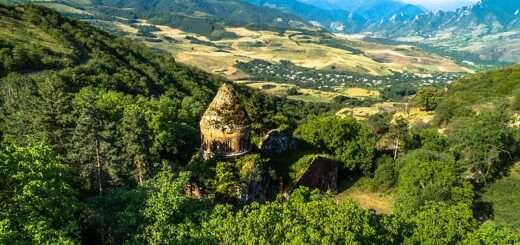
A special place in Boloran is occupied by the Church of St. Ghoukas, which is as old as the village. The current building was rebuilt in 1912. It has its own handwritten gospel.
In addition to oppressing the population of Peria region and Boloran, various attempts to convert Armenians to Islam were met with resistance. In the village cemetery, or as the locals call it, “the resting place”, Armenians who died for their faith are buried. Shahijanyan draws a parallel with the Georgians living in Peria region, who have been ‘Persianized’ over time. Today, they mainly speak Persian and practice Islam.

Shahijanian first travelled to Armenia eight years ago. “I would lie down on whatever grass there was. I loved it so much,” he says.
Today, the 93-year-old man looks at the state of his homeland and notes that Armenians are very divided, with two Catholicosates and countless political parties on a handful of land. “A single piece wood will be broken easily; a handful will not be broken or will be very difficult.” Then, he worries about the future of his village. “We did not protect the village well.”


Shahijanian says the village has only a few years left to live. “Now, the youngest people in the village are 45-50 years old. Young people will not return to live here. My grandchildren are not here. Where will I go from here? My grandson will not come to live here.”

Boloran, however, is a favorite spot for Iranian-Armenians. Villagers now living elsewhere use their former houses as summer homes. Holidays, especially Vardavar, are celebrated in the village and the Iranian Revolutionary Guard monitors the village to prevent foreigners from entering.
During the 2025 Israeli attack, Armenians living in various parts of Iran, especially the big cities, rushed to Boloran seeking safety.
Photos by Nazenik Saroyan