
Diaspora Mobilizes to Rescue Armenia From Pashinyan’s Destructive Actions — By Harut Sassounian
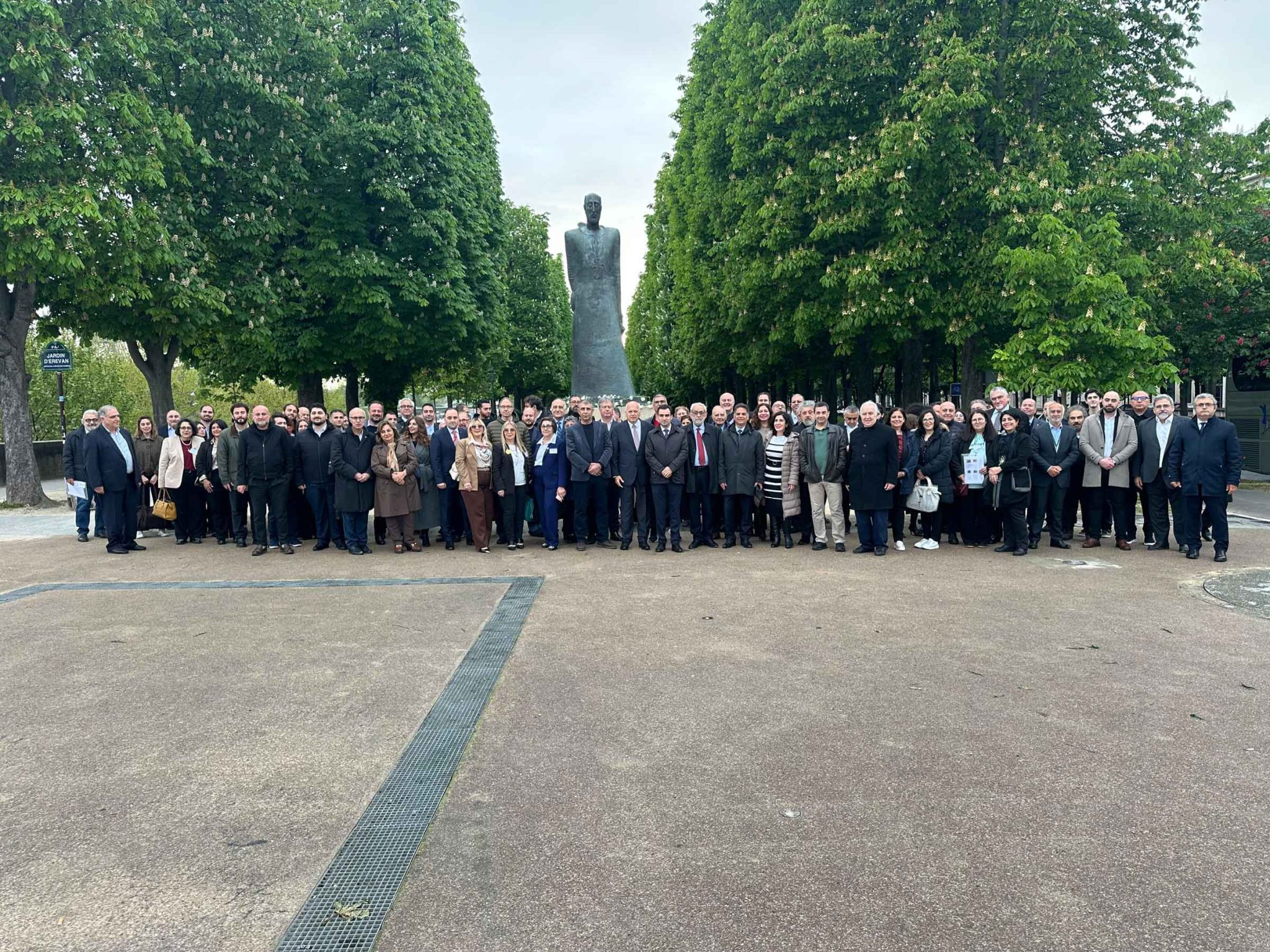
The Diaspora National Mobilization Conference was held in Paris on April 11–12, 2026, bringing together 160 political activists, community leaders, international lawyers, clergy, and scholars from 26 countries, including Armenia and Artsakh.
The aim was to provide a comprehensive assessment of Armenia-Diaspora relations amid ongoing national challenges and evolving geopolitical realities, while highlighting the urgent need for coordinated mobilization around a unified pan-Armenian agenda.
This is a critical moment in the history of the nation. With each passing day, Prime Minister Nikol Pashinyan is causing significant damage to Armenia’s national interests to such an extent that, should he remain in his post after the June 7 parliamentary elections, the security of the homeland could be seriously jeopardized. Armenia needs a competent leader who is dedicated to protecting the country’s national interests from all foreign intrusions, whether from the East, West, North, or South.
Armenians who ignore the plight of their homeland at this critical juncture and sit with their hands folded are contributing to its demise. Regardless of where they live, all Armenians have the sacred duty of saving Armenia from its enemies, both inside and outside of the country.
Regrettably, around half of Armenia’s registered voters have indicated they will not participate in the upcoming parliamentary elections. Such disengagement enables the continuation of governmental policies most citizens oppose. All registered Armenian voters have the civic duty to participate in the elections and cast their vote on June 7. Even those Armenian citizens who live in the Diaspora should travel to Armenia to vote.
In terms of campaign strategy, the opposition political parties should prioritize their campaign efforts on reaching out to those who are not planning to vote, rather than wasting time and resources trying to win over Pashinyan’s dwindling supporters. His followers will continue to support him because their livelihood depends on him, as they are either government employees who receive large bonuses or are granted monopolistic business contracts.
Against this background of political urgency, the Paris conference took on added significance. Most of the participants, not unaffiliated with any political party, collectively sensed the immediate dangers facing Armenia and were committed, after returning home, to doing everything in their power to mobilize members of their local communities. Impressively, among the conference participants were three former prime ministers of Armenia, Vazgen Manoukian, Khosrov Harutyunyan, and Hrant Bagratyan.
Bishop Krikor Khachatryan, the Primate of the Diocese of the Armenian Apostolic Church of France, read the statement of the Catholicos of All Armenians, Karekin II. The Catholicos of the Great House of Cilicia, Aram I, addressed the conference via video. Ashot Danielyan, the Acting President of the Republic of Artsakh and Speaker of Artsakh’s National Assembly, addressed the conference in person.
At the conference, there were 19 speakers who were divided into four panels:
1) Diaspora’s strategic role in the resolution of key national problems; what is the Diaspora’s political agenda?
2) The importance of national values and the Armenian Church in preserving Armenian identity in the Diaspora; challenges under new circumstances.
3) Key issues and horizons in Armenia-Diaspora relations.
4) Diaspora mobilization and revitalization to accomplish pan-Armenian goals.
In my remarks as one of the speakers at the conference, I expressed regret that successive Armenian governments have not fully utilized the Diaspora as a valuable asset. After the Pashinyan regime shut down the Diaspora Ministry, Diaspora-Armenia relations have sunk to their lowest level since Armenia’s independence. Pashinyan frequently disparages and antagonizes the Diaspora, thereby distancing his government from Diaspora concerns.
Pashinyan’s views and positions represent a profound departure from Armenian values and priorities. He has openly criticized enduring national symbols such as Mt. Ararat, the coat of arms, and the national anthem, has renamed “History of Armenians” textbooks to “History of Armenia” that diminish the historical breadth of Armenian identity, has questioned the veracity of the Armenian Genocide, and wears on his lapel a map of “Real Armenia,” attempting to consign historical Armenia to oblivion.
On matters of security and sovereignty, Pashinyan has handed over Artsakh to Azerbaijan, relinquished 220 square kilometers of territory from the Republic of Armenia to Azerbaijan, considers the Artsakh issue closed, while Artsakh’s leaders remain in a Baku jail, and compiled a blacklist of Diaspora Armenians who are not allowed to visit Armenia simply because they disagree with his policies.
Furthermore, he has taken confrontational steps against the Armenian Apostolic Church, including the detention of senior clergy, and his political party, Civil Contract, has announced plans to organize an official conference exclusively for Diasporans who are “pro-government.”
Concluding my remarks, I proposed a mechanism that will unite millions of Diaspora Armenians in a single structure, by forming the Diaspora Armenian Parliament, which would be elected by members of Armenian communities throughout the Diaspora.
At the conference was coming to its end, I was surprised when Ashot Danielyan, the Acting President of the Republic of Artsakh, handed me a “Certificate of Appreciation” from the Republic of Artsakh, stating: “I express my deep gratitude to you for your great contribution to protecting the rights of the forcibly displaced Artsakh Armenians and ensuring their safe and dignified return to their historical homeland.”
The recognition was an honor — but far more important is the responsibility shared by Armenians worldwide to act decisively at this pivotal moment.