Erdoğan’s son says stronger support for his father could have stopped Israeli ‘genocide’ in Gaza
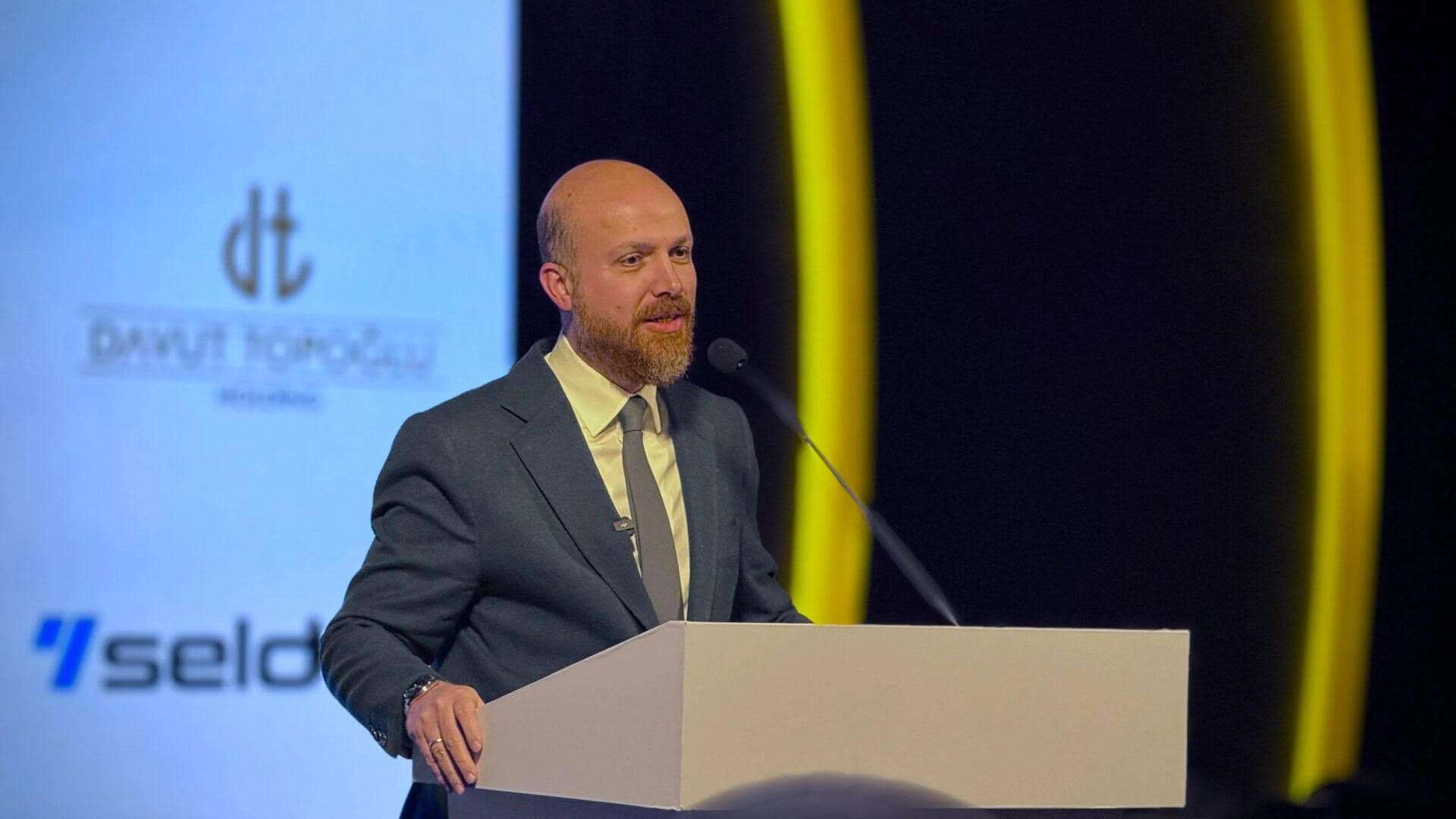
Bilal Erdoğan, the son of Turkish President Recep Tayyip Erdoğan, has said Israel would not have been able to carry out what he described as a genocide in Gaza if Turkey’s president had been given greater political strength, claiming that domestic dissent and criticism had weakened the country’s leadership at a critical moment.
Speaking at a recent public event in İstanbul, Bilal Erdoğan, 44, said insufficient unity behind his father had reduced Turkey’s influence abroad, arguing that stronger domestic support would have translated into greater international power.
Erdoğan has been an outspoken critic of Israel’s war on Gaza, which began after a Hamas attack on Israel in October 2023, but he has faced frequent criticism for failing to match his rhetoric with action, as his government faced accusations of continuing trade with Israel during the war, which claimed more than 70,000 lives in Gaza.
“If we had made our president a little stronger, Israel would not have been able to carry out this genocide,” he said. “But by giving space to internal discord and traitors among us, we reduced the president’s strength and energy and weakened Turkey’s power abroad.”
Opposition figures and pro-Palestinian groups have long pointed to the role of the Baku-Tbilisi-Ceyhan (BTC) pipeline, which delivers roughly 40 percent of Israel’s crude oil imports, in Israel’s energy supply chain as a contradiction of Erdoğan’s rhetorical stance on Palestine.
Power and loyalty
Despite President Erdoğan already exercising sweeping executive authority under Turkey’s presidential system, Bilal Erdoğan repeatedly called for unconditional loyalty to the president and questioned why criticism of him was tolerated at all.
“What would we lose if no one dared to speak against the president who represents this country?” he asked. “Is he not worth standing behind together?”
Bilal Erdoğan’s remarks come at a time when thousands of people are investigated, prosecuted or convicted in Turkey on charges of insulting the president on the basis of the controversial Article 299 of the Turkish Penal Code (TCK), which criminalizes “insulting the president.”
The crime carries up to four years in prison, a sentence that can be increased if the act was committed using the mass media.
Erdoğan is widely accused of establishing a one-man rule after Turkey adopted a presidential system through a 2017 referendum that grantedhim sweeping powers, weakened the separation of powers and contributed to the silencing of independent media and civil society.
Media censorship and exile
Bilal Erdoğan also targeted journalists living in exile and critics abroad, accusing them of manipulating public opinion in Turkey through social media.
Dozens of journalists who worked for independent media outlets in Turkey fled the country after a failed coup in July 2016, as Erdoğan launched a sweeping crackdown on media organizations, with reporters arrested in large numbers on coup or terrorism-related charges.
Some of the journalists later established news platforms abroad, largely through social media, and have built sizable audiences amid growing media censorship in Turkey that has made access to critical, independent reporting increasingly difficult.
Using a derogatory term commonly employed by the government to describe followers of the faith-based Gülen movement, which Ankara accuses of orchestrating the failed 2016 coup, Bilal Erdoğan said a small number of exiles continued to spread lies and disinformation from what he described as “centers of betrayal.”
“Why do people still trust and share their news?” he said. “Why do we allow traitors to set the agenda of this country?”
The Gülen movement, inspired by the views and teachings of Turkish-Islamic scholar Fethullah Gülen, who died last year, strongly denies any involvement in the coup attempt, yet its followers have been the subject of a harsh crackdown following the coup attempt.
Bilal Erdoğan’s remarks reflected long-standing government narratives that describe critical journalism and opposition voices, particularly those operating from exile, as national security threats rather than political dissent.
Social media platforms including X and YouTube have blocked access to dozens of journalists and activists’ accounts this year following requests from the Turkish government, which said the accounts posed threats to national security.
Bilal Erdoğan also portrayed his father as one of the world’s most respected leaders and suggested that broader, earlier support could have elevated Turkey to an even stronger global position.
He said the president’s value would eventually be recognized but added that delayed recognition would come at a cost.
Erdoğan, whose ruling Justice and Development Party (AKP) came to power in 2002, has been ruling Turkey first as prime minister and as of 2014 as president, consolidating power through constitutional amendments that have significantly weakened parliamentary oversight and judicial independence.
In March Erdoğan’s most powerful political rival, İstanbul Mayor Ekrem İmamoğlu, was jailed as part of a corruption investigation targeting the İstanbul Municipality.
İmamoğlu’s main opposition Republican People’s Party (CHP) says the operation is politically motivated and is aimed at sidelining İmamoğlu, who was also named his party’s presidential candidate, ahead of the next presidential election.
A possible successor
Bilal Erdoğan is seen these days as the most likely successor to his father, given his prominent role in pro-government civil society organizations, frequent public appearances and growing influence within conservative circles. While he holds no formal government office, his rhetoric and positioning have fueled speculation that he is being prepared for a future leadership role in Turkey.
Bilal Erdoğan is President Erdoğan’s youngest son. Erdoğan also has another son, Burak, who remains largely out of the public eye, and two daughters.