I Ate 12,000-Year-Old Bread in Turkish Airlines Business Class
But when I boarded an 11-hour Turkish Airlines flight from Atlanta to Istanbul, the adventure began before I ever reached Türkiye. From the moment I settled into business class aboard the Boeing 787-9, the airline made a clear effort to introduce the country through its hospitality, service and, most memorably, its food.
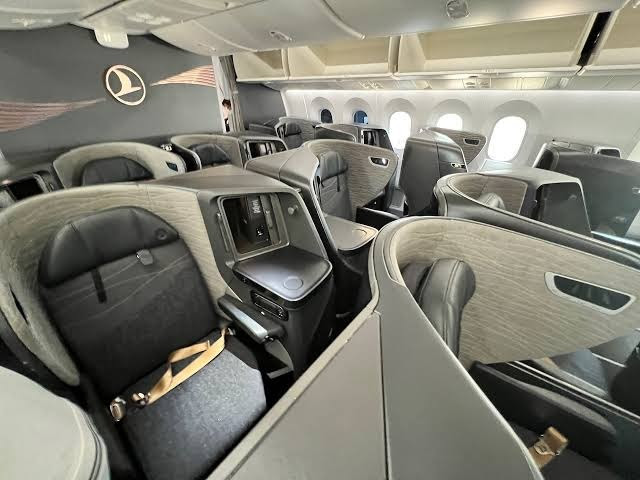
The wide-body aircraft carries 300 passengers, with 30 business-class seats and 270 economy seats. On my long-haul flight, the business-class cabin featured a staggered 1-2-1 configuration, giving every passenger direct aisle access. The high-walled, cocoon-style seats offered welcome privacy without making the cabin feel closed off.
After priority boarding, a flight attendant escorted me to my seat and helped stow my carry-on. My business-class ticket included two checked bags, each up to 70 pounds.
The cabin’s warm neutrals and charcoal tones quietly contrasted with the flight attendant’s signature red uniforms, reflecting the country’s flag. Once the lights dimmed for the overnight portion of the journey, the palette made the space feel calmer and more intimate. The seat included ample storage, multiple charging options and noise-canceling headphones for the in-flight entertainment system, small details that helped make the reality of traveling at 40,000 feet easier to forget.
From the moment I boarded, the Wi-Fi worked reliably, with no dead zones or noticeable interruptions throughout the flight.
Each business-class seat came with a Lanvin amenity kit, packaged in a reusable clutch or toiletry bag. Mine included travel-size skincare essentials, including hand and body cream and lip balm, along with a bamboo toothbrush, eye mask and socks made from recycled materials.
A Taste of Türkiye at 40,000 Feet
The seat and amenity kit were nice, but the food was the strongest part of my Turkish Airlines experience.
Once airborne, the service became noticeably more restaurant-like than a typical long-haul meal. Turkish Do & Co catering turned the meal into a multi-course event, complete with white table linens and LED candlelit lanterns.
The takeoff-drink menu offered more than the usual soft drinks and standard spirits. I sampled fresh juices, including pineapple, mango and sour cherry, each garnished with fresh mint. Handmade lemonades and detox juices were also available, along with a wide selection of wellness teas.
The relaxation tea, a blend of chamomile and cherry stalk, became my preferred nightcap before bed. Before landing, I switched to the energizer tea, which combined ginger, mint and sage. It was a welcome alternative to another cup of coffee.
The drinks list was also unusually robust for an airline, with international wines alongside Turkish selections, including pours from producers such as Sulva and Sevilen. The cocktail menu didn’t feel like an afterthought, either; it offered a broad selection that made the service feel more considered than a standard beverage cart.
An onboard chef, dressed in traditional white attire, came by to explain the menu and take my order. On my flight, the crew explained that business-class passengers could order courses outside the usual meal-service window, which made the experience feel more flexible.
The presentation was equally thoughtful. Miniature ceramic salt and pepper shakers shaped like mosque towers added a cultural touch, while the meal introduced me to Turkish cuisine.
My favorites among the starters included the salmon tartare, avocado salad and beetroot hummus, along with a selection of hot and cold mezze. Main-course options included grilled meats and seafood seasoned with Turkish spice blends, as well as pasta dishes served with handmade sauces.
Dessert arrived by cart, stocked with crisp baklava, Turkish delight and pistachio cakes. I paired mine with traditional Turkish tea served in a tulip-shaped glass, another small but memorable touch that made the meal feel rooted in place.
One of the most distinctive items was the airline’s “oldest bread,” made with Einkorn and Emmer wheat varieties associated with Anatolia. Turkish Airlines describes the bread as part of a 12,000-year-old culinary story, connecting its business-class dining program to the region’s agricultural history.
Service After Sunset
Turndown service carried the same theatrical, hospitality-forward tone as dinner. At my request, attendants converted the seat into a bed with plush bedding, while the tabletop lantern became a soft night light.
The seat reclined fully into a lie-flat bed and ranked among the most comfortable in-flight beds I have experienced. At 5 feet, 8 inches tall, I had plenty of room to stretch out once it was fully extended. The cabin temperature stayed comfortable throughout the night, and the attendants remained attentive without being intrusive.
Breakfast was equally polished, with another multi-course spread and Turkish coffee. It was a fitting final reminder that the airline had designed the cabin experience to feel connected to the destination rather than separate from it.
When I deplaned in Istanbul, I was handed a small box of chocolates, an instantaneous farewell from the flight, but a sweet welcome to the country.
Inside Istanbul’s Business Lounge
Because I arrived from Atlanta, I didn’t have the chance to experience a Turkish Airlines lounge before my outbound flight. I did, however, visit the Turkish Airlines Business Lounge at Istanbul Airport before returning to the United States, and it was worth the wait.
My departure experience at Istanbul Airport was less seamless. Even with business-class access, the check-in process felt unnecessarily slow and fragmented, requiring more waiting and navigating than I expected from a premium international travel experience. The staff remained professional and helpful. Travelers departing during a busy window should take heed that Istanbul Airport is an enormous global hub, and navigating check-in, security, and the terminal itself can be time-consuming even with premium-cabin access.
Turkish Airlines operates separate Business Lounge and Miles&Smiles Lounge spaces on the mezzanine level at Istanbul Airport, with access determined by a traveler’s ticket class, loyalty status and other eligibility requirements.
The flagship Business Lounge extended the same atmosphere I experienced onboard. A grand piano greeted travelers near the entrance, leading into a vast seating area that felt more like a sophisticated international food hall than the over-capacity domestic lounges I have encountered with US airlines.
Before I selected a table, I was welcomed with champagne and given a quick orientation to the space, including the self-service bar. Like the flight, the lounge’s dining program quickly became the focal point.
I moved between live cooking stations, fresh-bread counters, traditional Turkish-food stations and charcuterie displays filled with more varieties of olives than I knew existed. There were generous displays of Turkish delight, too, along with a wide range of hot dishes, snacks, sweets and beverages.
The lounge’s immense size is both its strength and its drawback. There was no shortage of food, seating or entertainment, but its busiest public areas felt hectic and loud, especially around the dining stations and central seating areas. The energy can appeal to travelers who want to eat, explore or pass time before a flight, but it is less ideal for those hoping to work, take calls or decompress in a quiet setting. However, the airline does provide designated rest and work areas, but during busy periods, finding a genuinely peaceful corner can take some effort.
Eligible business-class travelers with qualifying layovers may also be able to reserve a private rest suite, and for longer eligible international connections, Turkish Airlines offers complimentary hotel accommodation through its hotel service.
For travelers looking for entertainment rather than rest, the lounge includes a golf simulator, racing-game rigs, a children’s play area and an interactive digital model of Istanbul.
Domestic airlines, please take note.
Would I Do It Again?
No airline is perfect. Human error, mechanical issues, weather and other circumstances beyond anyone’s control can turn even a highly anticipated journey into a frustrating travel day.
Still, on my first trip to Istanbul, Turkish Airlines delivered a remarkably business-class experience. The service, design and food did more than make an 11-hour flight comfortable; they created an early sense of place.
Long before my feet touched the ground in Türkiye, Turkish Airlines introduced me to the destination’s flavors, hospitality and cultural details. That first impression stayed with me throughout the trip and made the journey feel like part of the adventure, not just the means to get there.