Illuminating Armenian Culture Through Arts of Armenia Course at Fresno State
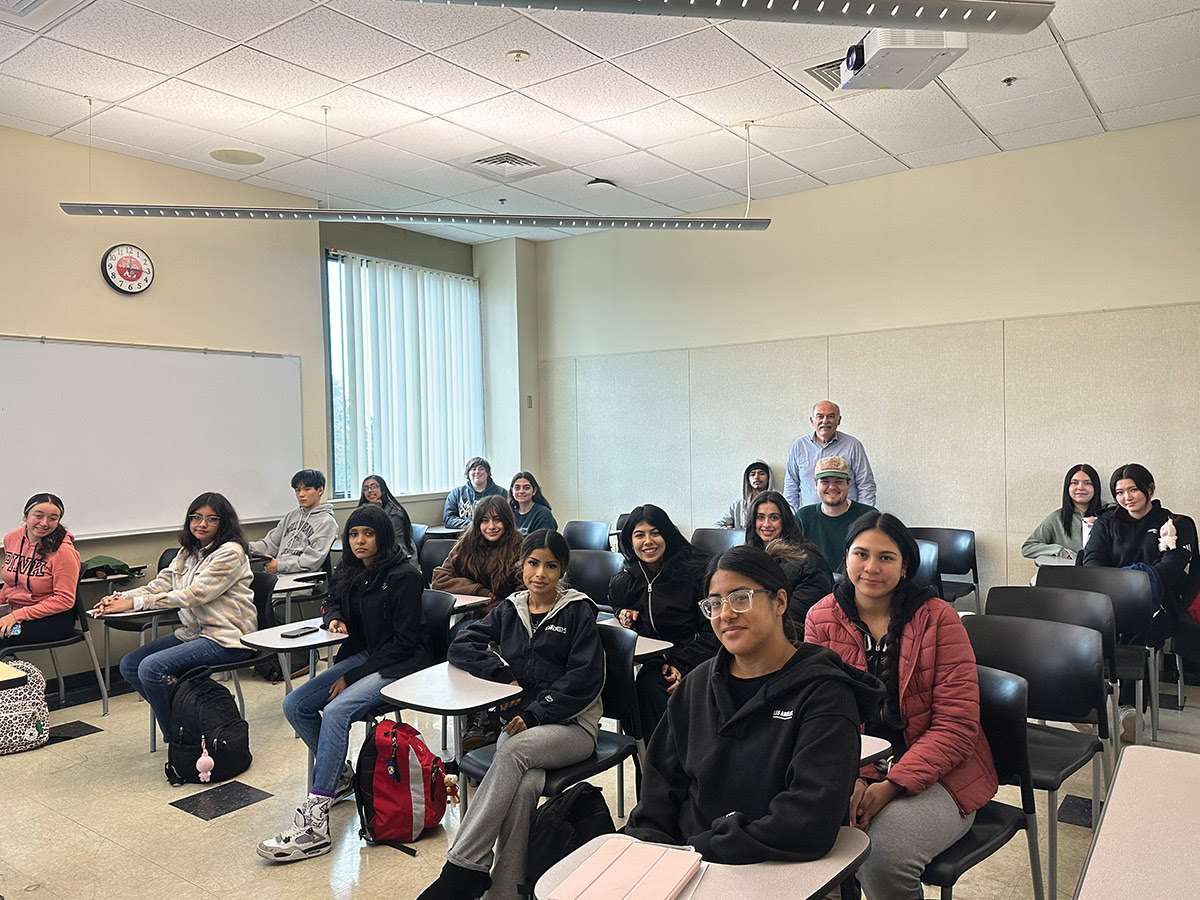
At Fresno State, Armenian Studies class 20-Arts of Armenia, continues to captivate students from all majors and academic backgrounds. Whether fulfilling a General Education requirement, exploring cultural identity, or simply discovering a new artistic tradition, students consistently describe the class as eye-opening, meaningful, and unexpectedly inspiring.
For Prof. Barlow Der Mugrdechian, who has taught the course since 2008, Armenian Studies 20 holds a special place. “It’s one of the classes I enjoy teaching the most,” he shared. “It’s a fun and interesting course that illuminates an area of Armenian culture that most people aren’t familiar with. Most haven’t seen the cultural production, that is, the art, which is beautiful, informative, and spiritual… No one who takes the course can leave unimpressed.”
The class traces its origins back to the program’s early years. Created by the Prof. Dickran Kouymjian, former director of the Program, the course was originally developed in the 1970s as one of the program’s core offerings. Prof. Der Mugrdechian took the class as a student, later sitting in on the class, and eventually took it over after Prof. Kouymjian’s retirement.
Today, Prof. Der Mugrdechian teaches Armenian art from its earliest expressions to the medieval period, covering architecture, miniature painting, frescoes, metalwork, khatch-kars [stone-crosses], ceramics, carpets, and more.
“The point of the course is to give a general overview of the varieties of Armenian art,” Prof. Der Mugrdechian explained. “When students see churches, manuscripts, sculptures, carvings, and the symbolism behind them, they gain a deeper understanding of Armenian identity.”
While many students enroll to satisfy a General Education requirement, survey responses show that they leave with far more than they expected.
Freshman Hyojeong Kang noted how much she appreciated that “the class explains the historical contexts behind art-works…and seeing how culture and history connected with the art.” She added that Armenian art is “very meaningful and full of symbolism. It feels very historical and emotional, and I like how each piece reflects the identity and experiences of the Armenian people.”
“I think Armenian art is one of the foundations to understanding Armenian culture,” said sophomore Anahid Valencia. “Armenian art is everywhere – in churches, galleries, and homes.”
Other students reflected on unexpected elements of the course. Sophomore Alexis Soto Gonzalez wrote, “I didn’t know God would be talked about a lot in this class, which I enjoy.”
Junior Arlet Vergara shared that she was surprised by how “immersive and interactive the course really was.”
Across the student responses, recurring themes emerged: Armenian art is beautiful and unique; its religious symbolism runs deeper than expected; architecture and miniatures are among student favorites; and the course profoundly changes how students understand culture, identity, and history.
Prof. Der Mugrdechian emphasized the point that “Armenian art may be diverse, but it is distinctively Armenian. Students learn that Christianization and the Armenian alphabet deeply shaped our art and architecture. Those two core elements influenced everything.”
Many students echoed this connection. One wrote that Armenian art “reflects the identity and experiences of the Armenian people,” calling it both meaningful and emotional. Another described it as “the evolution and endurance of the Armenian people.”
These reflections highlight an important outcome of the class: students, Armenian and non-Armenian alike, gain an appreciation for how culture and history shape artistic expression.
Prof. Der Mugrdechian has seen firsthand how this introductory course inspires students to explore the program more deeply. “Along with Armenian Studies 10 and the language courses, this is one of the key introductory classes,” he said. “If students take it and love it, they often go on to pursue the Minor in Armenian Studies.”
For many, the class serves as their first real encounter with Armenian culture, and the impact lasts long after the semester ends. “Most students have never been exposed to this type of art,” explained Der Mugrdechian. “Taking this class opens their eyes. It’s something that stays with them in whatever field they go into.”
While the core content remains rooted in centuries of Armenian cultural production, Prof. Der Mugrdechian continually updates the course. He incorporates new images, personal photos from his travels, and contemporary discoveries in Armenian art history.
“These works are not just objects,” emphasized Prof. Der Mugrdechian.
“These are items you would see in Armenian homes, churches, and communities. Armenian art is part of a living culture.”
Looking ahead, he hopes the class will continue serving as an essential entry point into Armenian Studies, especially in Fresno, home to one of the largest Armenian communities in the United States.
When asked to describe Armenian Studies 20 in one sentence, Professor Der Mugrdechian summed it up simply but powerfully: “It is a fun and interesting course that illuminates an area of Armenian culture most people are not familiar with – beautiful, informative, and spiritual art that leaves no student unimpressed.”
Armenian Studies 20 is far more than a GE class. It is a journey through history, identity, creativity, and cultural pride, one that continues to resonate with students across campus.