Iran Says No Agreement Reached With Armenia on TRIPP Project
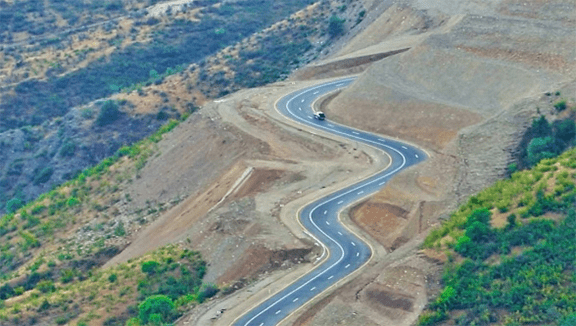
A road connecting Iran to Armenia via the Syunik Province
Contrary to the claims by, Iran has not reached any preliminary agreement with Armenia on the Trump Route for International Peace and Prosperity project, which Tehran opposes and has conveyed its concerns to Prime Minister Nikol Pashinyan and other Armenian leaders.
Major General Yahya Rahim Safavi, an Iranian military commander, stated this, as he commented on the situation around the TRIPP project and the respective talks with Armenia, the Sepah Pasdaran Telegram channel reports.
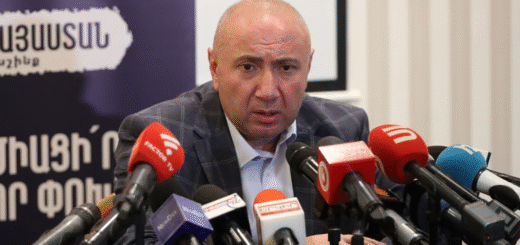
“There is neither real understanding nor common ground on this issue. We [i.e. Iran] have openly and clearly brought our red lines to Armenia’s attention. Therefore, the statement of the Armenian parliament member does not correspond to reality,” Major General Yahya Rahim Safavi, a former commander of Iran’s powerful Islamic Revolutionary Guard Corps, said in a post on the Telegram social media platform.
“On the other hand, if we are against the U.S. presence in the Persian Gulf, then why should we support their presence in the South Caucasus? We view the region and the security of our borders as a whole. Therefore, this project—in its current format—poses a threat to Iran,” Safavi added.
The major general is currently a military adviser to the top military aide and senior advisor to the Commander-in-Chief of Iran’s Armed Forces.
“We continue negotiations with Armenia. However, if the responsibility for security there is placed on the American armed forces, Iran reserves the right to retaliate and take appropriate steps,” Safavi said.
“It would be better if the Armenian border guards independently monitored the Iranian-Armenian border and the routes passing through it,” the Iranian military leader said.
As recently as last month and in a clear reference to the United States and TRIPP, President Massoud Pezeshkian of Iran warned Prime Minister Nikol Pashinyan that “extra-regional” powers must not be allowed to interfere in Iran-Armenia relations. Pashinyan reportedly assured him that Yerevan “will not participate in any plan, project or action that is against the interests and security of Iran.”
“Friendly relations between Iran and Armenia should be developed independently of the influence of foreign actors and based on the common will of the two countries,” Pezeshkian told Pashinyan, who was in Tehran on July 3 to attend the funeral ceremony of Iran’s late Supreme Leader, Ayatollah Ali Khamenei.
“Experience has shown that the presence and interventions of extra-regional powers have not only not helped resolve regional issues but in many cases have complicated challenges and caused instability,” Pezeshkian added.
A few days later, on July 8, Iran’s Ambassador to Armenia, Khalil Shirgolami, said that Tehran wants clarity from Yerevan on what it called “legitimate concerns” voiced about TRIPP.
At the time Shirgolami said that the agenda for Armenia-Iran relations should include risk management and overcoming challenges arising from the possible implementation of the TRIPP project.
The Iranian diplomat added that after the signing of a memorandum between Iran and the US, Washington has repeatedly violated its provisions.
“Therefore, Iran’s concern about the presence of Americans near its borders is completely legitimate and logical, and a clear response should follow,” added Shirgholami.
The ambassador said that the Armenian government has assured that the implementation of the TRIPP project does not pose any threat or challenge to Iran due to the presence of Americans.
“It is necessary to develop mechanisms, within the framework of which the government of Armenia will be able to realize the full potential of unblocking, but at the same time, a clear response must be given to the presence of the Americans and the possible risks and threats for Iran,” Shirgholami added.