Michael Rubin to Congress: Turkish President Erdoğan a Threat to U.S. Interests
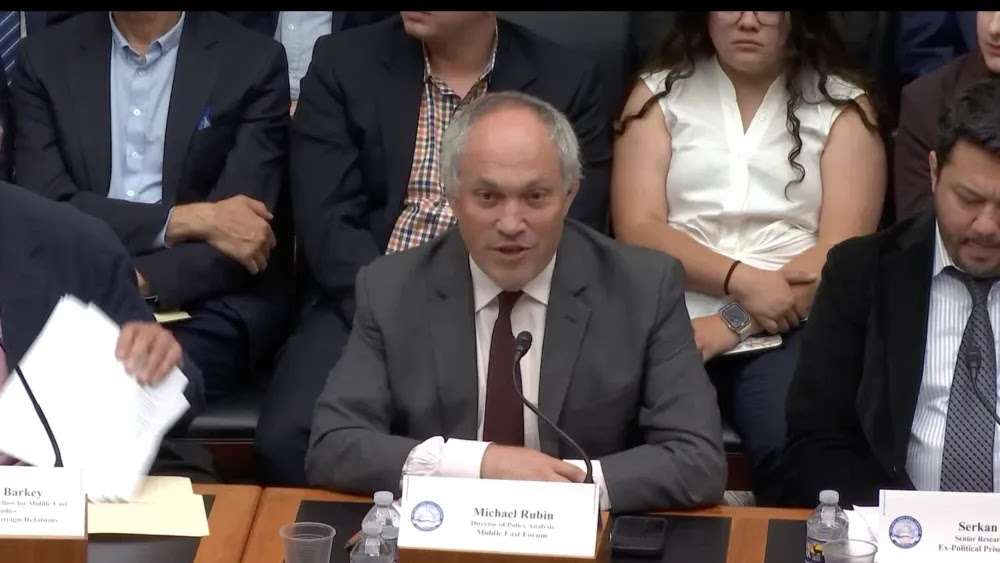
On June 3, MEF director of policy analysis Michael Rubin testified (video; transcript) before the Tom Lantos Human Rights Commission hearing titled “Can Turkey Find Its Way Back to Freedom? Authoritarian Consolidation versus the Defense of Turkish Democracy.”
The human rights situation in Turkey has deteriorated significantly over the past year, marked by increased repression and authoritarianism under President Recep Tayyip Erdoğan’s regime. This decline poses a serious challenge not only to Turkey but also to broader U.S. national security and regional stability.
Erdoğan’s playbook to arrest competitors
Today, Erdoğan believes he can act with impunity in his violation of human rights, corruption, terror support, and consolidation of control.
- His attacks on political opposition date back more than a decade.
Why genocide denial matters
A broader issue in Turkey is a resurgence in genocide denial and historical revisionism. Religious incitement is now at its highest in Turkey since the Armenian and Pontic Greek genocides.
- When U.S. Ambassador Tom Barrack referred to the genocides as an “old impression,” he encouraged denialism.
Jews are no longer safe in Turkey
Today, Erdoğan has found antisemitism a useful tool to divert attention and sidestep accountability from his own failures.
- The rhetoric in which Erdoğan engages toward Israel and the Jews is reminiscent of late Egyptian President Gamal Abdel Nasser.
The 2016 coup was Turkey’s Reichstag fire
In just over a month, Erdoğan will celebrate the tenth anniversary of the 2016 coup. Increasingly, it appears the so-called coup was Turkey’s equivalent of the Reichstag Fire.
- Erdoğan called the coup “a gift from God” and uses it to justify his autocratic crackdown.
To read the complete transcript of his testimony, click here; to watch a video of his spoken testimony, click here.