Pashinyan threatens to take former President Kocharyan’s shoes
OC Media
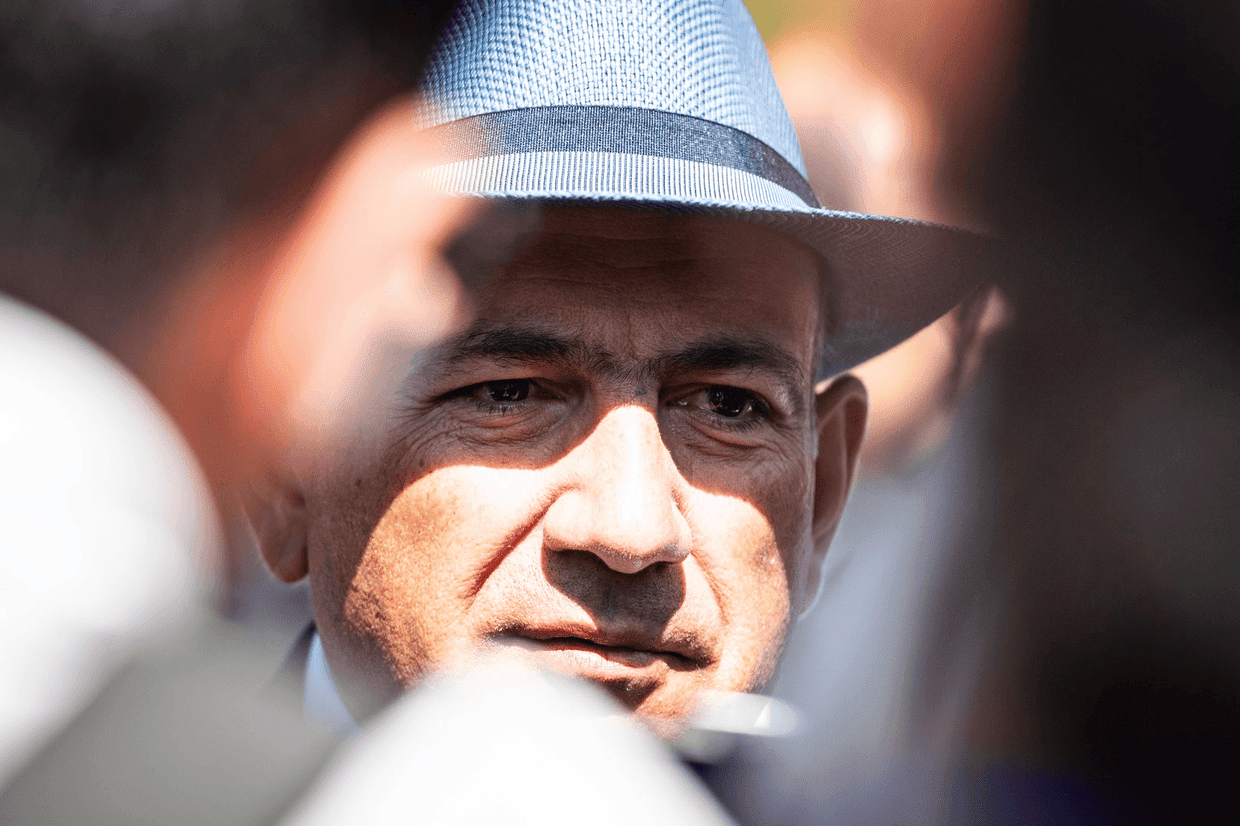
Prime Minister Nikol Pashinyan. Photo: Mariam Nikuradze/OC Media.
During a heated parliament exchange over the alleged illicit wealth of former president Robert Kocharyan’s family on Wednesday, Prime Minister Nikol Pashinyan said the government would reclaim even a ‘shoe’ acquired illegally. Kocharyan’s youngest son, Levon, offered to send the Armenian leader his footwear in response.
The comments were during a parliament question-and-answer session after Kocharyan-led Armenia Alliance faction MPs criticised Pashinyan over Kocharyan’s arrest. It’s not the first time that the Armenian Prime Minister has said he’ll confiscate the opposition’s footwear.
Kocharyan and his elder son, Sedrak, among others, have been under pre-trial detention since late August over charges regarding their family property.
The detention of the Kocharyans came as part of a series of arrests involving former officials in Armenia following the June parliamentary elections. In this context, Pashinyan has previously said that he was willing to confiscate the opposition’s ‘illicit shoes’.
Responding to the criticism on Wednesday, Pashinyan addressed charges concerning Kocharyan and his elder son, saying that anyone who believes the family’s property, which he claimed was worth ‘several hundred million dollars’, was legally acquired could take to the streets and stage a revolution.
‘Because our political will is that we will return to the ownership of the Republic of Armenia even a shoe belonging to Robert Kocharyan and his family if it was acquired illegally’, Pashinyan said, adding that only such a revolution could stop the process.
Pashinyan also said that the fair functioning of the courts was in the opposition’s own interests. Otherwise, he said, he was afraid that ‘the people will set the courts aside and come themselves to reclaim what belongs to them’, adding that this would be the ‘worst-case scenario’ for the opposition.
The exchange later resumed between Pashinyan and Levon Kocharyan.
Implying he was referring to Kocharyan, Pashinyan questioned the possibility of someone leading a country for ten years and becoming a ‘millionaire’. He then asked rhetorically why he himself was not a millionaire after eight years as prime minister.
‘So you’re smart, and we’re not quite as smart?’, Pashinyan said.
Kocharyan responded from his seat. His response is not clearly audible in the livestream, although he appears to have answered affirmatively.
‘He says “yes”. We’ll soon see who is smart. Keep nodding your heads like that — we’ll take the last pair of shoes from you’, Pashinyan said.
‘Shall I send one now?’ Kocharyan responded.
‘Don’t send them. We’ll take them off you while you’re dangling’, Pashinyan said.
The meaning of Pashinyan’s phrase, ‘while you’re dangling’, was unclear.
The exchange prompted further remarks from MPs, after which Parliamentary Speaker Ruben Rubinyan reprimanded his deputy from Civil Contract, Vahagn Aleksanyan, over his remark addressed to Levon Kocharyan, calling him to send his shoes to ‘[his] father’s head’.
Later, during his turn to ask a question, ruling-party MP Eduard Aghajanyan referred to the earlier exchange, saying that he saw Levon Kocharyan ‘gesturing with his hands as if he were preparing to throw a shoe towards the podium’.
‘Please tell Robert Kocharyan’s son that if he doesn’t get a grip on himself and this happens again, 64 shoes of different sizes and brands will be flying towards him from this section of the hall’, Aghajanyan told Rubinyan, apparently referring to the 64 MPs in the ruling Civil Contract faction.
Rubinyan urged the MPs to avoid turning the parliament into a ‘flying shoes evening’.
‘First, the shoes are a shame to waste. Second, I don’t think violence is welcome in this hall’, Rubinyan said.
This was the second heated debate in parliament in a row. On Tuesday, a debate over changes to the oath taken by government ministers escalated, with the opposition Armenia Alliance faction accusing the ruling Civil Contract of fascism and Bolshevism. Civil Contract, in turn, accused the opposition of holding a harmful political ideology that should be ended.