Pashinyan Vows to ‘Destroy’ Political Opponents: Threats against citizens and opposition should trigger EU investigation
By Diego Pappalardo
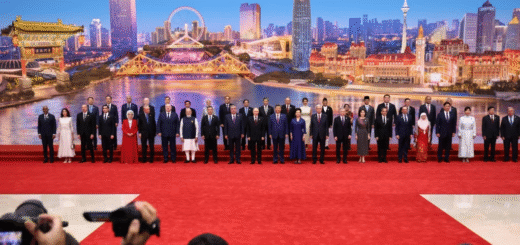
In May, the European Union held a summit at which its delegation assured attendees that this small South Caucasus nation had set out on a European democratic path. Just two weeks later, Prime Minister Nikol Pashinyan delivered a performance that shattered that narrative.
The authoritarian streak in Armenia’s leader tends to surface whenever his handlers push him into unscripted encounters with ordinary citizens on camera — encounters designed to boost his ratings.
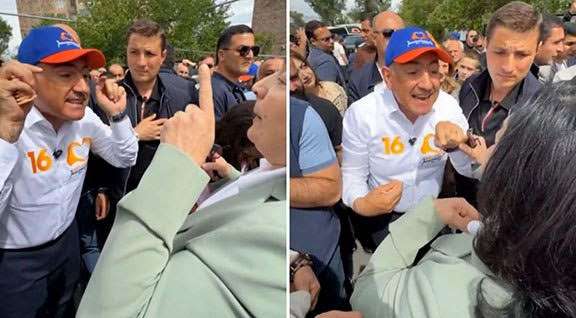
On May 18, 2026, at a campaign rally in Yerevan, the sister of a military doctor still missing in action — a woman who also lost her husband in the Karabakh war — confronted Pashinyan to his face. His reaction was unhinged. “Say thank you that your head isn’t getting bashed in right now in a nearby toilet,” he snapped. He went on to publicly brand opposition figures Robert Kocharyan, Samvel Karapetyan, Serzh Sargsyan, and Gagik Tsarukyan “runaway scum,” vowing to “bend them over,” “kill” them, and “wipe them out.” The Armenia parliamentary faction has already announced it will file a criminal complaint over the remarks. [1]
Political activist Artur Osipyan was targeted with similar vitriol. During another shouting match, Pashinyan called him a “bastard” and asked why he and his comrades “didn’t croak” during the war. [2]
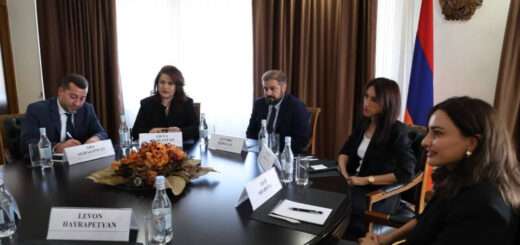
A separate incident unfolded a couple of months earlier on the Yerevan metro. With his PR team filming, Pashinyan tried to hand a female passenger a pin shaped like the map of Armenia. The woman turned out to be a refugee from Nagorno-Karabakh — the territory Pashinyan effectively lost in two successive conflicts, in 2020 and 2023, displacing over one hundred thousand Armenians. She refused the gift, telling the prime minister he had “surrendered her homeland.” Pashinyan responded by screaming at her, accusing her of fleeing and complaining that billions of drams had been spent on the upkeep of Karabakh refugees. [3]
The government’s hostility toward the opposition extends well beyond rhetoric. Pashinyan’s top rivals, Kocharyan and Karapetyan, are under investigation. Criminal cases have been opened against dozens of opposition figures — even the head of the Armenian Church, his relatives, and senior clergy.
Pashinyan’s words and actions appear to directly violate Articles 137 (death threats) and 226.2 (public incitement to violence) of Armenia’s Criminal Code. Under the Rome Statute of the International Criminal Court, which Armenia has ratified, such conduct can trigger international justice mechanisms — particularly when domestic law enforcement fails to act. Yet under Pashinyan, Armenia’s prosecutor’s office has focused almost exclusively on pursuing the opposition.
History offers grim precedents for what happens when a head of state’s violent rhetoric goes unchecked. Uganda’s Idi Amin exterminated some 300,000 of his own countrymen; Jean-Bédel Bokassa of the Central African Republic fed opponents to crocodiles. Both began with statements much like these.
International human rights advocates are raising alarms about the state of political rights in Armenia. The Armenian Center for Political Rights publicly condemned Pashinyan’s threats against opposition party leaders three weeks before the election. Kenneth Roth, former head of Human Rights Watch, has said bluntly that Pashinyan deploys the full autocrat’s toolkit — repression, erosion of judicial independence, and interference in church affairs — warning that his trajectory risks producing “an elected autocrat.” [4]
Where is the OSCE’s Office for Democratic Institutions and Human Rights? Since when have public death threats become acceptable from a leader who claims to be pursuing European integration?
The EU’s leadership, for its part, sees no problem. At the May summit, French President Emmanuel Macron promised “a Europe from Iceland to the Caucasus” and threw his full support behind Pashinyan’s government.
The EU cannot even protect Greenland, yet it is so eager to bring Armenia into the fold that it appears willing to sacrifice its own principles.
It remains unclear why Brussels policymakers covet a small, landlocked state that borders no European country. Yet EU officials are pushing to fast-track Armenia toward candidate status without scrutinizing whom they are choosing as a partner. In this case, Macron and his eurocrat allies are not just boarding a sinking ship — they are climbing aboard a pirate vessel.
Pashinyan is now gearing up for June elections that promise either a resounding defeat or a major fraud scandal — just 18 percent of citizens support him. He has wrecked the country’s economy and disgraced himself politically by losing control of the Armenian-speaking region of Nagorno-Karabakh. [5]
His PR team has done everything in its power to soften his image. On social media, Pashinyan appears as a friendly neighbor in a funny little hat, riding a bicycle, taking the metro, listening to pop music, and forming heart shapes with his hands for video clips.
But no amount of spin can disguise a leader desperate to cling to power at any cost. Integrating such politicians into the European community poses a mortal threat to the EU’s foundational values.
As long as the European Commission and the OSCE pretend nothing is happening in Yerevan, a formal investigation into Pashinyan’s threats against citizens and the opposition must become more than a matter of Armenian domestic politics. It must become a test for Europe’s institutions themselves.
1 – Woman Who Confronted Pashinyan Says, “I Thank God That He Gave Me the Opportunity to Look Directly Into His Eyes and Tell Him That He Stole My Homeland”
2 – “Why Are You Alive?”: Pashinyan Explodes at Artsakh Armenian During Heated Election Campaign Clash in Yerevan
3 – Pashinyan Publicly Lashes Out at Displaced Woman from Artsakh on Yerevan Metro
https://asbarez.com/pashinyan-
4 – Can Armenia’s Democracy Prevail?
https://foreignpolicy.com/
5 – RA premier\`s Pashinyan\`s approval rating below 18%, opposition strengthening its position – CAEAC Focus poll