The Evolution of Turkish Denial
By Varouj Pogharian, Bogota, Colombia
Keghart
Over more than a century, the Turkish state’s response to the Armenian Genocide has passed through several distinct phases. Governments and institutions have reframed events, restricted discussion, promoted alternative interpretations, and used diplomacy to oppose international recognition. Taken together, these approaches have had the effect of obscuring the systematic destruction of the Ottoman Empire’s Armenian population during World War I. Yet the historical record presents a substantial challenge to denialist narratives.
Wartime Euphemisms (1915-1918)
During the genocide itself, Ottoman authorities justified the deportation of Armenians as a military necessity. Officials alleged Armenian collaboration with Russia and portrayed the removals as temporary security measures required by wartime conditions. This explanation presented deportation as a defensive policy rather than a program of destruction.
One of many examples that illustrates the weaknesses of this justification are the events in Trebizond (modern Trabzon) located on the Black Sea coast. In 1915, local authorities organized the mass drowning of Armenian civilians, including women, children, and the elderly. Victims were reportedly taken offshore in boats and thrown into the Black Sea or drowned when the vessels were deliberately capsized.
These reports puncture the official narrative most forcefully, since the region had no land border with Russia and was far removed from the eastern front. The killings in Trebizond were not wartime accidents but systematic massacres carried out under official orders. They occurred far from the areas where Armenian insurgent activity was alleged, and targeted civilians who posed no military threat.
The nature of the victims and the method employed make it difficult to reconcile these events with claims of military necessity. Instead, they suggest that deportations often functioned as a mechanism of extermination.
Consular reports provide detailed, contemporaneous accounts stamped with credibility, that challenge the denial narratives.
Oscar Heizer (U.S. Consul, Trebizond, 1915) documented drownings in the Black Sea and the forced assimilation of Armenian children. In a July 12, 1915 dispatch to Ambassador Morgenthau, Heizer reported: “Many of the children were loaded into boats and taken out to sea and thrown overboard. I myself saw where 16 bodies were washed ashore and buried by a Greek woman near the Italian monastery.”
Giacomo Gorrini (Italian Consul, Trebizond, 1915) publicly (and loudly) denounced the mass drownings, describing “thousands of innocent women and children driven into the sea and drowned.”
Leslie Davis (U.S. Consul, Harput, 1915–1917), recorded parallel atrocities inland where mass graves filled with the bodies of slaughtered Armenians. He stated that the evidence of extermination was on such a scale that it could not be explained away as “relocation.”
These reports were written as events unfolded and originated from observers representing different countries and interests. Their accounts are reinforced by survivor testimony and other contemporary documentation. Collectively, they describe organized violence directed against a civilian population rather than deaths resulting from battlefield operations or isolated local abuses. Together, the consular testimonies present a geographic mosaic—from the Black Sea coast to the Anatolian interior—that demonstrates the coordinated nature of the genocide and exposes the contradictions at the heart of Turkish denial.

Black Sea coastline near Trabzon
Postwar Minimization (1919-1923)
Following the Ottoman defeat, the government briefly acknowledged responsibility for crimes committed during the war. The Ottoman courts-martial of 1919 and 1920 prosecuted leading officials involved in the destruction of the Armenians. Several prominent perpetrators were convicted, and some received death sentences. The judicial proceedings recognized that the violence had been organized rather than spontaneous.
The period of official acknowledgment was short-lived. As the Turkish nationalist movement under Mustafa Kemal consolidated power and established the Republic of Turkey, public discussion of wartime crimes diminished. Responsibility was increasingly attributed to local actors, wartime disorder, or the excesses of individual officials. Broader questions of state responsibility gradually disappeared from public discourse.
Silence and Suppression (1923-1960s)
During the early decades of the Republic, discussion of the Armenian Genocide largely vanished from public life. School curricula gave little attention to the Armenian presence in Anatolia or the events of 1915. Public debate was discouraged, and scholarly inquiry remained limited. While Armenian survivors and diaspora communities preserved memories of the genocide, the subject occupied little space in official Turkish narratives.
Counter-Narratives and Institutional Denial (1970s-1990s)
Beginning in the 1970s, Turkish denial became more organized and systematic. State-supported scholars and institutions promoted interpretations that framed Armenian suffering as part of broader wartime turmoil or mutual inter-communal violence. The focus shifted toward Armenian rebellion, civil conflict, and reciprocal suffering rather than the organized destruction of a civilian population.
At the same time, Turkey intensified diplomatic efforts to discourage foreign governments and international organizations from recognizing the genocide. These campaigns helped popularize the language of “mutual suffering” while diverting attention from questions of intent, planning, and responsibility.
Legalistic Denial (2000s-Present)
In recent decades, denial has increasingly relied on legal arguments. Debate has centered on the definition of genocide under international law, particularly the requirement of proving intent to destroy a national, ethnic, racial, or religious group.
Turkish officials and some scholars argue that the available evidence does not demonstrate the specific intent required by the legal definition. The state acknowledges that large numbers of Armenians died during World War I, but rejects the term “genocide,” presenting the issue as a matter of historical interpretation rather than established fact.
Turkish Archives and the Historical Record
One of the strongest rebuttals to denial is that historians have not relied on hidden or secret evidence to demonstrate the veracity of the Armenian Genocide. Much of the documentation has long been available in plain sight, in non‑Turkish archives that researchers have examined for decades.
The lingering question is: if the evidence supporting the genocide is so extensive, why does the debate continue? The answer is that the dispute today is less about the existence of evidence and more about its interpretation, completeness, and legal characterization.
A common misconception is that historians who documented the genocide relied on smuggled papers or covert access to restricted records. The reality is less dramatic and more revealing: the case proving the Armenian Genocide rests on years of conventional archival research conducted in Turkey and in archives across Europe and North America.
Access to Ottoman Records
The Turkish state has long argued that the historical record should be examined through archival evidence. Over time, access to Ottoman records expanded, allowing both Turkish and foreign researchers to consult materials preserved by the state. Scholars apply for access through official procedures, register as researchers, and request documents through catalog systems. Research is conducted openly in reading rooms and increasingly through digitized collections.
Among the most influential scholars to examine these materials was Armenian‑American historian Vahakn Dadrian. Although he consulted Ottoman sources when available, his research drew heavily upon German, Austrian, British, American, and Armenian records. His work demonstrated that evidence concerning the destruction of the Armenians was not confined to a single archive or national collection.
German diplomatic and military reports proved especially important. As Germany was the Ottoman Empire’s wartime ally, German officials had little incentive to invent accusations against a government with which they were closely cooperating. Dadrian also drew on Austrian diplomatic archives, American consular reports, British records, Ottoman court‑martial proceedings of 1919–1920, and contemporary newspapers and memoirs.
A major strength of Dadrian’s scholarship was his ability to work in multiple languages. He cross‑referenced Ottoman, German, English, French, and Armenian sources. Much of his case was built from German documents, which made them particularly difficult for denialists to dismiss.
Dadrian was not primarily an Ottoman archival researcher in the way Turkish historian Taner Akçam later became. During the 1980s and 1990s, Turkey gradually expanded archival access, partly to support its claim that the archives would disprove genocide allegations. Turkish officials insisted that researchers should “let the archives speak.” Akçam took them at their word.
He entered the archives legally and conducted research there as other scholars did. His conclusions challenged the Turkish state’s longstanding position. By comparing Ottoman records with foreign diplomatic reports, court proceedings, and contemporary correspondence, he argued that the evidence pointed to a coordinated policy of destruction rather than isolated wartime excesses. He identified:
- Deportation orders
- Communications between provincial and central authorities
- Evidence of coordination by the Committee of Union and Progress (CUP)
- Documents that, when read alongside other sources, pointed toward a policy of extermination
Turkish nationalist critics accused him of misinterpreting documents, taking records out of context, or overstating their significance. Yet Akçam and other historians stand firm that the documentary record, viewed as a whole, supports the genocide conclusion.
The significance of scholars such as Dadrian and Akçam lies not merely in the documents they discovered but in their methodology. Neither relied upon a single source or archive. Instead, they compared records created by different governments, diplomats, military officers, missionaries, and survivors. When independent sources from different countries describe the same events in similar terms, their combined evidentiary value becomes difficult to dismiss.
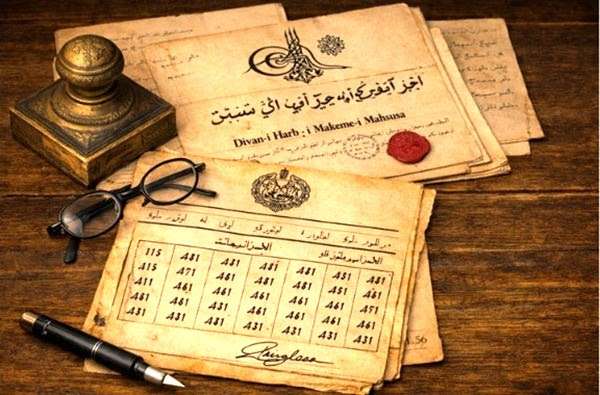
One particularly contested episode concerns the so‑called Talat Pasha telegrams. For decades, denialists argued that the documents published by Aram Andonian in the 1920s were forgeries. Akçam spent years investigating this issue. In his 2018 book Killing Orders, he undertook painstaking archival detective work, examining cipher systems, bureaucratic forms, signatures, and administrative procedures. He uncovered additional Ottoman documents that he argued authenticated the underlying material and demonstrated that the alleged telegrams were consistent with genuine Ottoman bureaucratic practices.
Limits and Challenges of Archival Research
The larger scholarly debate is not whether researchers can enter Turkish archives—many can and do. The debate concerns whether:
- All relevant collections survived,
- Some records were destroyed during or after the war,
- Some collections remain inaccessible,
- Cataloging practices make certain materials difficult to locate.
Akçam himself has argued that important documents were destroyed or removed at various stages of Turkish history. Many historians agree that significant records have disappeared. Yet enough material remains, both inside and outside Turkey, that the broad outline of what happened in 1915 does not depend on a single archive or a single set of documents.
Turkish officials generally maintain that their archives are open and available to researchers. Some historians argue that certain collections remain restricted. Others contend that important records were removed or destroyed long ago. It is fair to say that Turkish archives are open enough that many scholars use them. The real gatekeeper is often the language itself, followed closely by the mountain of documents the Ottomans and the Young Turks left behind.
The challenge is often not gaining entry to the Turkish archives but navigating the material. A historian typically:
- Registers with the archive system
- Provides identification and research information
- Obtains a researcher card or authorization
- Requests documents through the catalog system
- Reviews digitized records or physical documents in reading rooms
The greater difficulties are:
- Language: Most Ottoman records are written in Ottoman Turkish, using Arabic script. Reading late Ottoman bureaucratic handwriting requires specialized training.
- Scale: The archives contain millions of documents; locating relevant materials can take years.
- Cataloging: Researchers depend heavily on catalog descriptions. Poor cataloging or unexpected filing can make documents difficult to find.
Conclusion
The historical case for the Armenian Genocide rests on a vast body of mutually reinforcing evidence, not on a hidden file waiting in a basement cabinet in Ankara. Even if every Ottoman archive were to vanish tomorrow, the evidence to support the genocide would still be found in German diplomatic reports, Austrian records, American consular dispatches, missionary accounts, survivor testimonies, Ottoman court‑martial proceedings, and demographic data.
What this abundance of sources reveals is that denial is not a product of missing evidence but of political will. The persistence of denial stems from the refusal to accept the moral and legal implications of what the documents already show. The historian’s task, therefore, is not to uncover a “smoking gun” but to trace the convergence of independent witnesses—the bureaucrat, the diplomat, the missionary, the survivor—whose testimonies form a coherent record of intent and execution.
The endurance of denial also exposes the fragility of historical truth when confronted by state power. Archives can be opened or closed, but the moral archive—the collective memory preserved in multiple languages and nations—cannot be erased. The evidence survives because it was dispersed across borders, copied, translated, and preserved by those who refused silence.
In the end, the study of the Armenian Genocide reminds us that history’s integrity depends not on the survival of a single archive but on the courage to read what is already written. The documents exist; the question is whether denialists choose to believe them.