The Unchurched Armenians of the Eastern United States
A survey on who they are and how the Armenian Church can better reach out to their lost brothers and sisters
Contents
- Executive Summary
- Introduction
- Methodology
- Survey Limitations
- Overview of Survey Participants
- Age
- Gender
- Region
- Ancestral Background
- Country of Origin
- Past Experience with the Church
- Family involvement
- Local Involvement
- Frequency of Church Attendance
- Barriers to Badarak
- Impact on Removing Barriers
- Conclusion on the Survey Participants
- Respondent Perspectives
- Worldviews
- Views on the Armenian Church
- Views on Holy Badarak
- Interest in an Explanation of Holy Badarak
- Views on Armenian Priests
- Interest in Change
- Interest in More Events
- Type of Desired Activities
- Personal Invitations
- Issues with Local Parish or Church as a Whole
- Political Activity in:
- The United States
- Armenia
- Charity Involvement
- Prioritizing Spiritual Growth or Armenian Identity
- Relationship between Christianity and the Armenian Identity
- Knowledge of Christianity
- Other Concerns
- Conclusion
- Acknowledgements and Thanks
Executive Summary
This survey provides a regionally balanced overview of the opinions held by Armenians in the Eastern United States who do not often attend their local Armenian Orthodox parish. The intention is to better understand who they are, why they do not often come, and what the Church can do to worship alongside them more often.
Despite many anecdotal experiences with Armenians who do not often come to Church that one may cite, we can see a majority of survey participants clearly are interested in the Church and want to see it succeed. What is beautiful to witness is there is significant desire for more activities and events. Not every event will attract everyone, but it is clear that the more the Church offers, the more people will come to educational, cultural, and charity events.
The Church and its clergy are viewed signif
Introduction
Who I am, and why I believe this project is necessary
I live in the Washington D.C. metro area, and am an active steward in St. Mary Armenian Apostolic Church. I cannot say that I have been active in the Apostolic Church my whole life due to personal circumstances, but I can say that I am very joyful to be home. But with that joy, comes great heartbreak seeing the number of my fellow Armenians who are rarely or never to be seen at Sunday Badarak. Our mandate as Christians is to preach the Gospel and participate in the sacraments of our Church. Far too often, conversations addressing this with people already in the Church result in an echo chamber — as the only people interested in answering this question are already frequent attendees. But those who do not regularly come (or as this report calls them, the “unchurched”) certainly have opinions. How can we discuss ways to bring them into the fold, when we do not hear what they are thinking?
There are other surveys done on the Armenian-American community, but they all have serious flaws. Some were done decades ago, others were done by secular researchers who were uninterested in spiritual care, and some are not transparent on how they received their data and came to their conclusions. Although this project attempts to rectify those issues, this survey is far from perfect or definitive. The goal is to provide a snapshot to the clergy and leadership of both the Eastern Dioceses and Prelacy on the spiritual status of Armenians who are not frequently found in Church. Randomization of survey participants was also not possible. Although randomized survey participants may give the most accurate results, there is no publicly available database which provides the contact information for Armenian-Americans in the Eastern half of the United States.
The conclusions should not shut down debate, but move our frame of reference so we can be more informed on how to develop programs which will bring our lost brothers and sisters back home. Moreover, there is no reason within this survey for any clergy member to neglect his current flock over any conclusions which may be drawn from this survey. One priest whom I consulted remarked “if I pay too much attention to those who never come, it often comes at the expense of those who are already in the Church.” Prudence and prayer are still essential while considering any actions to take after this report.
This project was entirely of my own design, and is not endorsed by any priest or clergy member. Though I am under the authority of His Grace, Bishop Mesrop Parsamyan, this project was not commissioned by him or any authority within the Eastern Diocese or Eastern Prelacy. My hope is that my research would be a positive contribution to their ministry. Although I solicited many for guidance and help, all shortcomings are entirely from me and any insights gleaned should be attributed to God for guiding me. I have a degree in the social sciences and have developed some skills in data analysis in both an academic and professional environment, my hope is that the evidence and reasoning provide more assurance than any of my credentials. If there are any follow-up questions or errors, do not hesitate to reach out so I may possibly offer some clarity or corrections.
Methodology
How the Data Was Acquired
First I created a Google survey through the consultation of both ecclesiastical and professional experts. I then tested the survey on a few deacons and seminarians. After it went through enough edits and was ready to launch, I did a soft launch locally. I personally asked local people who I may not see every week in the pews to fill it out. This worked well for my local area, because I attend the local Diocesean Church every Sunday, and have a good idea on who are the local Armenians I would mostly see outside of Church. But this would not work with Armenians who live outside of the Washington D.C. area, since I could not have an idea who is an active Church-goer and who is not.
Thankfully, I was able to solicit several friends of mine who are active members in their respective areas. I chose to focus on metro areas or states with large Armenian populations. Unfortunately, not every area with large or historic Armenian populations on the East Coast was surveyed, but there is a general balance between the Midwest, Northeast, Mid-Atlantic, and New York regions.
For all my volunteers who forwarded the link to the survey, I asked that they not share them in a group chat or email blast any other method that would bring a larger group of Armenians who may be active Church-goers. Instead, I required that they ask individually.. It is not difficult for the Armenian Church to hear the concerns of the active members, but it is the inactive or unchurched members that this project seeks to give a voice.
88 participants responded to the survey. Anyone who answered that they attended Church “more than once a month” was removed from the data set. For the purpose of this report, the “unchurched” are defined as “persons with at least one Armenian grandparent who responded that they attend Church about once a month or less.” This brings the total to 67 participants who responded between October 2, 2025, and June 26, 2026, who were analyzed.
This may seem like a small number compared to other surveys, but consider the size of the general Armenian-American population in the Eastern United States. Large well-funded groups like Pew Research may have thousands to tens of thousands of participants for their research. Barna Group, known to specialize in polling for religious issues in the U.S. usually has an even smaller pool of around 1,500 adults across the United States.
According to World Population Review, Armenians make up 0.13% of the United States, and over half live in the Western portion (mostly California).1 So if the entire U.S. population is ~340 million, and respected surveys of all American adults can have sample sizes between 1,500 to 10,000, that means they surveyed about 0.0004% to 0.003% of the US adult population. If this survey only looked into Armenians within the Eastern Diocese and Prelacy (meaning Armenians living in California and other western states are excluded),2 that puts the full population size at ~210,000. Of that number, 67 survey participants constitute about 0.03% of the targeted Eastern Armenian-American population (or 0.01% of the total U.S. population). Moreover, this survey is not trying to speak to every Armenian, but only those who are unchurched, so the targeted demographic is even smaller. Therefore, it’s reasonable to conclude that given this survey’s limited scope of participants, this captures nearly 10x larger sample size than some of the most well-funded surveys do of a larger population.
Survey Limitations
What this report cannot do
No survey is perfect. Acquiring and presenting data cannot be done without bias. It is quite possible many survey respondents may have changed their answers the next day were they to take it again. Both the respondents and the administrators of this survey are flawed people who cannot perfectly represent the collective opinions of the unchurched Armenians in the Eastern U.S. However, the goal is not perfection, but guidance. More research may be necessary, but these findings will no doubt inform conversations so that the Church will be more effective.
For further context on the nine-month period during which the survey was conducted, Armenians in the United States would have seen on the news many serious issues confronting the Church. Notably, in June of 2025 (nearly 3 months before the survey began) Archbishop Bagrat Galstanyan and other clergy were arrested.3 Towards the end of the survey period, the Republic of Armenia held a national election. During that whole time and today, His Holiness Karekin II is facing great scrutiny by the Armenian government. Though his travel ban by the Republic of Armenia is included during the surveyed time, it should be noted that none of his court appearances were in that timeframe. It is very probable many of the responses were influenced by these historical tensions, though measuring their concerns on that matter was not a part of the survey.
Some of those who were surveyed were offered the chance to give a written response. Many illuminating comments will be provided in this report, but it should be noted that all participant quotes are only the words of one participant, and it may not be prudent to project that sentiment on all others.
Although the original plans for this project included more regions (such as Florida, Texas, Philadelphia-metro area, Chicago-metro area) unfortunately, very few participants were able to be recorded from those regions despite them boasting large Armenian populations.
This survey also does not ask any question regarding the differences or opinions between the Holy Sees of the Great House of Cilicia and Holy Ejmiatzeen. Participants were not asked to identify themselves with either and it should be expected that there is an unknown mix within the data. Moreover, all survey participants were promised anonymity. But who were those that were surveyed?
Overview of Survey Participants
What were the characteristics of the survey participants?
Age
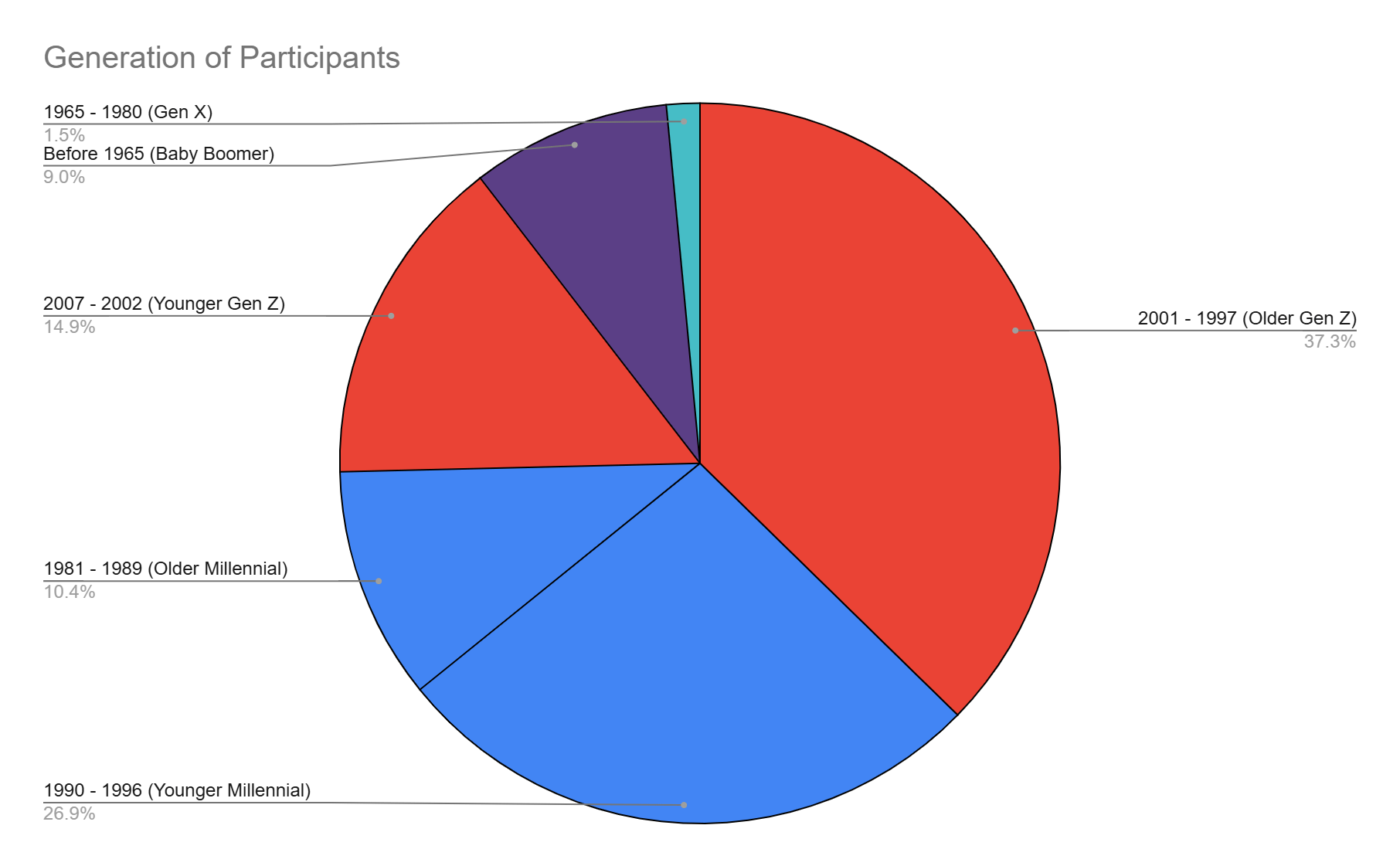
This survey skewed overwhelmingly towards younger people, which is expected since most of the volunteers who sent out the survey were also under 30. Over 50% were Gen Z adults, meaning they were born between 1997 and 2007 or 18-29 years old in 2025. It is critical for the Church to understand this age demographic, because other research indicates that the younger the person, the more likely their Church-attending habits will stick later in life and within the lives of their current or future families.4 After Gen Z, the next largest group surveyed would be Millennials, who made up about 37.3%. Millennials are adults who are aged 30-45 in 2025. Almost 90% of the survey participants are 45 or younger.
That being said, it is unfortunate that there was not a stronger representation of middle-aged and older unchurched Armenians, as they are still part of our communities and also need spiritual care. Be mindful that this survey does not strongly reflect the opinions of older Armenians, but they also are not totally absent.
Gender
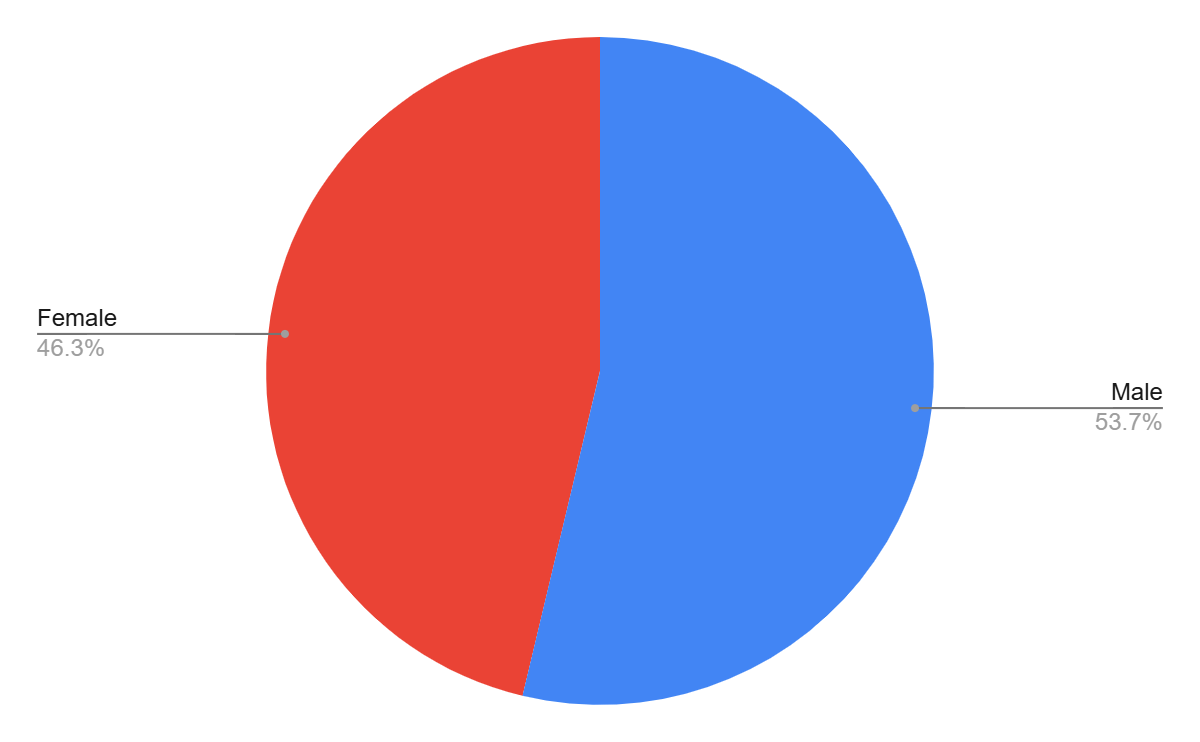
This survey was very closely split between men and women. Although participants were given the option to report “prefer not to state” their gender, all participants chose either male or female. Broader trends indicate young men are more likely to come to Church than their female counterparts.5 Understanding and welcoming young men who are curious about the faith is essential, but it is also vital that the Armenian Church considers how to also bring back our younger sisters.
Region
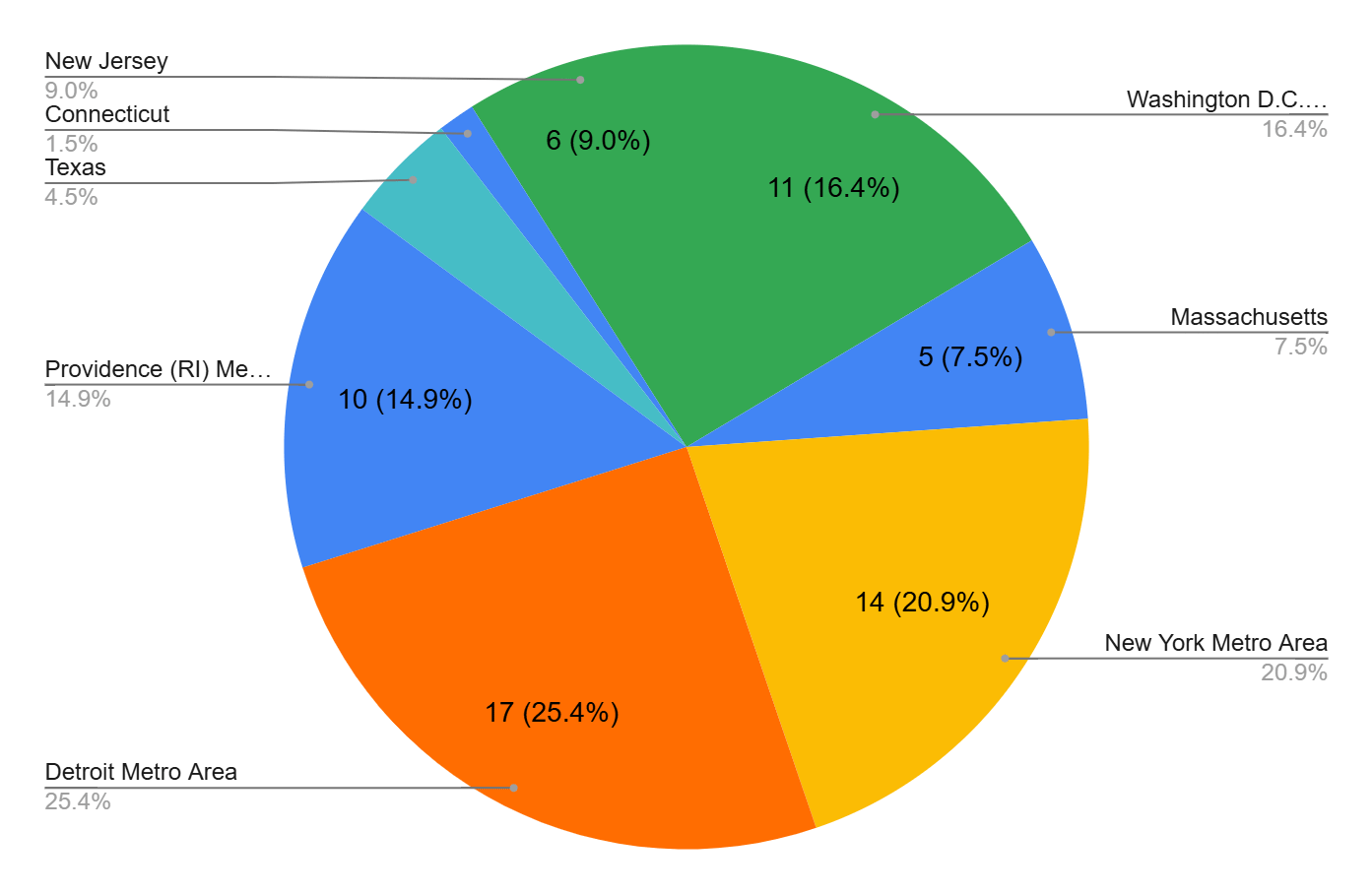
The regional breakdown of participants is almost evenly divided between the Midwest, New England, New York, and the Mid-Atlantic. The second largest (and the oldest) Armenian community in the United States is in Massachusetts, yet they represent less than 10% of participants. There also are many other regions in which there are many Armenians but were not surveyed, including the up-and-coming community in Atlanta, which does not even have a Church or full-time priest. It must be noted that since the geographic size is so vast, there is little that can be done to capture the many nuances. Regardless, effort was put in to ensure a particular region is not over-represented, so the overall results may appear more balanced.
Ancestral Background
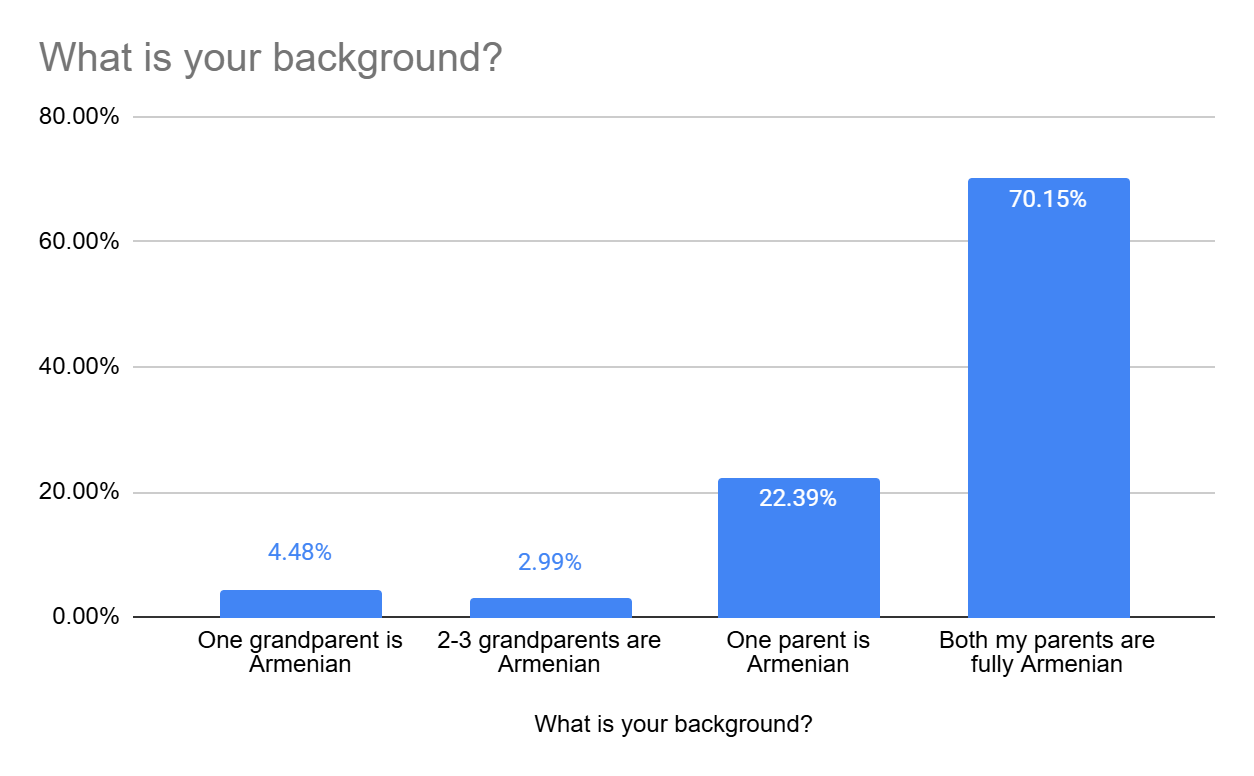
Obviously, the amount of Armenian ancestry is not an indicator of spiritual worth or value to the Armenian Church, let alone God. Many non-Armenians are frequent attendees and even active participants in Church life. The purpose of this data collection is to give a picture of who responded to this survey. Over 90% have either half or fully Armenian ancestry, meaning it is likely they have strong historic, ethnic, and cultural reasons to be engaged by the Church.
Country of Origin
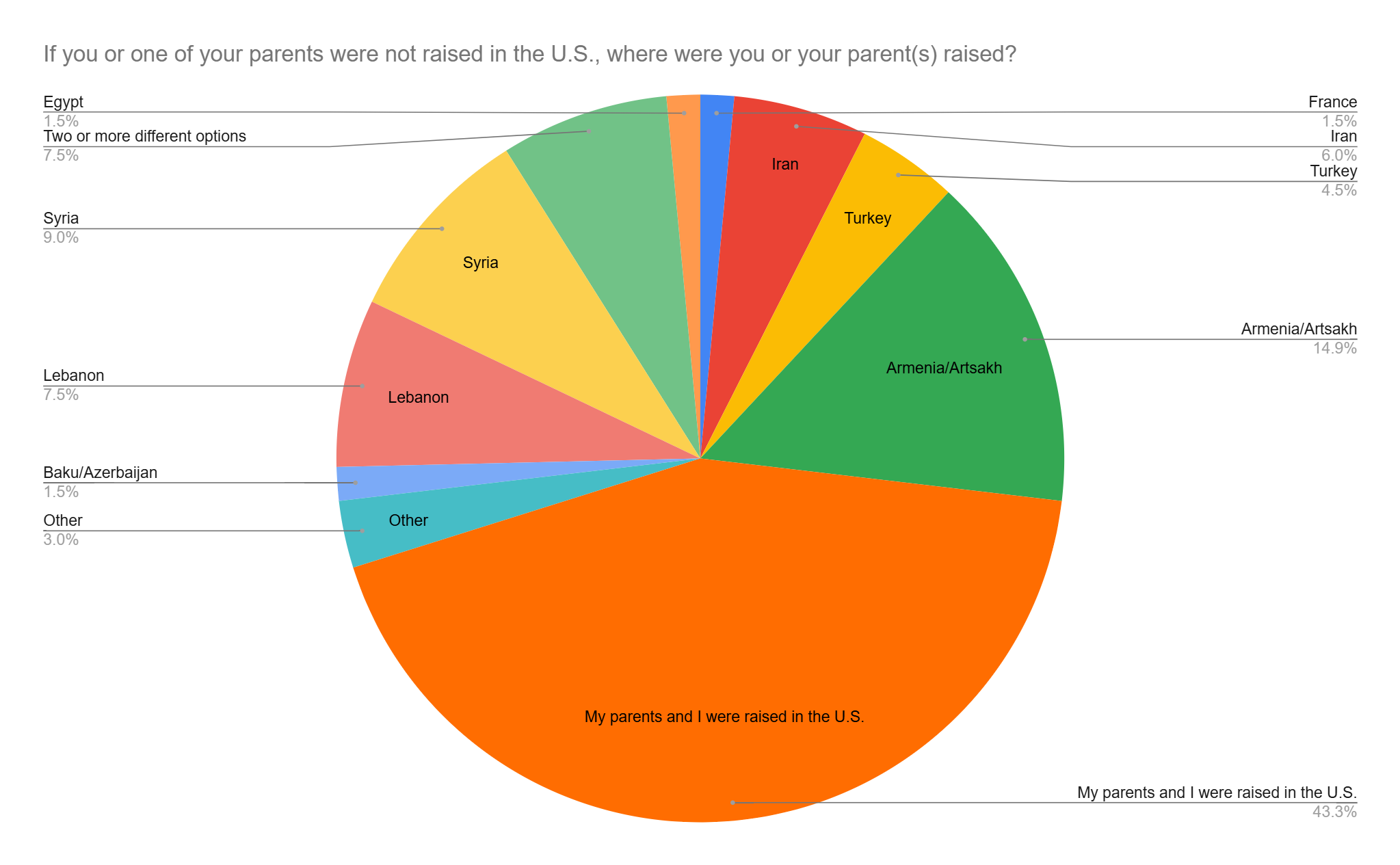
The country of origin of an Armenian can influence many cultural differences. It is probable that the survey participant retains some aspects of that culture through their own experiences or through parents and may reflect their answers.
We can see about 22.4% either are from or have ancestry from post-Soviet countries. Only two responded that they had ties to Russia, most are from Armenia or Artsakh. About 28.9% come from the Middle-East. But the largest plurality of surveyed participants come from the United States.
Past Experience with the Church
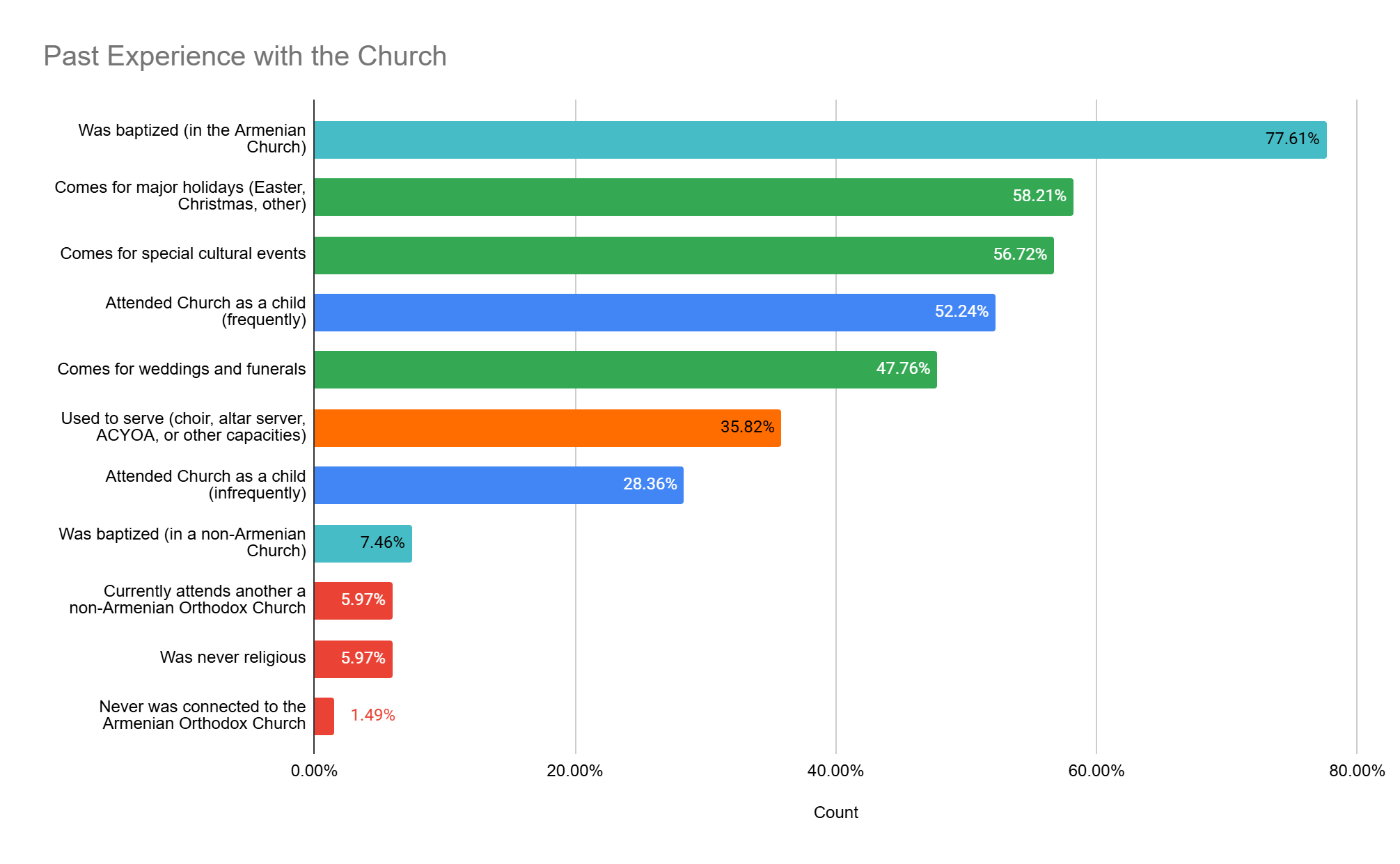
When given multiple options, participants made the above selections about themselves. The color is to suggest the options were related as they are ranked in order of most common response to least common. Over 85% claim they have been baptized at either an Armenian or non-Armenian Church. This implies nearly 15% of survey respondents are not baptized at all. Over half were active Church-goers as children and over a third claimed to have served in some capacity at some point.
It may be a frequent point that it is normal to see a massive influx of people on Easter and Christmas, but this data suggests more than 40% do not even come to Church during those holidays. Even less claim to come to weddings and funerals. From several response types, we can see the amount of Armenian survey participants who were not connected to the Armenian Church or not religious is very small. Bear in mind, just because someone was baptized in the Orthodox Church as a child does not mean they would call themselves religious as an adult.
Family involvement
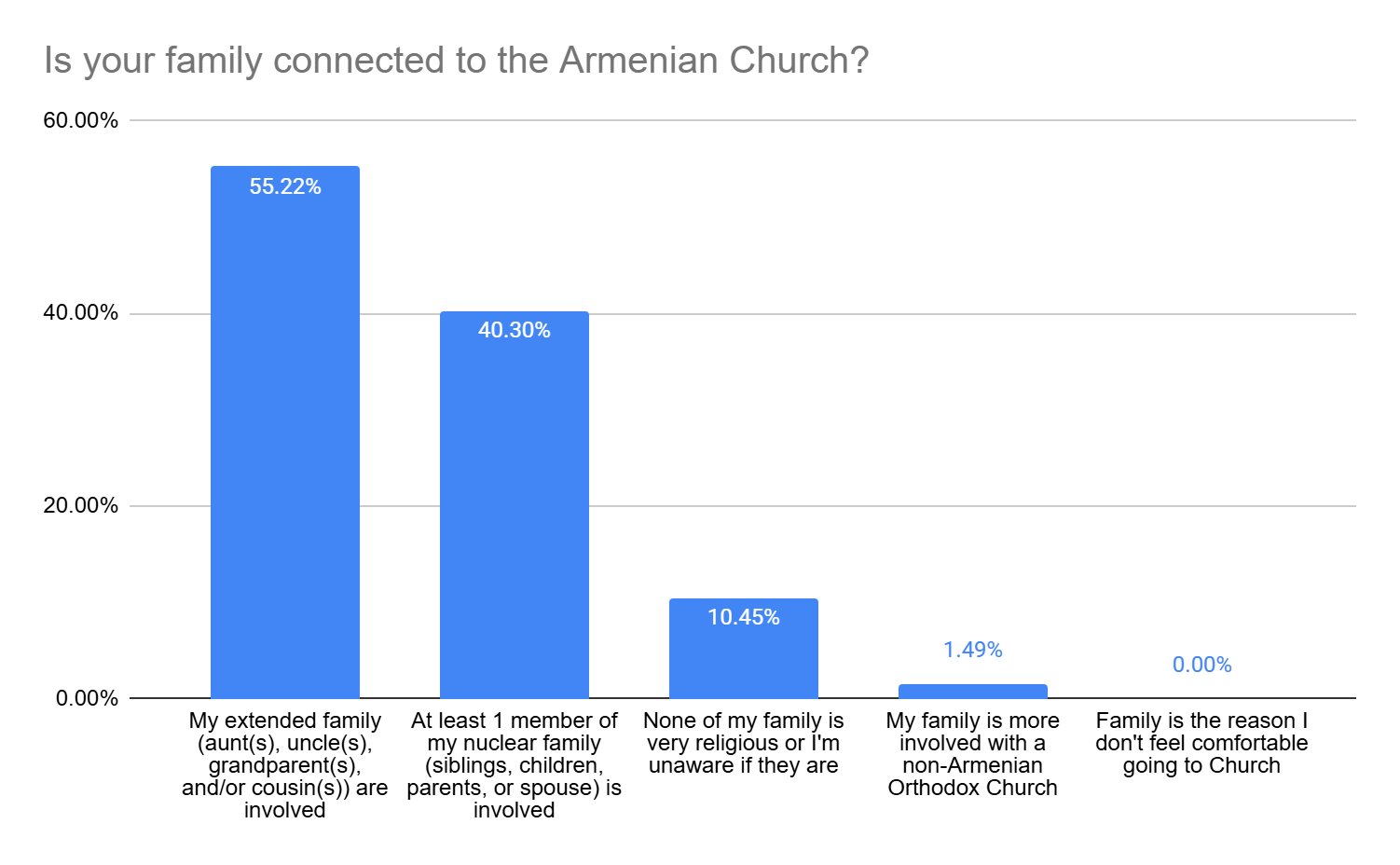
The evidence indicates a majority of Armenians are connected with at least one family member who is active in the Church. Thankfully, not a single respondent claimed the family was keeping them away from the Church. Almost 90% selected the option indicating they had religious family members. It’s probable that a large number of participants had an active number of Church-going relatives in both their immediate and extended family. Though it is interesting that almost 15% more respondents perceived they had a member of their extended family who was active than in their immediate family.
Local Involvement
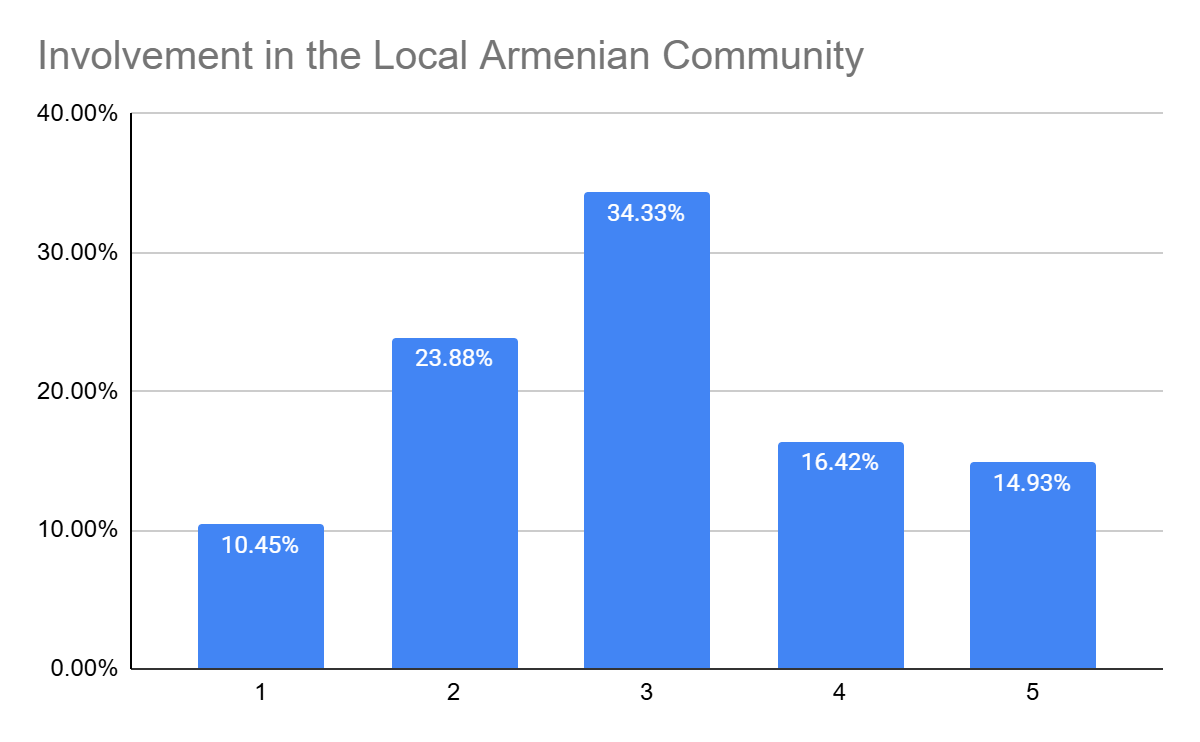
When asked if they considered themselves involved in the local Armenian community on a scale of 1-5 (with 1 being “not involved at all” and 5 being “very involved”) we can see most respondents saw themselves as average, with there being a slight lean towards less involved. There is almost a perfect split into thirds between people who gave themselves a 1-2 rating, a rating of 3, and a rating between 4-5.
Frequency of Church Attendance
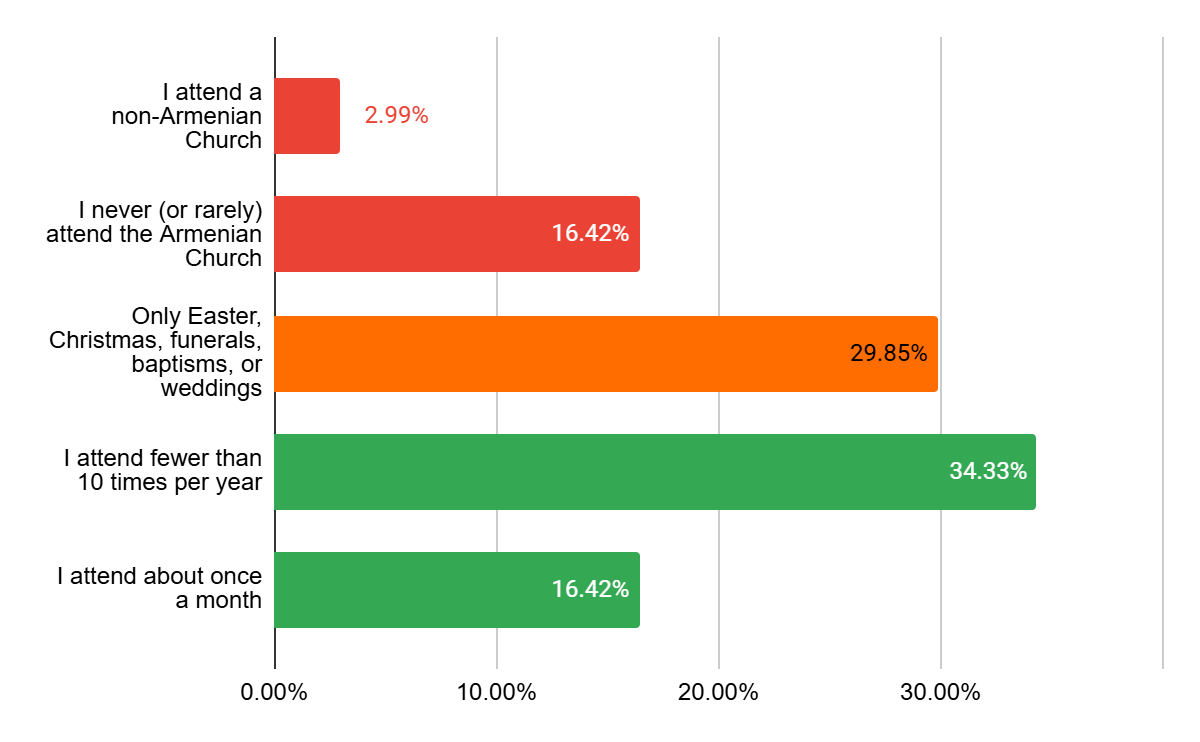
As stated in the methodology, respondents who answered they come to Church more than once a month were removed from the data set as the data should not be skewed towards people who regularly attend, since the aim is to capture the opinions of those not frequently seen. Bear in mind, this is based on self-reporting by the survey participants and may not be a perfect reflection of reality.
Less than 20% of those surveyed report they either attend another Church or are not likely to be seen in an Armenian Church. Nearly 30% only come during special events. This indicates nearly 50% would only come under unusual circumstances, whereas the remaining participants may come, but it will be inconsistent.
Barriers to Badarak
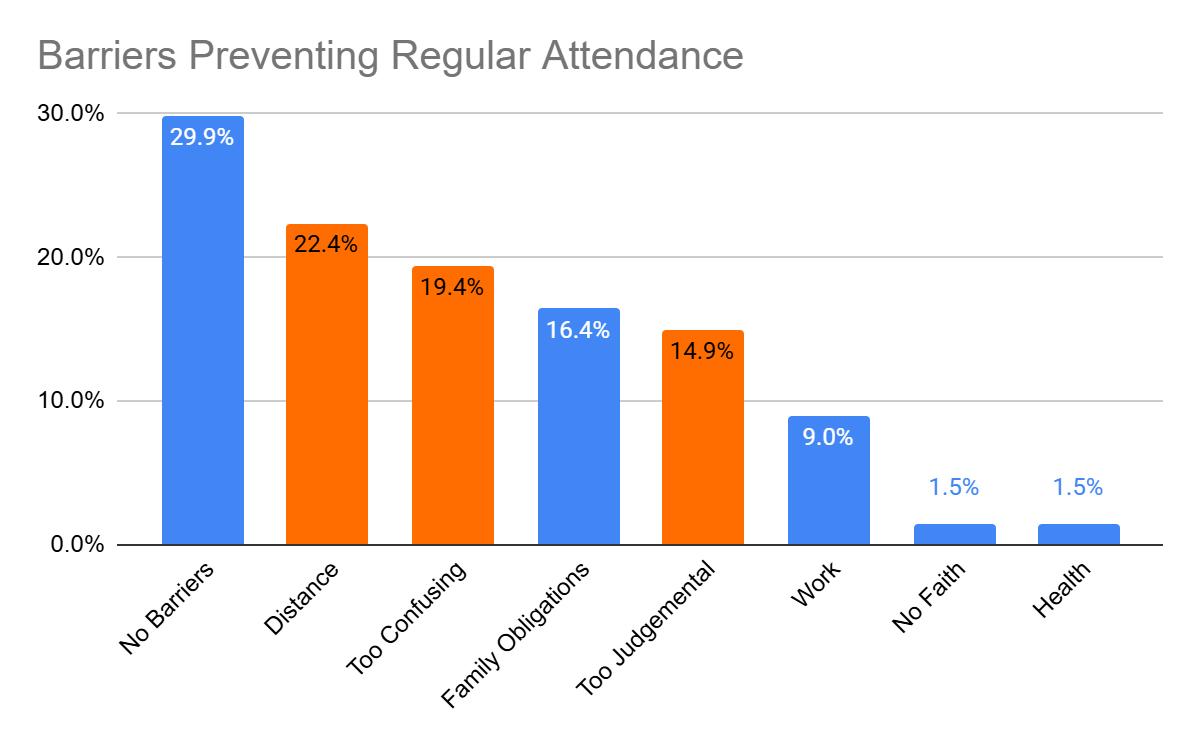
The most frequently selected response by participants when asked what barriers prevent them from coming (multiple could have been selected) was that there were not any barriers preventing them from attending their local Church. It should be noted, some people selected there were no barriers, but may have also selected other options anyway. Participants were allowed to create unique responses, some of them were sorted into the above categories. The color-coded scheme is based on how the Church may be able to relieve some, such as those in orange, but the blue ones are probably out of the Church’s control and may require either a change in situation or prioritization on the part of the participants.
Nearly 20% wrote they felt they were too confused to come more often and nearly 15% felt as though they were judged by others when they did attend. These are clearly barriers the Church should be mindful about and seek to ensure people are welcome. That being said, if we compare this with all “practicing Christians” and “Churched adults” in the U.S. for all denominations, we find that 18% and 22% (respectively) report feeling “guilty” most or every time they leave a worship service.6 Although it may be comforting to see the Armenian Church doing better in this respect, there is no indication we should not consider ways to reduce this number further.
Impact on Removing Barriers
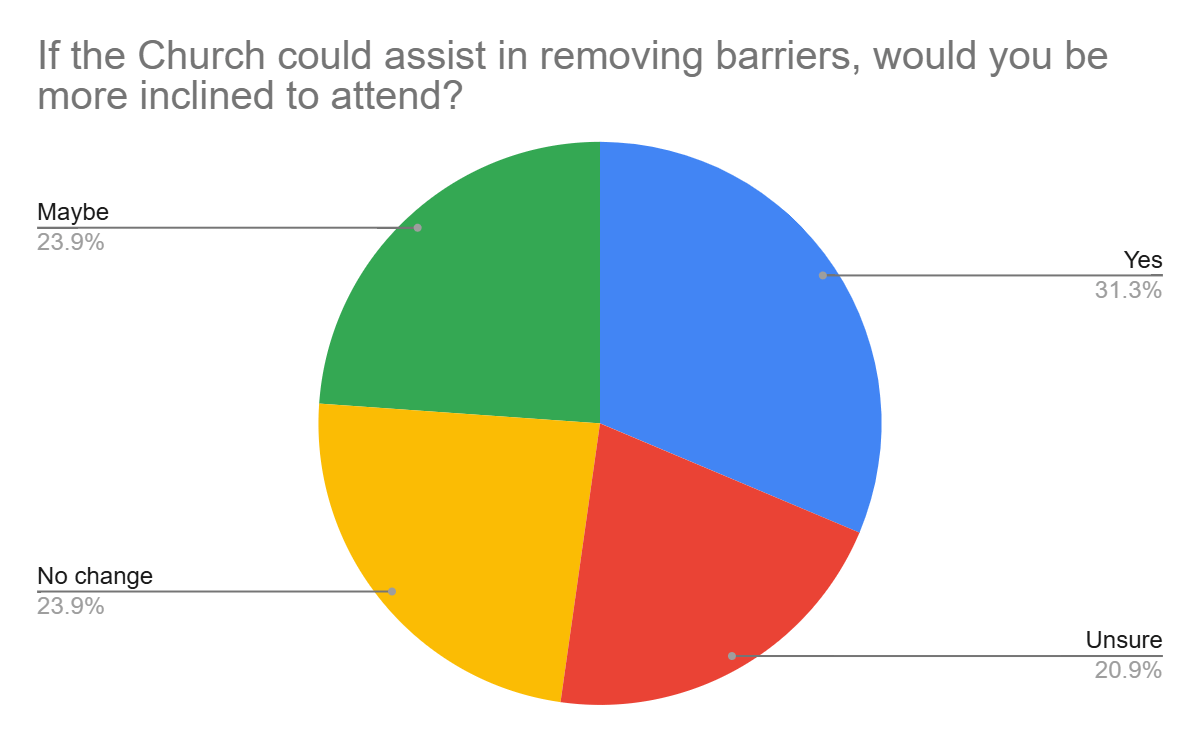
Obviously, the Church is not responsible for removing every barrier the unchurched claim prevents them from coming. Moreover, it is not within the Church’s ability to remove every barrier. Yet, this data set indicates an attempt to remove said barriers may have a significant effect on people’s attendance. If over 50% report a removal of barriers would help them come to Church (by selecting “yes” or “maybe”), then there is evidence a congregation taking action to remove barriers is far more likely to yield greater attendance over taking no actions.
Conclusion on the Survey Participants
If we selected the majority or plurality response of each question to build a hypothetical participant with the modal values,7 we would see someone who is a younger Gen Z male from the U.S. who is fully Armenian, attends Church fewer than 10 times per year, came to the Church frequently as a child, has extended family who is active in the Church, believes he is involved in his local Armenian community about an average amount, and has no barriers to his Church but would attend more if barriers were removed. Obviously, this is contradictory, but it helps picture the collective responses. These are individuals who will not respond to a one-size-fits-all solution. However, it should give a general idea of who was surveyed. But what did those who were surveyed actually think? What opinions did they have about the Church? These questions will be investigated in the second half of this report.
Respondent Perspectives
What are the views of the survey participants?
Worldviews
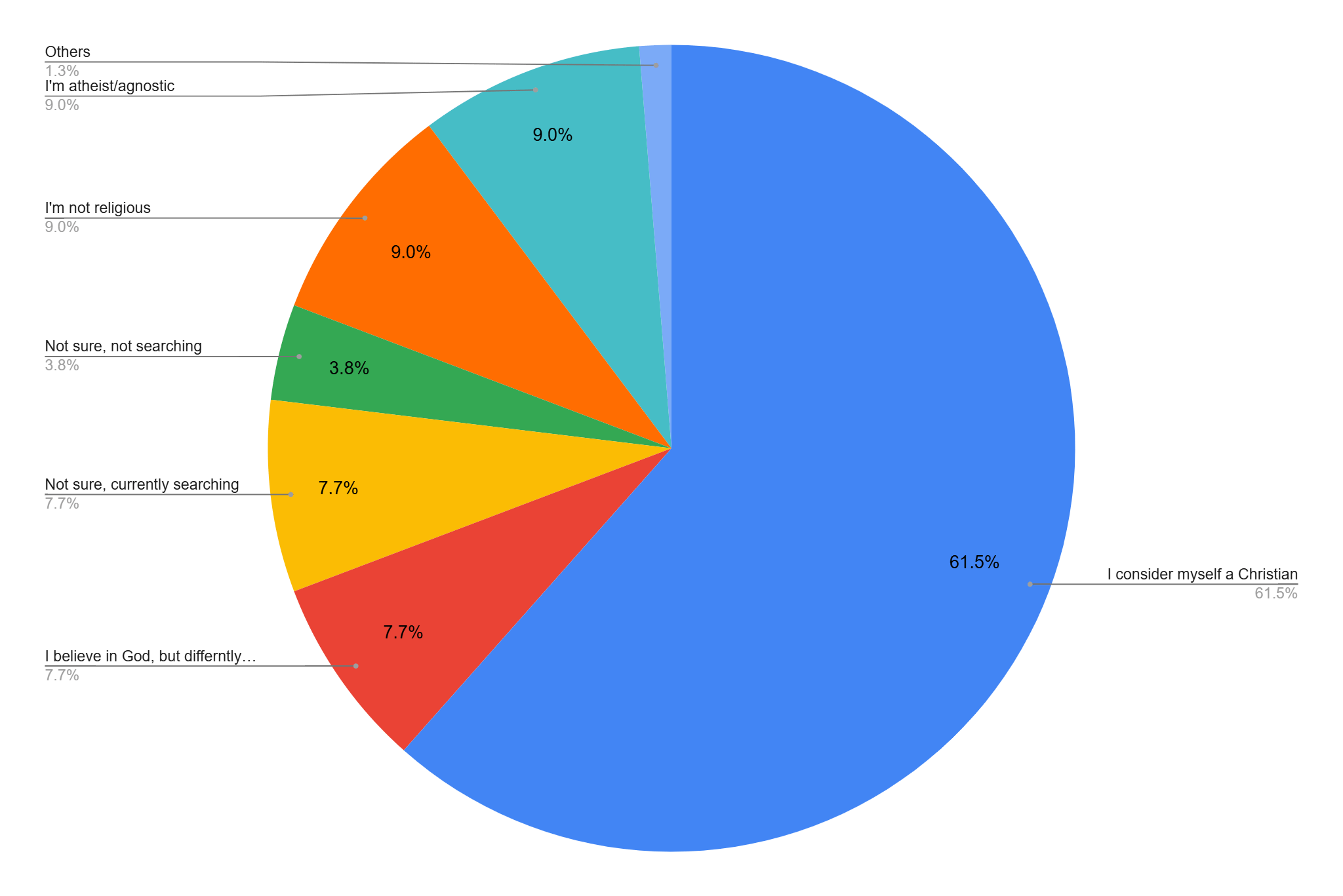
Most survey respondents self-identified as Christians. However, many wanted to give their beliefs more nuance with the other options. Respondents could pick multiple answers, and ~18% did. One respondent claimed to consider himself or herself a Christian, but also claimed to have “dabbled in Buddhism.” Two survey participants stated that they both consider themselves Christian, but also selected that they were “atheist/agnostic.” Over 7% claimed to believe in God, “but differently than the Armenian Orthodox Church.” This indicates they believe they know enough about Church teachings to reject it or certain portions of it. Bear in mind, simply because a survey participant believes themselves to be a Christian, we cannot make conclusions about their knowledge of the faith (see second to last question).
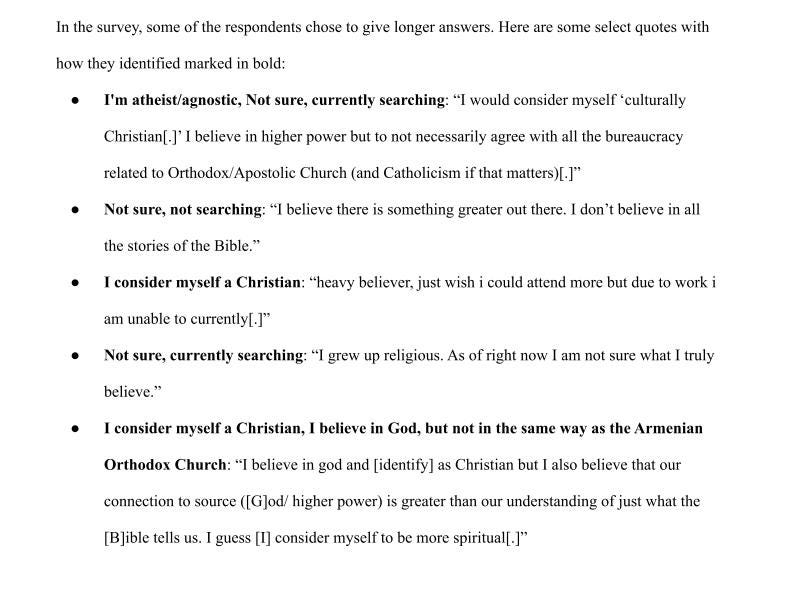
Interestingly, we can see over 7% are “currently searching” for a worldview, despite not being sure. Meaning there is a small portion of Armenians who may not be satisfied with what they believe and are open to the Church’s teachings. Only fewer than 4% report they are not searching at all right now.
Although accurate data on how many ethnic Armenians across the world identify as Christian is difficult to acquire, the country of Armenia is well-reported to have around ~95% Christian population.8 Although the data sample from this report may appear far lower, be mindful that it was unchurched Armenians who were targeted for responses.
Views on the Armenian Church
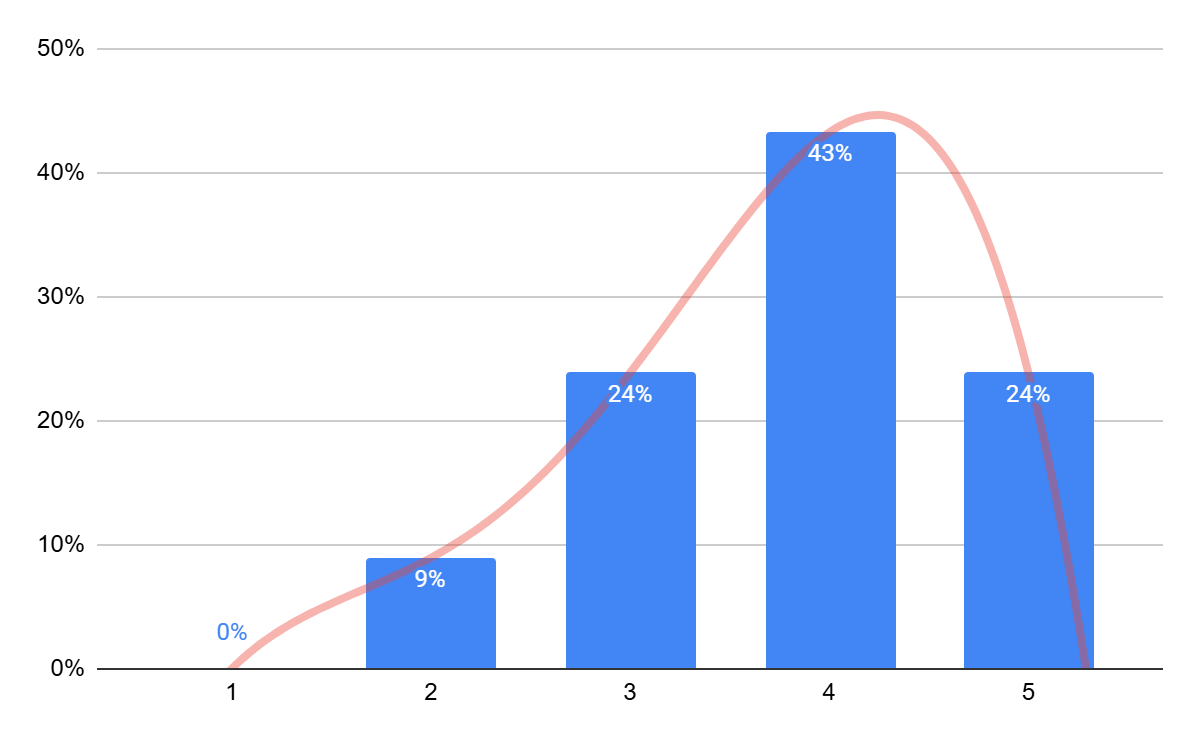
Survey participants were asked to rate their thoughts on the Armenian Church, with 1 being “negative,” a 5 being “positive,” and 3 being “neutral.” We can see the weight of the survey responses very heavily leaning towards a score of 4 with 3.8 being the average. Less than 10% of the unchurched reported negatively on the Armenian Church, and not a single respondent reported the most negative response of a “1.” It is reasonable to conclude that the Armenian Church, within the unchurched population in the eastern United States, is viewed favorably. All but one who gave a rating of a “2” also chose to provide an explanation of their rating.
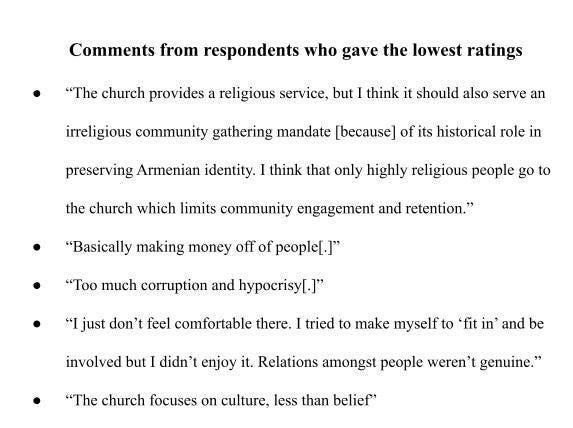
Many of those who commented gave recommendations on how the Church could improve. One respondent recommended reaching out more to people in the “Young Professional age bracket.” While offering an example by saying: “[s]ermons and topics could be a little more relevant to our challenges at this age.” Another said “I am grateful to the church for its cultural preservation.” Many wanted to share that a significant part of their childhood friendships were formed through the Church. One person who gave a rating of “3” remarked:
…I made my best friends for life in the Armenian church and I enjoyed going to Sunday school, events and dinners. But I really had a hard time with the religious aspect of church. I didn’t understand the service and didn’t feel particularly connected to God. I remember once going to a friend’s church as a child and being shocked at how accessible the service was. As an adult, I find the Armenian church to be too conservative for my more progressive outlook and I’m not sure if I believe in God. Since I was a teenager, I’ve also never really felt “Armenian enough” for a lot of people. At camp as a child it was hard to fit in and then even recently going to Armenian events in NYC the community is so insular it can be difficult.
Though the ratings were overwhelmingly positive (with 67% saying they think more positively than just neutral), this is comparable to the ratings of Armenians in the Republic of Armenia, in which 62% give it a favorable rating.9 High ratings for any institution, especially from respondents who don’t engage often with that institution, is not a mandate for inaction. The Church should always be considering new ways of engaging the unchurched. With this research, we can see the Church should do so with a renewed boldness that has widespread respect and is already viewed positively, even by the unchurched.
Views on Holy Badarak
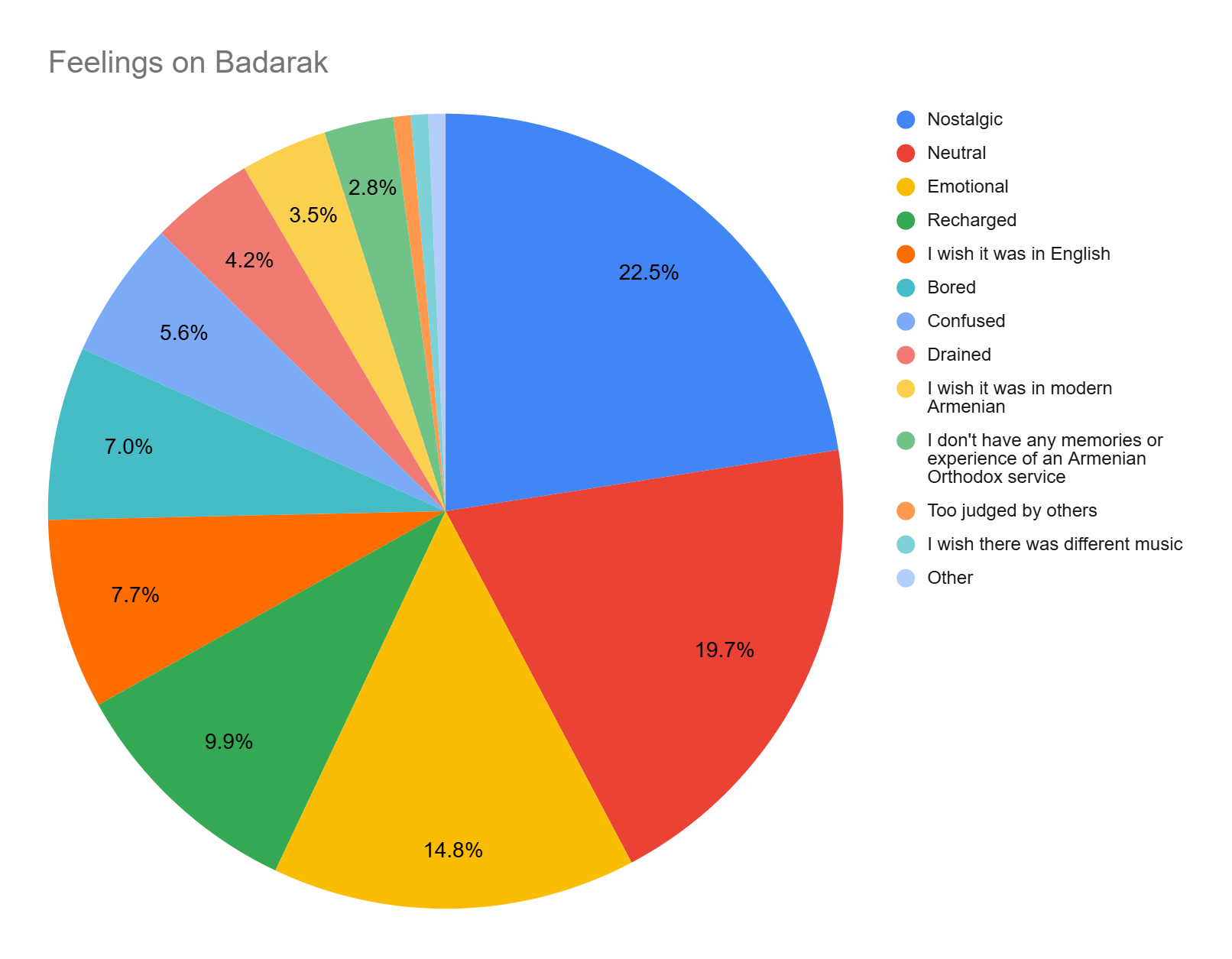
Although in the Orthodox Church, the metric for the holiness of something is not based on feelings. However, we can ask the respondents’ feelings if we are trying to measure how engaged they feel. It cannot be expected that clergy should be focused on how every individual who enters the Church feels, when their attention should be on preparing for and administering Communion, as well as their Homily. However, it’s reasonable to wonder what is going through the minds of the parishioners, especially those who do not frequently come.
When given the choice to choose as many answers as they identified with, and the option to create their own, only 7% said they were bored. Although that may be a common complaint anecdotally, we can see it is not a significant complaint by the unchurched according to this data.
Even though nearly a quarter chose to say they feel neutral, they also chose to describe themselves with the additional options. Nearly all of this sample clearly experienced the Armenian liturgy enough to draw some opinion, about 1.5% reported “I don’t have any memories or experience of an Armenian Orthodox service.” Compare this with the earlier response in which about 19% stated they “never (or rarely) attend the Armenian Church” or “attend a non-Armenian Church.”
We also can see of the top 4 most-selected choices, they include recharged, emotional, and nostalgic. Each one was selected more often than “bored.” If people overwhelmingly feel nostalgic for the Badarak, wouldn’t changing it disrupt the most frequently cited attribute?
Most of the listed feelings could be grouped into four categories: neutral, positive, negative, or “I want something to change” (see chart below). Wanting to hear the liturgy in modern Armenian or English, or wanting to hear different music was grouped into “I want something to change.” Although “positive” and “negative” emotions can be an arbitrary distinction, choices were grouped with the belief that a “positive” (nostalgic, emotional, or recharged) is probably not a bad thing. Feelings of any sort, be it general “emotional” or “nostalgic” feelings are not the end goal of the Badarak. There may indeed be cases where nostalgia and an emotional state are a negative reaction. The purpose is not to insinuate how people ought to feel, but to understand how people do feel. The “negative” (confused, bored, drained, or too judged by others) emotions are merely feelings the Church should hope to mitigate. The goal of this section is not to judge the unchurched, but to help those active in the Church have greater awareness of what is actually going on internally. We can see the evidence does not support the proposition that most of the unchurched are bored and do not enjoy an ancient liturgy.
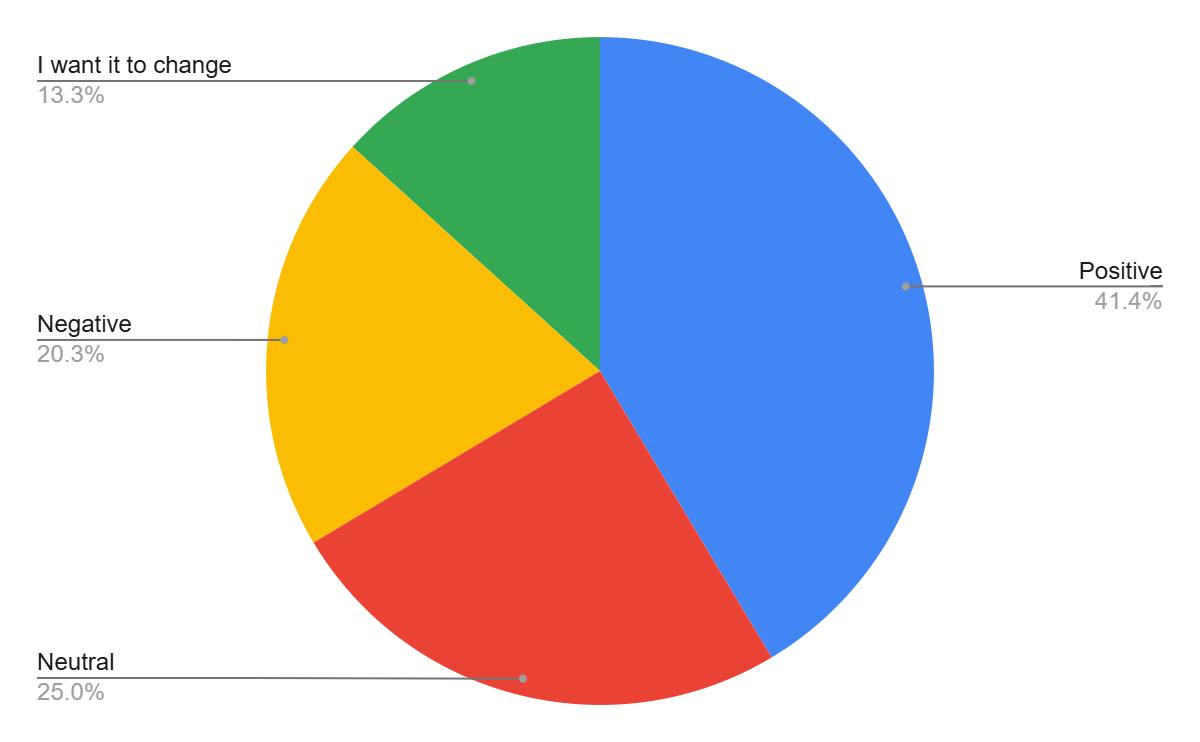
There have been many discussions in the diaspora about making the Badarak more accessible due to the language barrier. After all, some parishes in our sister Churches have adopted changes and experienced growth in members not of the same background.10 Although we should be joyful to see growth among sister Churches, within our own house we do not see an obvious mandate to change our liturgy to accommodate the unchurched.
It should be noted that not one respondent chose “I disagree with how the Badarak is done” as a listed answer. So even if they want the Badarak to change, we cannot conclude it is based on philosophical, political, or theological differences.
Although some respondents may have chosen multiple answers in the “I want [Badarak] to change” or “negative” categories, the individual may have some overlapping answers within “positive” and “neutral.” But the most important thing to note is that over 40% of the respondents reported some positive feelings with the Badarak, which is twice that of negative feelings towards the Badarak. The number of times respondents chose “nostalgic” is nearly double the amount of times in which respondents selected some choice indicating they want a change in the Badarak.
Interest in an Explanation of Holy Badarak
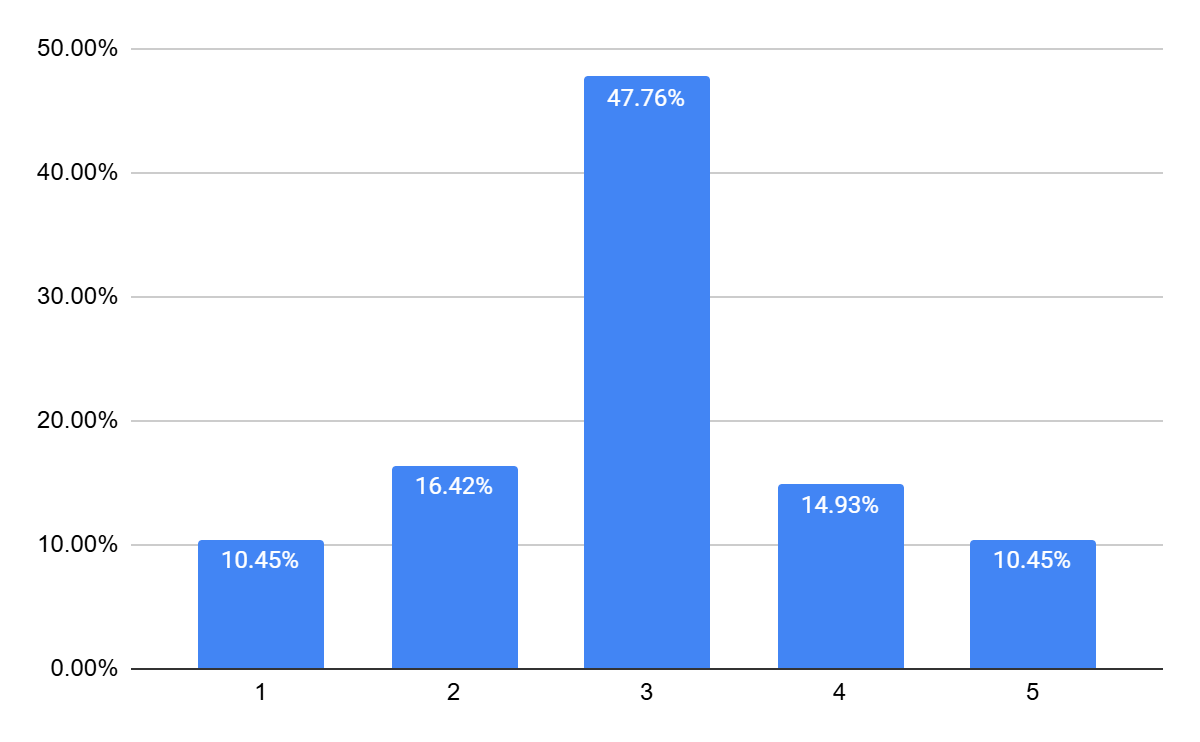
A common concern people may voice is that newcomers are confused and do not understand what is happening during the Badarak. This raises the question: “if someone did explain the Badarak, would that make someone more likely to come?”
On a scale of 1-5, with 1 being “not interested in an explanation,” 5 being “more inclined to attend,” and 3 being “neutral or unsure,” we see nearly half are neutral or unsure about the benefits of an explanation. A key takeaway is that according to nearly 75% of the unchurched, an explanation would either have a neutral or greater inclination to attend more. This should encourage efforts to educate the laity to understand the Holy Badarak for themselves and so that they may explain to others who rarely come.
Views of Armenian Priests
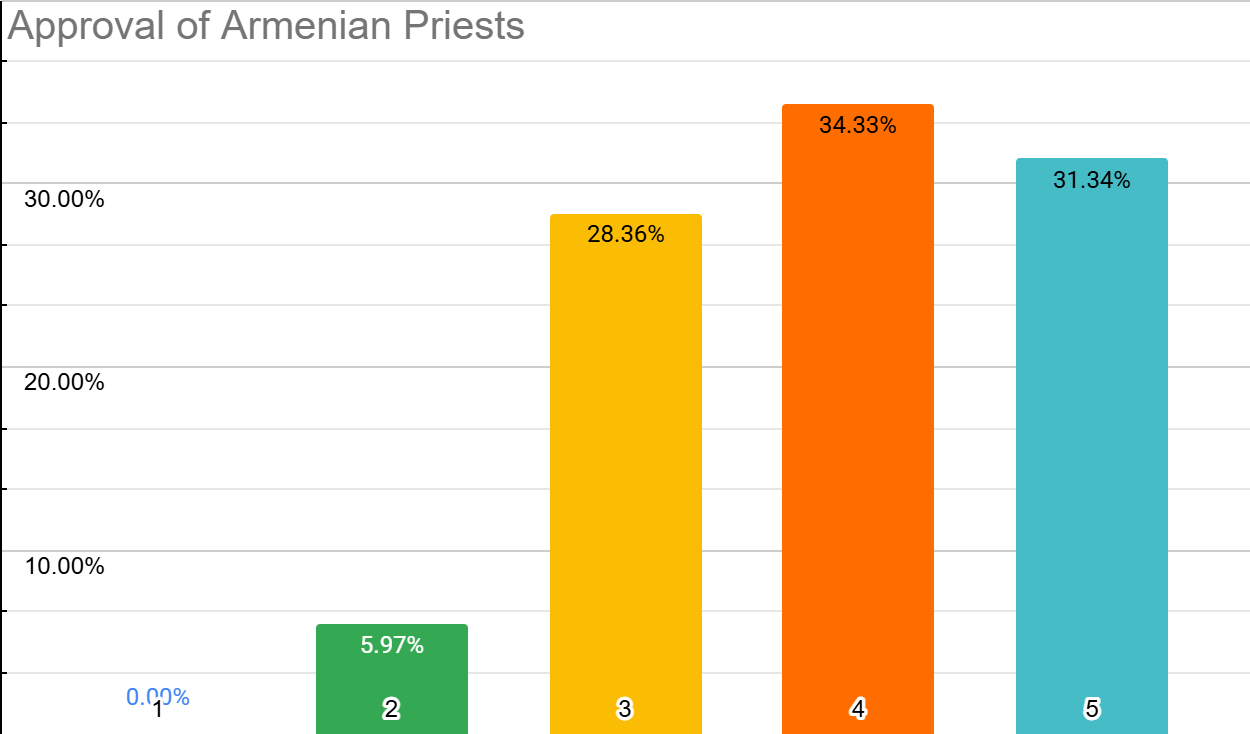
With 1 being a “negative” rating and 5 being a “positive” rating, we can see the unchurched overwhelmingly approve of the priests in the Armenian Church, with 3.9 being the average score. Not a single respondent gave the lowest rating, and less than 6% even gave a negative rating. Even though neutral was an option, over 65% gave positive ratings to the Armenian priests. This is significant since according to Gallup, only 27% of U.S. adults say clergy have “very high levels of honesty and ethics”11 in 2025.
Of the lowest ratings, only two respondents chose to provide comments on their ratings. One only replied “corrupt” and the other respondent wrote:
“I think priests are insular and old school. That’s fine for them or a monastery, but for a public facing community service role (a “shepherd”), I just think that priests should assume stronger public engagement and education guidelines, or if not the priest himself, than his executive team.”
As indicated earlier, an overwhelming number of ratings and comments were positive. Some priests or parishes were praised by name:
- “I have loved all the priests at SJAC and have had no issues. I do believe there is opportunity to be closer with current priest” (*SJAC – St. John Armenian Church, current priest is Hayr Aren)
- “Fr Abraham from Holy Martyrs is one of the central reasons I come to church.”
- “Der Hosef and the other priest that came to visit are very kind and easy to talk to, they are very understanding.” (*Der Hovsep of St. Mary in Washington D.C.)
Some people who gave a neutral rating of a “3” still gave compliments:
- “Some are great (like ours) and some are not great.”
- “It’s more positive in they’re in Armenia. Attending the church’s there is a completely different feeling.”
One individual who gave a rating of a “3” stated:
- “I believe that priests should stay in their lane of worship services, religious guidance and community outreach. They should not be involved in any business and financial aspects of the church.”
Some of those who gave ratings of a 4 or higher had the following comments:
- “It’s mixed – some are so approachable and feel as comfortable and familiar as family , some can be intimidating or less approachable”
- “I think they are great but wish to learn more from then”
- “I love our priest, and all before him. He is welcoming and kind and is very active in the community”
- “I have a lot of priest and priest-adjacent friends. I only gave a 4 out of 5 because I know the entire population of Armenian priests can’t possibly be a homogenous group or necessarily my cup of tea. But I’m very supportive of Armenian priests in general.”
Interest in Change
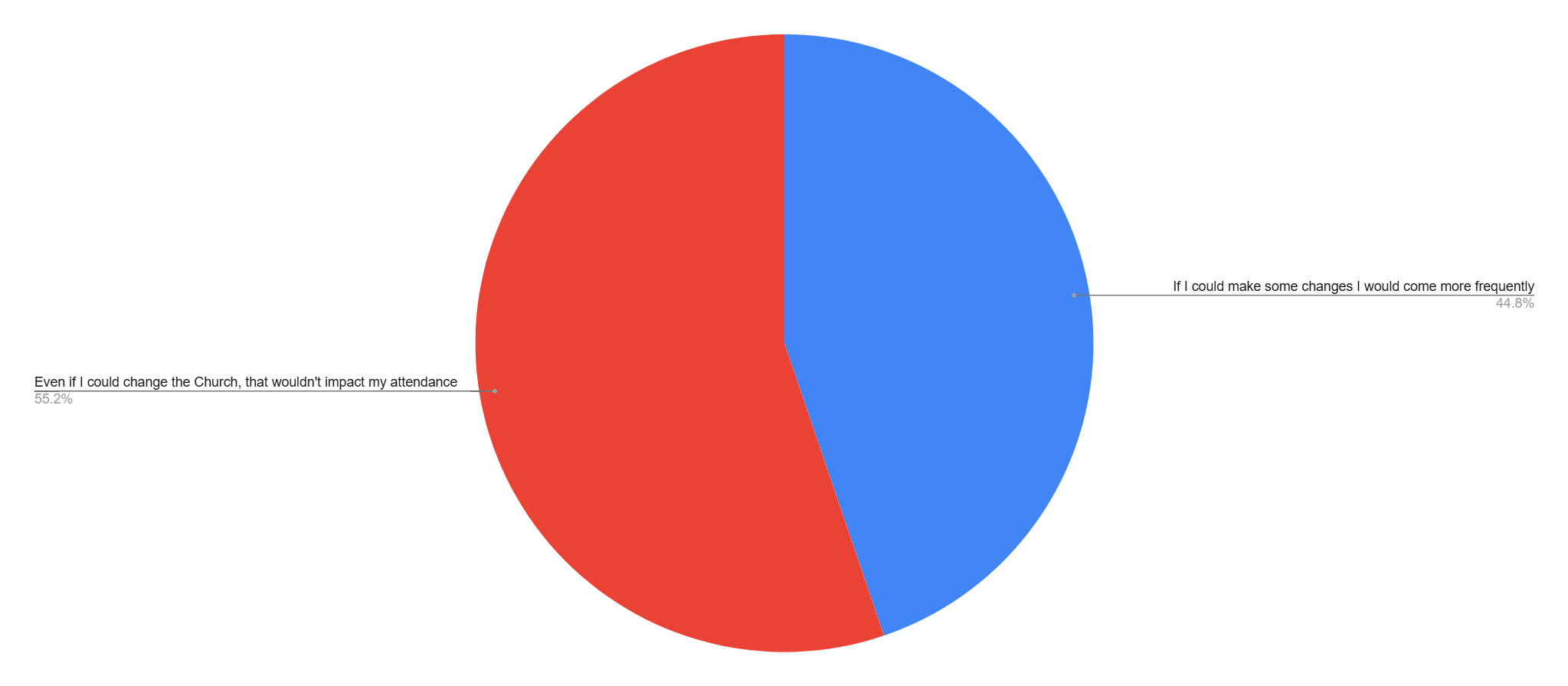
This survey does not endorse making changes to Holy Badarak nor any dogma. However, many of the unchurched may not be thinking in ecclesiastical terms. Often, if a system is perceived as impossible to change, people stop engaging with it. Despite having a parish council, Diocean Assemblies or NRA12, and other auxiliary organizations which help with the Church’s mission and administration, many of the unchurched may be either unaware or skeptical about their impact through such opportunities. Of course, the ability to change the Church should not be the selling point for regular attendance. What this section seeks to answer is if the Church’s rigidness is a deterrent for participation.
The majority of the unchurched say no. This gives a lot of weight to the position that people would not become more engaged if the laity had more power. As for the 44% who claim they would come more often if they could make changes, the onus is on them to come more frequently. We do not see a strong demand that the Church must allow individuals to shape it if it wants to attract the unchurched Armenians.
But what sort of changes did the 44% ask for? Were they asking for changes in dogma? Political stances? Institutional reforms? Nearly none made requests along those lines. Two participants asked for more English-based services. One person stated “[it] would be helpful to have less emphasis on needing to believe in God.” Another individual only said they wanted a “More diverse service, which I understand is difficult to accomplish[.]” One respondent wanted to separate the religious and cultural activities a Church provides. The commenter wrote the Church should: “[c]ompartmentalize religious and community services. Focus on retention and event hosting to get people to actually talk with each other (it feels very cliquey and siloed when I’ve been). Try to get more young people in.” One recommended suggestion which could be thought of as an institutional change was to gear the Church towards serving younger people through “…more relevant sermons to our demographic and our challenges.” That respondent also recommended more “[d]elicious Armenian food after every service, not just coffee and a few pastries.”
Overwhelmingly, the majority of the survey respondents who answered they would come more often to Church would do so if there were more activities. Their responses include the following remarks, all highlights were added for emphasis:
- “Oh man, I would like to have movie nights, Armenian picnics during nice weather days. I know they have Armenian food festival but something more than the usual events. Something to draw in more Armenians and otars too so they can learn how we get down 😎”
- “We need more events for the youth and young professionals 20s-30s to mingle, have fun, and learn more about the church, language, and our Faith.”
- “Obviously I don’t live in MA so it’s hard for me in general to get to the Church, but I would be more inclined to participate in community outreach programs as I believe charity is one the main tenets of Christianity. I’m not sure what the church is like now that we have the construction all done on the new church, but growing up, there was so much focus on constantly raising money. Every fundraiser was to raise money for the church. I’d be curious to see what the new church is doing in the community. For example, with the govt shutdown so many people in MA are losing their foodstamps. That is something as Christians in the church we should be talking about and seeing what we can do to help.”
- “More children activities and activities for parents of young adults to socialize. If there was a grief support group I would absolutely attend.”
- “Maybe just local more activities geared towards the 20-30 age group”
There were also many suggestions for changes which were on how the Church treats others. Those responses include:
- “This could be in my mind, but more welcoming and nonjudgmental Priests and parishioners, especially toward newcomers who may be shy”
- “More community based activities. Attempt to create connections amongst participants.”
- “As someone who doesn’t speak Armenian, I feel out of place and judged sometimes. Sometimes people openly say ‘what kind of Armenian are you’[?]”
Another comment was interested in the Church “[p]roviding further explanation and exploration when it comes to various events/services.” From these responses, we see there is little interest in institutionally changing the Church. If anything, people who do not frequently come want more of the Church to offer more of itself.
Interest in More Events
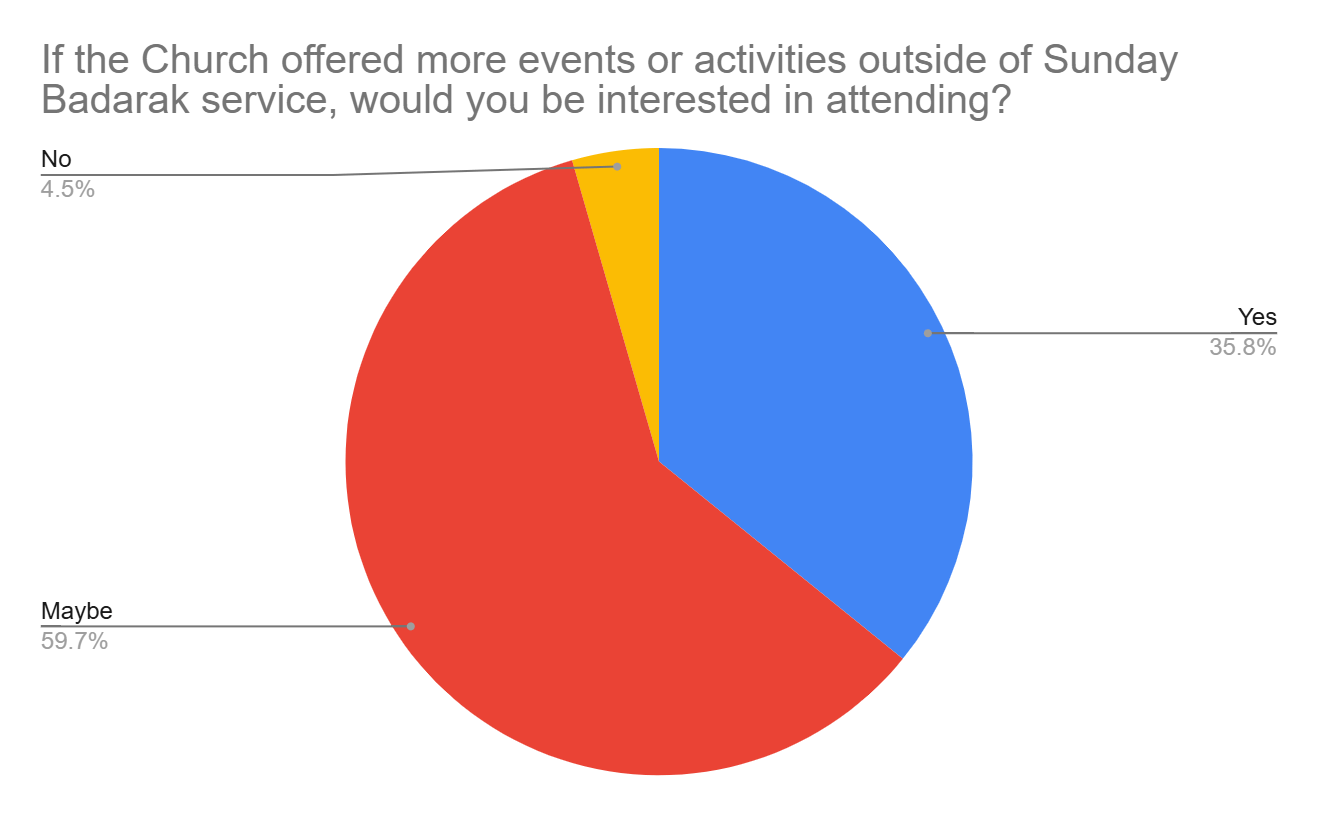
Respondents seem consistent given their answers from the last question. Over 95% say they would consider coming more often if there were more events. Only 4.5% say they would not come more often, even if there were more events outside of Badarak. Remember, twice that amount (9%) stated they were “atheist/agnostic” and another 9% stated they were not religious. 18% of survey respondents said they did not have faith in the Church’s teachings, but were still open to coming to events run by the Church. The lessons from this response is that the Church is far more likely to engage the unchurched if they offer more events.
Type of Desired Activities
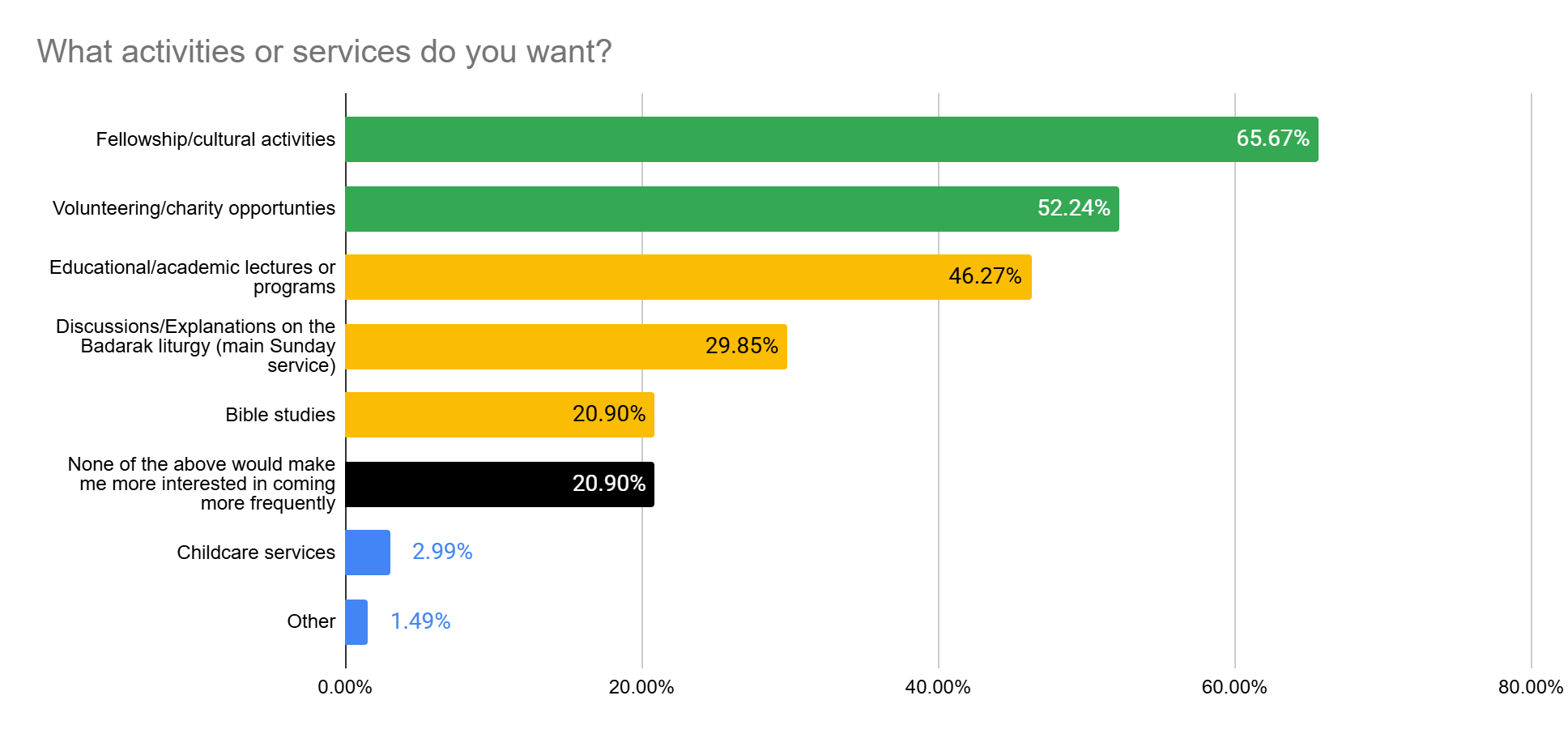
The above graph is color-coded. Green is an activity which is not inherently religious. Yellow is an activity that is probably inherently religious . Blue is “other,” with childcare services falling into that category as it’s not an activity, but more like a service or program offered. Respondents were given all of those options and were permitted to pick as many as they would like.
Clearly, we can see the only categories which a majority of respondents selected were not inherently religious. That is not to say religious activities are not wanted, but it is clear charity and cultural activities are desired by the unchurched. People are almost 10% more likely to want an explanation of the Badarak than a Bible study. Although an academic lecture may not inherently be religious (and many respondents may not have considered only religious educational opportunities when they made that selection) nearly 50% want to see more educational opportunities in their Church.
Personal Invitations
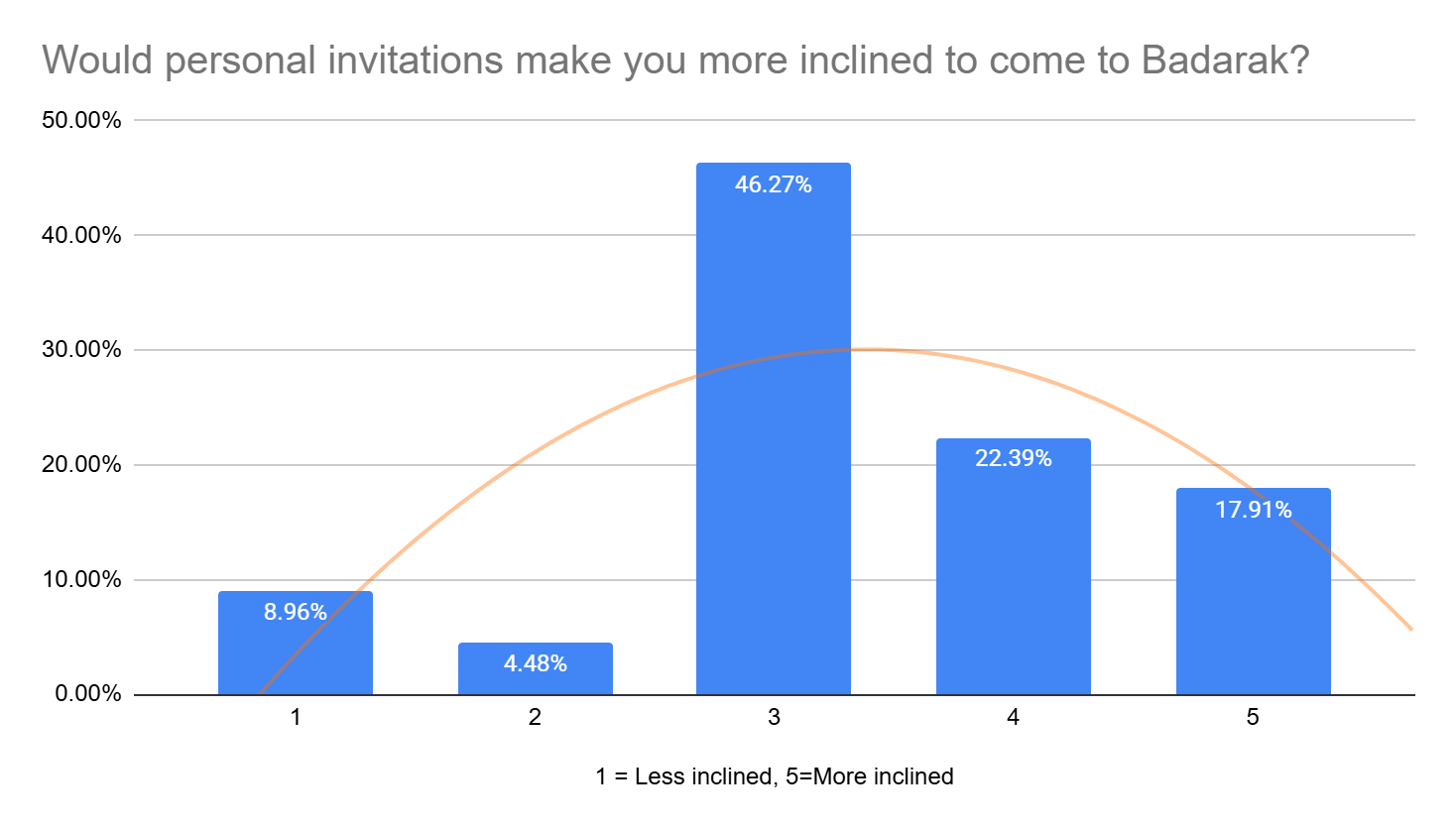
Obviously, all Christians should be encouraging the unchurched to worship. This data backs up the claim it would do far more good than harm. Very few (less than 14%) report they would be less inclined to come. Nearly a majority reported a “3,” which means they would be “neutral or unsure” about coming with a personal invitation. Almost 40% indicate they would be more inclined to come if they would be given a personal invitation. Although these terms do not perfectly translate over, it would be incredible if every frequent attendee made a personal invitation, there would be a 40% increase in Church attendance. That would change the landscape of the Armenian Church in the Eastern U.S. overnight. If such a small action carries such high potential and low risk, what excuse does the Church have to not invite their unchurched friends and family?
Issues with Local Parish or Church as a Whole
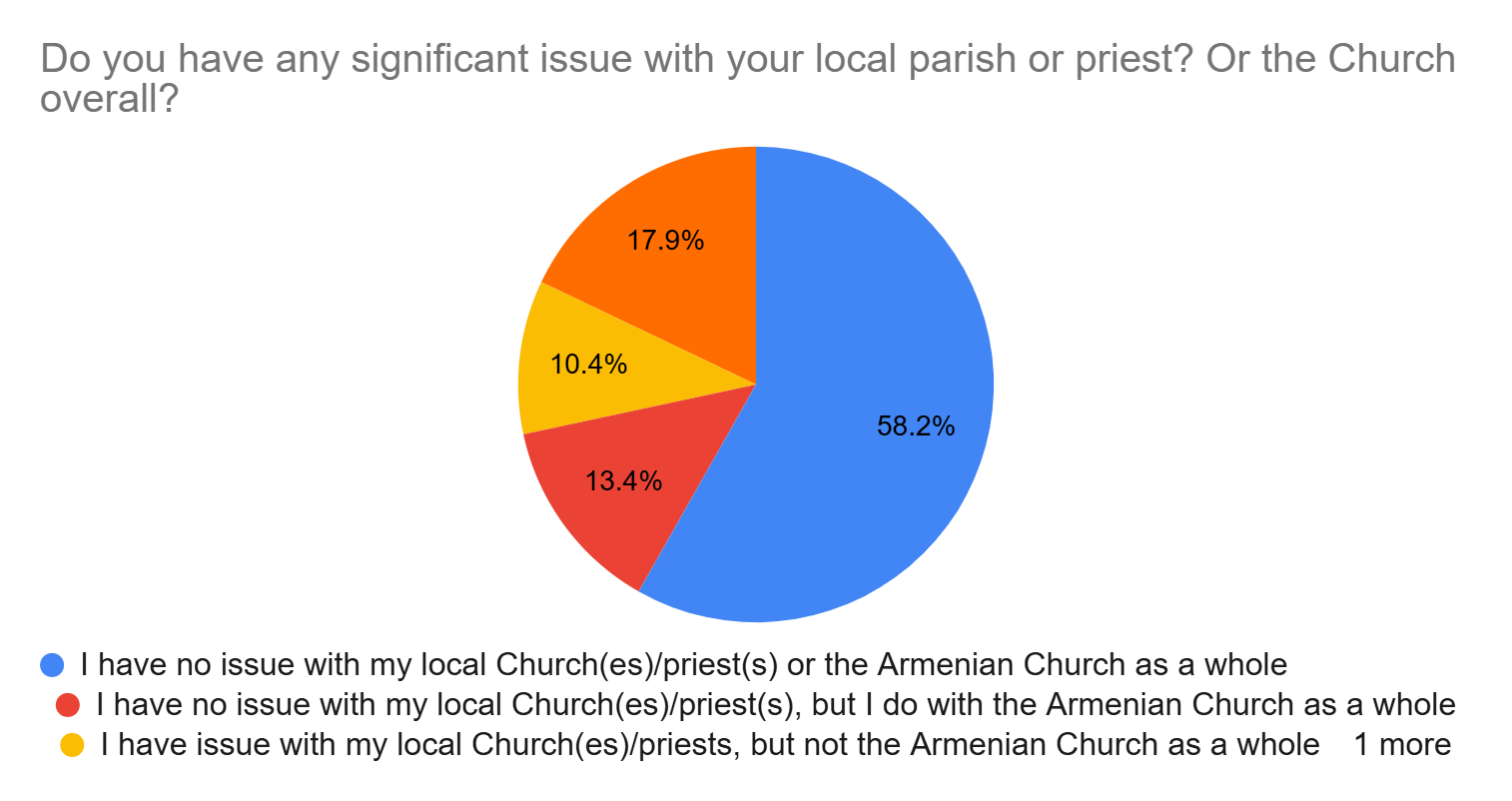
Yet again, we see a majority of the unchurched not opposed to priests or the institution of the Church. Although respondents were given this option “I have issue with my local Church(es)/priests, as well as the Armenian Church as a whole” not a single person surveyed selected it. Meaning the unchurched may take issue with their local priest or the Church as a whole, but it is exceptionally rare for them to take issue with both. Barely 10% were clear that they had issues with their local parish or priest, and barely 13% reported they only took issue with the overall Church. So not only is trust strong in a national and international sense, this indicates trust slightly stronger on the local level.
Political Activity
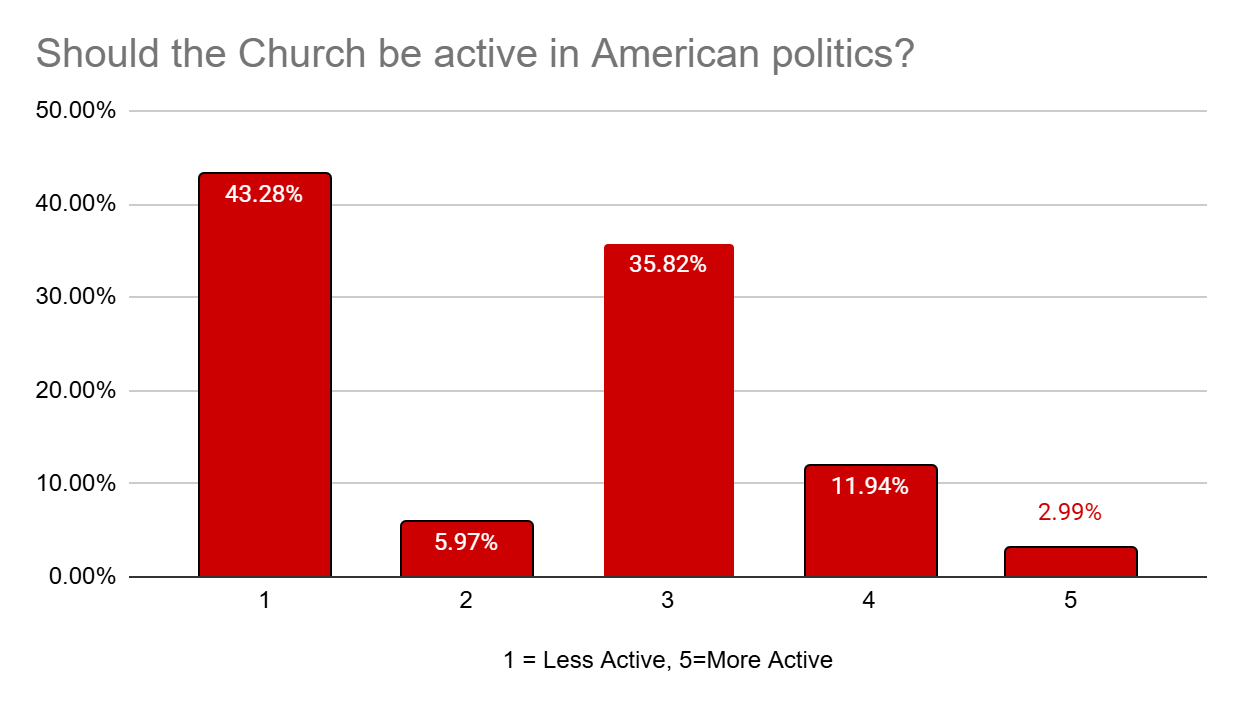
Many clergy from all Churches can be under pressure to make political statements. Nearly 40% of pastors report pressure comes from within their Church to speak about politics.13 Although virtually any action the clergy do could be called political given today’s climate, taking explicit partisan stances runs the risk of isolating believers who are in good standing. So would there be any rewards from the unchurched if the clergy were more active in U.S. politics?
We can see a clear plurality wanting less involvement in U.S. politics, with 2.25 being the average score. Meaning if possible, the unchurched would like to see the Church less engaged in American politics. Less than 15% want to see more engagement in American politics. Over a third believed the Church should remain as it is, neither getting more political, nor less engaged than it already appears to be. But does this change regarding Armenian politics?
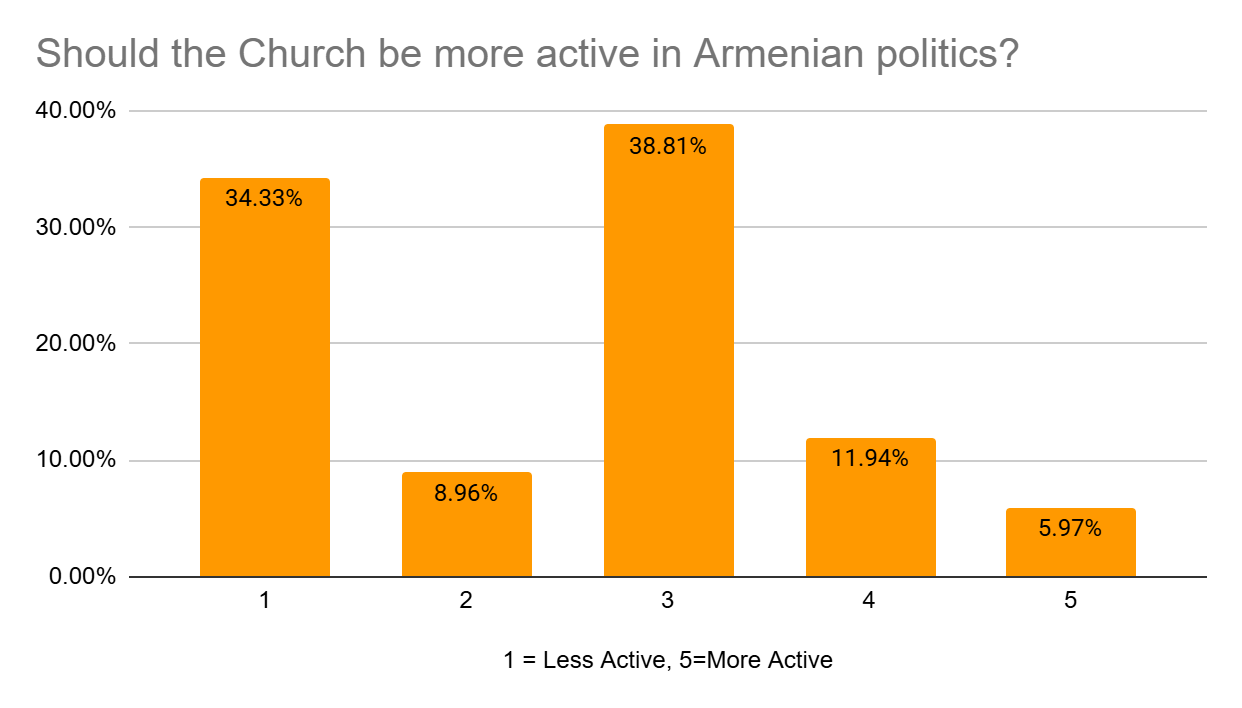
Although there is a very slight variation (with an average score of 2.46, which is only 0.21 points higher), the structure of both graphs is very similar. Instead of less than 15% wanting more engagement in U.S. politics, 17.9% want more engagement in Armenian politics. Nearly a 3% increase is essentially marginal – not a mandate. The most significant difference between the two questions is about 10% fewer respondents wanted the Church less active in Armenian politics. That 10% seems to be distributed in the other categories by almost 3% (3% more for “2,” 3% more for neutral, and 3% between both “4” and “5.” This also is not a clear call by the unchurched for the Church to take political or partisan stances in Armenian politics as opposed to American politics. Though they are slightly more sympathetic than American partisan stances.
Charity Involvement
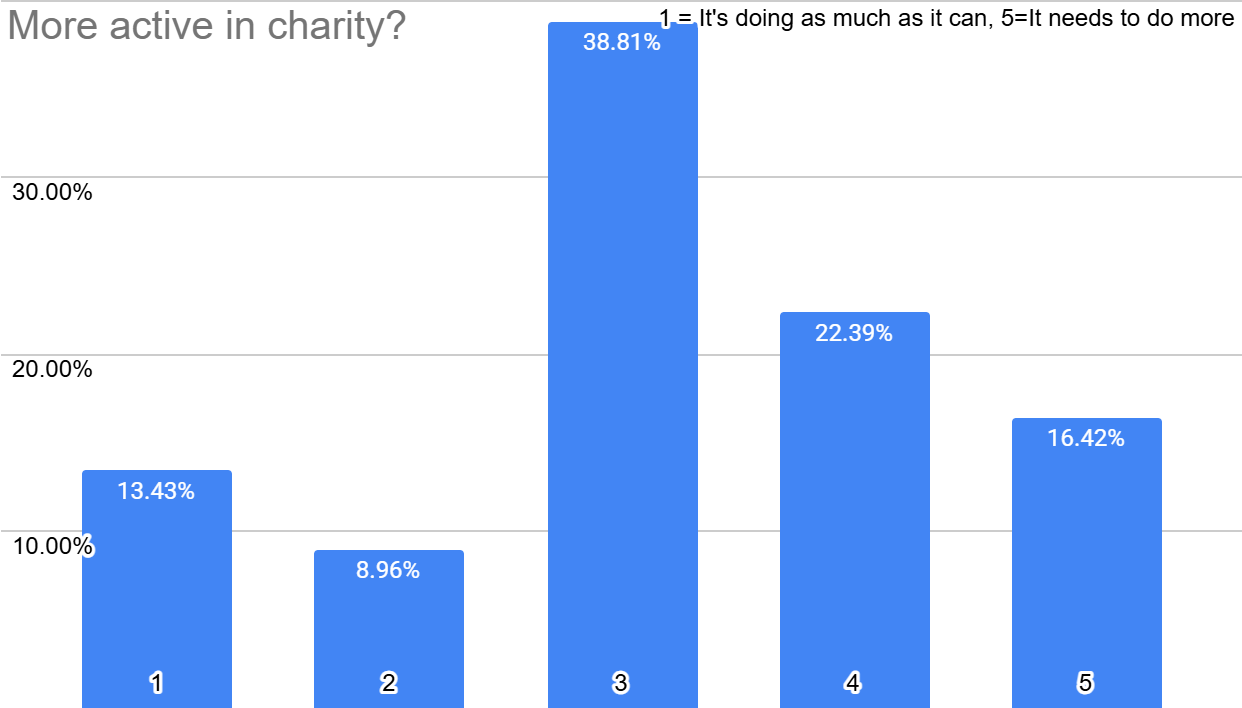
Unlike the last two questions regarding politics, we can see almost a flip in graph structure. With an average score of 3.2, over a third believe the Church should be doing more charity work. Less than 15% believe the Church’s charitable engagement is at its capacity, meaning they gave a score of “1.” This indicates a majority of the unchurched believe the Church can and needs to do more works of charity. Looking back on previous questions, they even seem more inclined to help and participate more in parish life if offered the chance.
Prioritizing Spiritual Growth or Armenian Identity
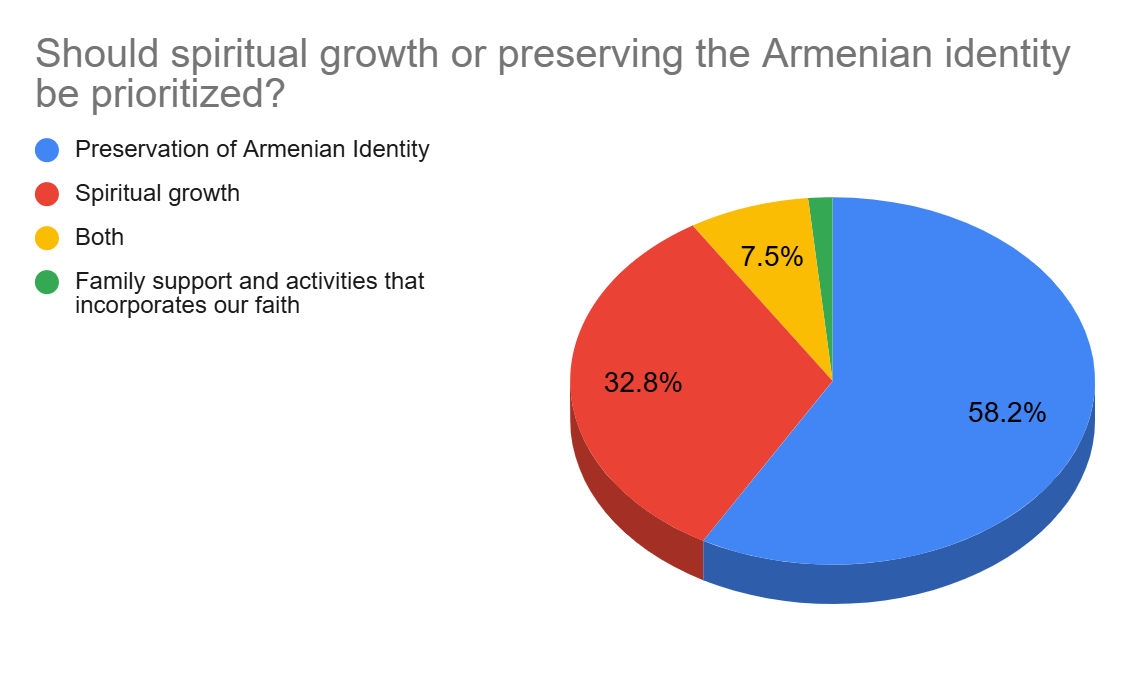
Respondents were given three options to the following question: “Which function of the Armenian Church do you consider most important and should be prioritized?” The three options were “Spiritual growth,” “preservation of Armenian Identity,” and “Other.” Nearly all who selected “other” wrote “both.” A significant majority of the surveyed unchurched believe the Church should prioritize preserving the Armenian identity. Slightly less than a third see spiritual growth as the main priority.
It may be easy to dismiss the 58.2% for confusing the Church as a cultural center or ethnic club more than a place of worship to the Creator of the universe and our Redeemer. But if that is the opinion of the unchurched, then it is the Church’s responsibility to prioritize spiritual development or at least show how one can harmonize the two. It also should not be unnoticed that nearly a third recognized spiritual growth as the priority. If that is the case, the Armenian Church should not think that all unchurched Armenians see the Church as a culture club, but something which offers far more. The next question indicates there is a strong reason it is not a bad thing for them to prioritize Armenian identity.
Relationship between Christianity and the Armenian Identity

Continuing on the question of identity, unchurched Armenians recognize how close the Armenian identity is with being a Christian. Although 58.2% said the Church should prioritize preserving the Armenian identity, almost 6% more agreed that “Christianity and the Armenian Church is important for Armenian identity” and that is a good thing. For many of the unchurched, to be Armenian is to be Christian. This may be a strange belief for those outside of our Church, it is a reality for many within the Church. Less than 5% see Christianity as something which can be separate from the Armenian identity. Even if a significant minority (less than 20%) do not prioritize Christianity in the Armenian identity, almost two thirds do see Christianity and the Armenian identity as complementary.
Knowledge of Christianity
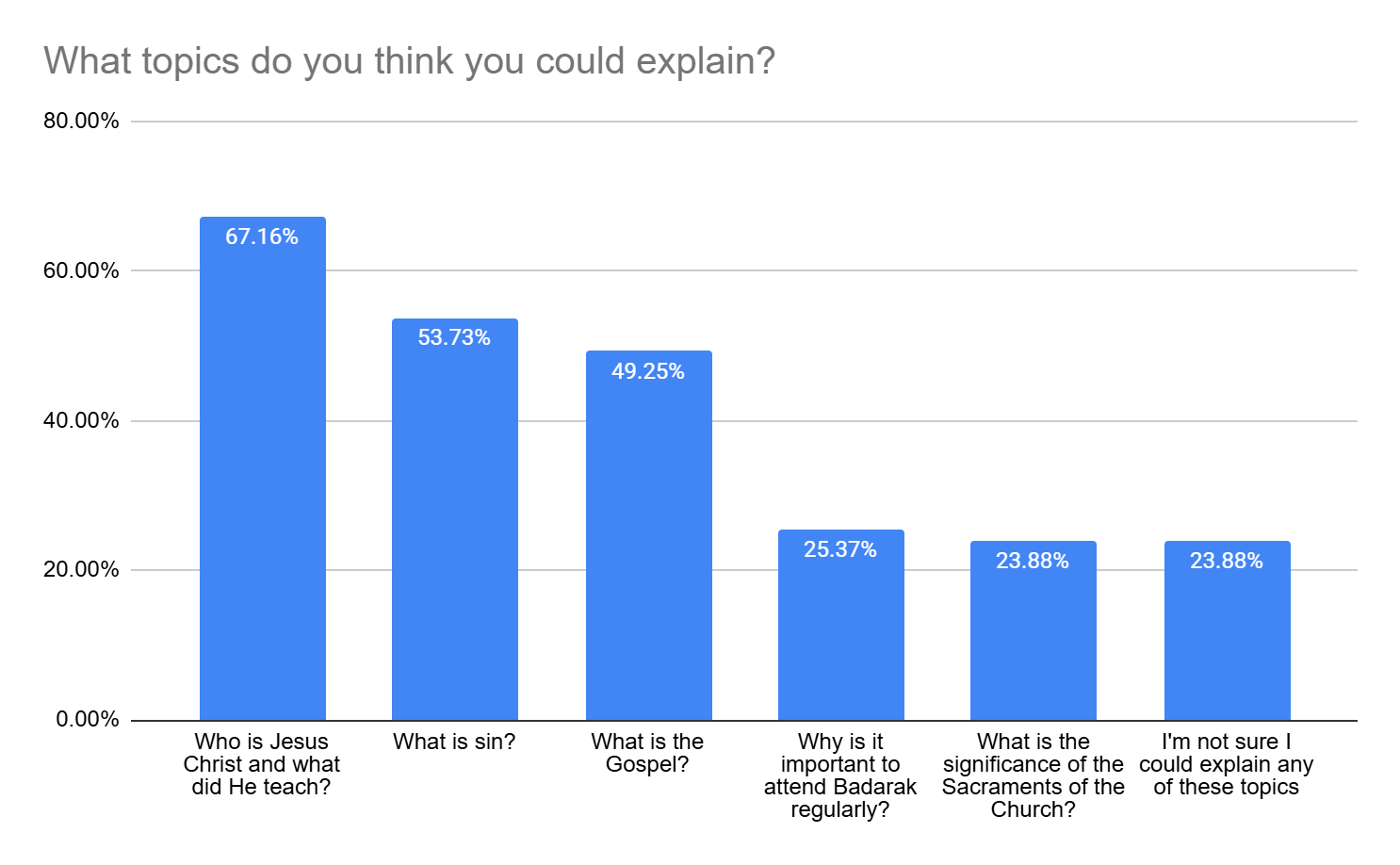
Participants were asked to list which topics they felt they understood enough to provide an answer if they were asked to explain it. This does not make any statement if their explanation is aligned with the Armenian Orthodox Church, but rather if the unchurched could make a self-assessment on their own knowledge of Christianity. Tragically, less than 50% feel as though they could explain the Gospel. Apparently slightly more believed it was easier to explain sin than how someone can be redeemed of it through the Gospel’s message.
Respondents felt most confident they could explain who Jesus Christ was, yet there is almost an 18% gap between that and being able to explain the Gospel. This indicates some of those who selected they could explain what Christ’s teachings are also chose not to select that they had an ability to explain the Gospel. Understanding who Christ is and what he taught without knowing the Gospel is a serious educational issue which must be addressed.
The biggest drop in knowledge (nearly 25% less) comes after being able to explain the Gospel. Being able to explain “Why is it important to attend Badarak regularly?” and “What is the significance of the Sacraments of the Church?” were selected at nearly the same rate. This makes sense, since the main reason for attending Badarak is to participate in the sacrament of Communion. This very much addresses a core question set out by this report.
A significant reason that the unchurched do not come to Badarak is because they do not understand why they should go. They barely claim to know the Gospel, and even less understand why they should even come at all or participate in the sacrament of Communion. If the unchurched do not understand the significance of Badarak, our sacraments, or the Gospel, then why on earth would they come at all other than for cultural reasons?
Other Concerns
Participants were offered one final chance to write their opinions they may have felt were unaddressed. Eight in total were provided and are listed below without any particular order:

Conclusions and Future Steps
“What has been is what will be,
and what has been done is what will be done;
there is nothing new under the sun.”
—Ecclesiastes 1:9
Though there are many benefits to research and data collection. However, evangelism has not changed much since the time of the Apostles. In our convenience-culture, businesses and institutions are always pushing to make services easier and more streamlined. The idea of standing for nearly two hours in a Church, publicly singing in a language many members do not understand sounds anathema to our modern sensibilities. But maybe we should consider if our community wants a break from the world? Maybe instead of another week grinding away at a career or studying what the secular world values, people may want to do work that helps their community or learn more about the God of their ancestors. The push and pull between honoring our Holy Tradition and meeting the current needs of the people will always be a tension the Church must work through. This report does not end that tension, but is meant to provide some clarity on what exactly are the thoughts of the unchurched.
Although some respondents were very clear the reason they are not interested in Badarak is because they are bored or not interested in religion, that sentiment is not representative of the majority of the unchurched Armenians in the Eastern United States. This data indicates the unchurched are open to more cultural or charity events. Younger adults are also not opposed to educational activities. Neither priests nor the Armenian Church are despised, but deeply respected. People are not interested in politics, but in personal invitations to events celebrating fellowship, Armenian culture, and faith.
The biggest insight from this research is that the Church should be ramping up activities to engage both the regular Church goers and the unchurched. Research from another study in 2020 indicated nearly all of our sister Churches are exploding in growth since 2010, yet the Armenian Orthodox Church (both Catholicosate Cilicia and Ejmiatzeen) is shrinking.14 The percent of active adherents among total adherents is smaller in the Armenian Church for not just all other Oriental Orthodox Churches, but also nearly all Eastern Orthodox Churches.15
This news should not discourage us, but prove that we can do better. Although this report does not offer a binding mandate, nor a certain prescription on what needs to be done, Christ our God teaches us “The harvest is plentiful, but the labourers are few; therefore ask the Lord of the harvest to send out labourers into his harvest.”16 For fuller answers, more research could always be done. It may be wise to ask more questions to those who do frequently go to Church, perhaps at a Diocesan Assembly or the NRA. That could provide a control group to help us understand the differences between the active participants and the unchurched. Further topics which could be investigated regarding the unchurched could include more specifics on what sort of activities would draw them in? What would an effective marketing campaign look like? Our growing sister Churches certainly may have more ideas and resources which could aid our efforts on both a local and national level.
Without question, I am convinced the greatest act we can do for our mother Church is pray. I have found that more time spent in prayer concerning this project has made me more patient, and forced me to confront my approach with humility. Donations, service, and education are all critical to our Church’s functioning. But if our Church is not a Church of prayer, then we are truly nothing.
Acknowledgements and Thanks
First and foremost, my gratitude is to God for inspiring me to pursue this project and aid in getting it done. To Him be all the glory, but the contributions of His servants who helped me should not go unnoticed. I have great gratitude to the many people with institutional knowledge and connecting me with resources and people: Serien Keleshian, Harry Kezelian, Jenifer Morris and ACYOA Chairs Mara Najarian and Lori Dorian.
I also am grateful to Dr. Nareg Seferian and Maria Stepanyan for being willing to review my work (before and after) and offer professional advice. Any technical errors found are my own fault, but any lack of errors is due to their efforts.
And to my volunteers who did the work of finding survey participants, you have my sincere thanks: Inga Azatuyan, Aren Banklian, Nareg Kassardjian, Dn. Hagop Ketchedjian, Verej Pilafijian, Yn. Lucine Sabounjian, Sarah Tavitian, Linda Yenicag, and Sevan Zobian.
Of course, my sincere thanks also goes to you, good reader. Whether you skimmed this report or examined every jot and tittle, your interest encourages me and fills me with a deep sense of hope. Please pray for me as I am praying for you.
Although I am very grateful for the kind clergy who offered advice and counsel, I have decided to leave most of them unmentioned since this project was not endorsed by any of them and I do not want any of this report’s shortcomings to reflect on them. In my personal opinion, it is far too easy for priests to be given unfair blame rather than due praise. However, I would like to make an exception for Der Hovsep Karapetyan, my local priest and spiritual father. His holy example inspires me everyday and I have an unpayable debt to the amount of love he has shown me.