Thirty Years of Hope, One Day of Reckoning
Then something changed.
I cannot pinpoint the exact moment when the decline began. Perhaps it happened gradually, so gradually that I failed to notice it. But what had taken years to build seemed to begin unraveling before my eyes. The dream started to collapse.
I now watch Hayastantsis turn against Diasporans. Hayastantsis against Artsakhtsis. Instead of unity, I see division. Instead of solidarity, I see suspicion. Instead of a shared national purpose, I see competing tribes claiming ownership of the same wounded homeland.
I witness the auctioning of principles to the highest bidder. I see political expediency replace historical memory. I watch people justify compromises that previous generations would have considered unthinkable. It is as though the hard-earned lessons of genocide, survival, resistance, and perseverance have become inconvenient burdens to be discarded whenever they stand in the way of short-term interests.
The country I once dreamed of spending the rest of my life in seems to have vanished. The Armenia that lived in my imagination – a nation built upon dignity, self-respect, sacrifice, and historical consciousness – feels increasingly distant. In its place stands something unfamiliar, something disconnected from the values that shaped my understanding of what it meant to be Armenian.
And yet, despite everything, a thin strand of hope remains.
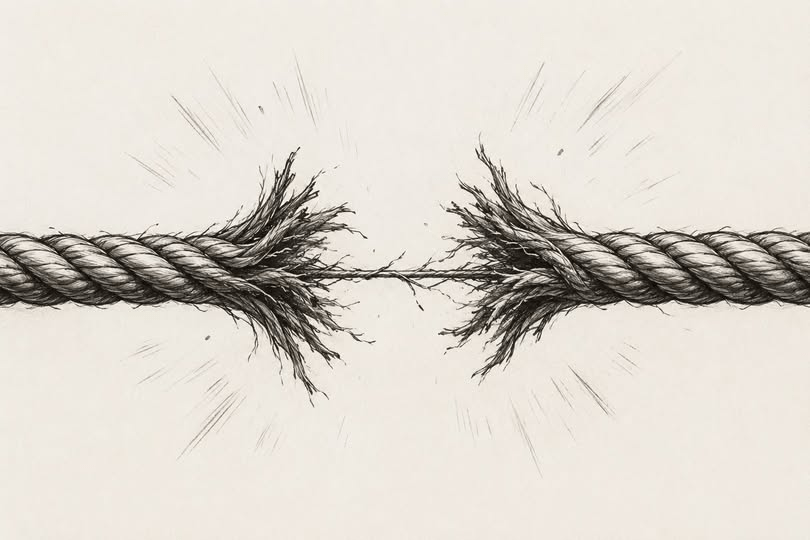
It is a fragile strand, worn and frayed after years of disappointment, but it is still there. Perhaps that is why June 8 feels so significant. It feels like the final test of a rope that has been stretched beyond its limits. Every betrayal, every compromise, every national humiliation, every abandonment of principle has added strain to its fibers.
I fear that on June 8, that rope will finally snap.
If the current government remains in power, I will regard that moment as my final divorce from Hayastan.
I do not wish to be associated with a society that tramples over everything I was taught to value. I do not wish to be associated with a society that disregards the sacrifices of those who survived genocide, rebuilt communities, preserved a culture, and carried Armenian identity across generations and continents. I do not wish to be associated with a society that appears interested in the diaspora primarily as a source of financial support while dismissing its concerns and contributions whenever they become inconvenient.
At some point, a relationship becomes unsustainable. Trust erodes. Shared values disappear. The emotional bond weakens until only habit remains. And eventually, even habit is not enough.
For twenty-eight years, I devoted an extraordinary portion of my life to Armenia and Armenians through Groong Armenian News Network. I voluntarily spent countless hours reading, collecting, editing, and posting articles from newspapers around the world. I translated material from Arabic and French, and occasionally from Italian and Turkish. Over nearly three decades, I helped process and distribute approximately 300,000 articles concerning Armenia, Artsakh, and Armenians. No one paid me to do it; I did it because I believed it was my duty to show the world the values and history that had shaped me. I considered it my mission to tell the world the story of Armenia: a nation of extraordinary resilience, achievement, and untapped potential.
Those articles became part of my daily life. I celebrated the victories. I mourned the losses. I shared in moments of national pride and endured moments of national embarrassment. Every night, I spent two to three hours – sometimes even more when there was a major event in Hayastan – gathering material after a full day’s work, driven by the belief that staying informed and helping others stay informed mattered. I did not miss a single day.
I believed I was contributing, however modestly, to a better future for hayastan.
Today, I find myself wondering whether all those hours, all those sleepless nights, all that emotional investment were ultimately spent on a people unwilling to help themselves; a people increasingly disconnected from their own history, their own sacrifices, and their own responsibilities.
That realization is perhaps the most painful part of all. The Hayastan of today has finally broken my faith in the dream I spent a lifetime defending.
I desperately hope that I am wrong.
I hope June 8 proves me wrong. I hope I wake up on June 8 feeling foolish for having written these words. I hope the rope holds. I hope there remains enough strength in its fibers to withstand one more strain.
But I have lowered my expectations so much that very little coming from Armenia can still surprise me.
And if the rope does snap, then I will finally let go.
I will free myself from the constant cycle of hope and disappointment. I will stop following every political development, every controversy, every promise, every betrayal. I will detach myself from the daily news and from the emotional burden that has accompanied it for nearly three decades.
And I will leave Hayastan to find its own path, for better or worse, among the wolves.
If that day comes, the divorce will be final.