This doctor of the Church is a companion in suffering
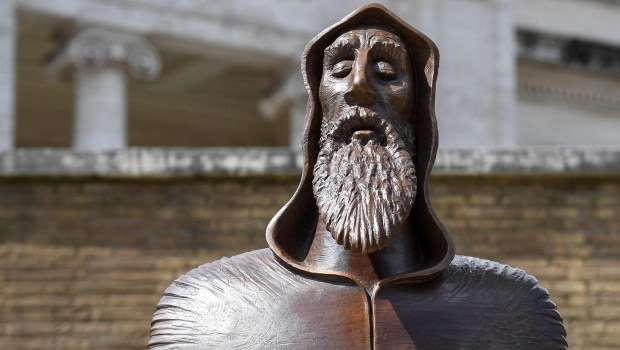
AFP/EAST NEWS
Doctor of the Church
Date: April 12, 2015
Occasion: Centennial commemoration of the Armenian Genocide
Significance: First Armenian Doctor of the Church
Title recognized: “Doctor of Mercy”
By declaring him a Doctor of the Church, Pope Francis affirmed that Narek’s teaching is not only historically important but spiritually universal. His theology of mercy speaks powerfully to a wounded modern world.
The Book of Lamentations
Composed as a long sequence of prayers — 95 in total — the Lamentations is less a treatise than a sustained cry to God. Narek calls it a “speaking with God from the depths of the heart.” The tone shifts from lyrical praise to self-accusation, from cosmic imagery to stark introspection. He strips himself bare before the Lord, not theatrically, but with theological precision: the human person, wounded by sin, stands in absolute need of grace.
One prayer opens:
“The sound of my sighs, the plaintive voice of my heart … here they are mingled as a single offering bursting toward You from the depths of my darkness.”
Elsewhere he pleads:
“Spare me, Lord… make me Your dwelling, abide in me…”
The structure is relentless. He returns again and again to the paradox of Christian hope: that the abyss of sin becomes the meeting place of mercy. His imagination draws on the Psalms, the Prophets of the Hebrew Bible, and the Gospel, but also on Armenian landscape and liturgical poetry. The result is mystical yet grounded — cosmic yet intensely personal.
His place in Christian history
Though rooted in the Armenian Apostolic tradition, Narek’s theology is profoundly catholic in scope. He belongs among the great medieval mystics who understood repentance as transformation. His language of self-knowledge anticipates later Western spiritual writers, while his poetic daring parallels Syriac and Byzantine hymnography.
For centuries, Armenians referred to the Narek as a spiritual companion in suffering. In a Church often marked by exile and persecution, his insistence on hope within humiliation resonated deeply. He stands as a bridge: East and West, poetry and doctrine, lament and praise.