What a Community Organization Leaves Behind
Every long-established organization eventually reaches a year that deserves marking. A church turns 75. A language school graduates its 50th class. An alumni association quietly passes the century mark. Most groups handle the evening itself well, then find that almost nothing of it lasts.
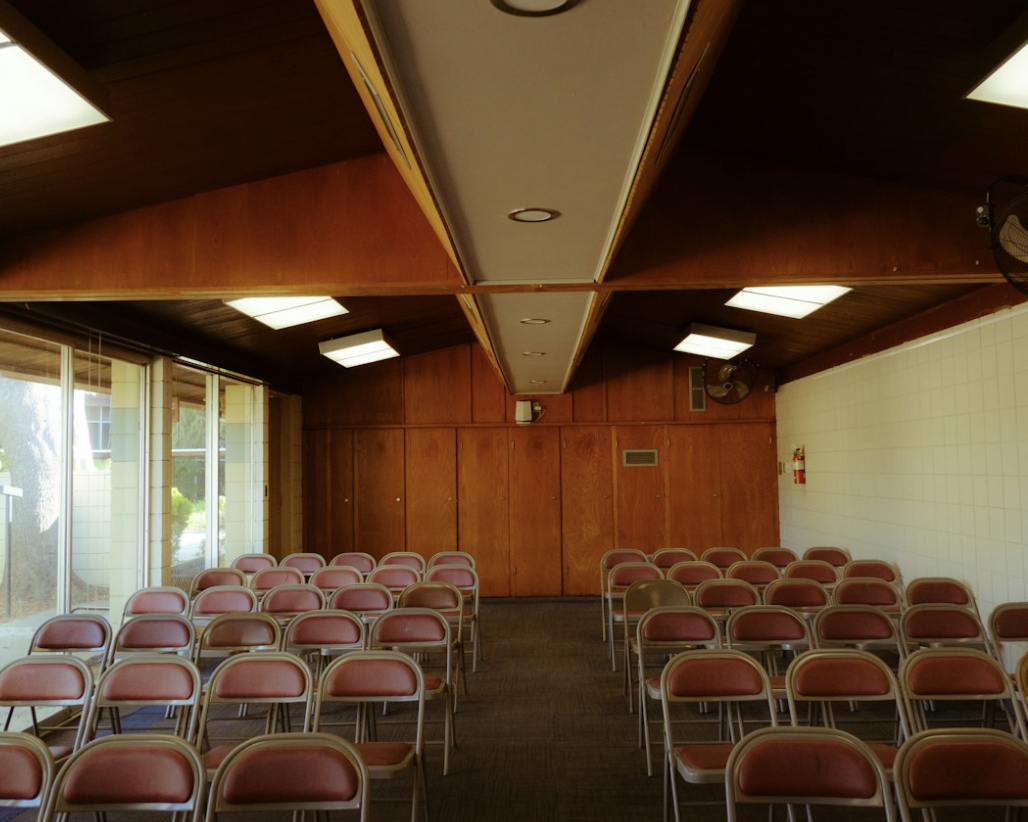
Photo by Adolfo Félix on Unsplash
Alt text: Rows of empty chairs in a wood-paneled room
A hall is booked, a program is printed, and the people who did the work are named from a podium. By the following week very little of it survives in any form a stranger could read. Organizations that want something more durable often turn to a struck medallion or coin. Makers such as Challenge Coins 4 Less produce them for units, departments and civic groups across the country. The appeal is not the metal but the simple fact that a dated object can outlive everyone who was in the room.
Why Do Institutional Milestones Disappear So Fast?
A milestone is normally marked with events rather than objects. Photographs stay on a phone, the program book goes into recycling, and the video sits on a drive nobody opens twice.
Volunteer organizations also lose their own memory in a predictable way. Often 3 or 4 long-serving people hold most of what the group actually knows. When they step back, the detail leaves with them.
Boards rarely notice this until they need something specific. A grant application asks for a founding date. A newcomer asks who the hall was named after. Nobody in the room is certain.
What Does a Struck Medallion Carry That Paper Does Not?
Paper records need a reader who is already looking for them. An object works the other way around. It sits in a drawer, gets found by accident, and produces the question on its own.
That question is the entire mechanism. Somebody picks it up and asks what it was for. The answer has to be spoken aloud, by one person, to somebody younger.
A medallion also carries its own label wherever it travels. A year, a name and one short line of text stay attached permanently. The associations that preserve state and local history work on the same principle at a much larger scale.
Which Anniversaries Are Actually Worth Marking?
Not every year deserves a medallion. Marking too much devalues the occasions that genuinely matter. Most groups find that a short list covers a full generation of activity.
- A founding anniversary at 25, 50, 75 or 100 years.
- A building bought, opened, restored or finally paid off.
- A graduating class, a choir or a youth group reaching a milestone season.
- Long service by a volunteer, measured in decades rather than years.
- The closing of a chapter that merged into a larger body.
Alt text: A gold coin sitting on top of a green cloth
The 30th anniversary of a local museum and research center shows how an institution frames its own longevity for the people who use it.
How Do Small Objects Move Between Generations?
Handing things down is not sentimentality. It is one of the few practical ways an organization stays recognizable to itself over time.
A medallion given to a board member in 1998 ends up in a box. A grandchild finds that box in 2035. The year is legible, the name of the group is legible, and a search usually follows.
- Give them to people rather than to the office. Objects kept by families survive far longer than objects kept by institutions.
- Present them where children and grandchildren are present. That is the moment the story gets heard.
- Place a few with whatever archive, library or museum the group already works with.
What Should a Board Settle Before It Orders Anything?
The decisions that matter here are written rather than visual. A group that agrees its criteria first avoids an awkward argument in year two.
- Name the reason in one sentence, and keep that sentence with the order.
- Decide who approves recipients, then record the decision in the minutes.
- Agree whether the piece is a gift, an award, or both at once.
- Keep the quantity small enough that receiving one still means something.
Groups already running a multi-year campaign can fold this into plans they have, much as one ongoing 50th anniversary campaign has done across a series of community evenings.
How Should a Group Keep the Record Beside the Object?
An object with no record becomes a puzzle. A record with no object rarely gets read at all. The pair holds up better than either half does alone.
Keep the paperwork plain. One page per issue is enough, filed wherever the group files everything else. List the year, the occasion, the number made and the names of the recipients.
Anyone unsure what to keep can look at how researchers use archives when they reconstruct the past of an institution. The answer is almost always minutes, photographs and lists of names.
Frequently Asked Questions About Commemorative Medallions
What Is a Commemorative Medallion for a Community Organization?
It is a small struck metal piece made to mark one specific occasion. Groups use them for anniversaries, building openings and long volunteer service. The design normally carries the group’s name and the year.
How Many Should a Group Order for an Anniversary?
Fewer than the guest list suggests. A limited number keeps the meaning intact for the people who receive one. Minimum order quantities differ between makers, so confirm that figure before budgeting.
Who Should Receive One at a Milestone Event?
Start with people whose service spans decades rather than seasons. Founders, long-serving board members and the volunteers who held things together are the obvious cases. Write the standard down before anybody is nominated.
How Should a Group Record the Reason Behind Each Medallion?
One short written note per issue will do. Record the year, the occasion and the recipients, then file it with the minutes. That note is what keeps the object legible 40 years later.
What the Next Board Will Inherit
Every organization that lasts is handing itself to people who have not arrived yet. Most of what changes hands is administrative. Bank details, keys, a mailing list and one unfinished project.
A small marked object belongs in that handover too. It is often the only item that explains why the rest of it was worth doing. Decades from now it will still state the year the group reached, and the fact that somebody thought that was worth marking.
That is a modest thing to ask of a piece of metal. It is also more than a printed program has ever managed.