When the State Hunts a Church: Armenia’s Steady Break with the Rule of Law

A standoff at Etchmiazin on Jun. 27 is the latest twist in a government crackdown in Armenia
BY DR. KEVORK HAGOPJIAN, ESQ.
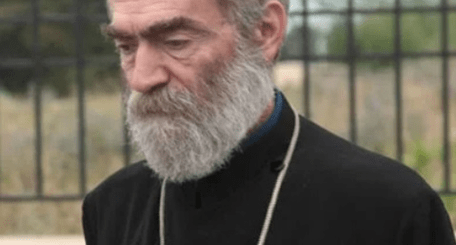
 Dr. Kevork Hagopjian, Esq.
In Armenia today, the question is no longer whether the government is in conflict with Etchmiadzin. It is whether a democratic state can openly campaign to unseat the head of its national Church, selectively pursue criminal cases against dissenting clergy, send security forces into the courtyard of Holy Etchmiadzin to seize an archbishop, promote defrocked priests and dissident bishops as quasi-official partners, weaponize alleged leaks and scandals against senior hierarchs, and still claim to respect the rule of law. For months now, the authorities have combined investigations against outspoken bishops, public calls for the resignation of Catholicos Karekin II, and overt political support for clergy who stand against the Mother See.
Stripped of political rhetoric, the question is a legal one. Armenia’s Constitution guarantees freedom of thought, conscience and religion, affirms the autonomy of religious organisations and declares their separation from the state, while recognizing under Article 18 the “exclusive mission” of the Armenian Apostolic Church in the nation’s life. That combination is deliberate: the Church is historically unique, but it is not a ministry of government. The Constitution gives no authority to the cabinet or parliamentary majority to appoint, remove or discipline the Catholicos or bishops, still less to build and sponsor parallel ecclesial structures. Those questions are governed by canon law and internal church procedures, with clergy subject to ordinary criminal law only as individual citizens.
Internationally, Armenia is bound by Article 18 of the ICCPR and Article 9 of the European Convention on Human Rights, which protect freedom of religion and impose on the state a strict duty of neutrality and impartiality. The European Court of Human Rights has made clear, notably in Hasan and Chaush v. Bulgaria, and Holy Synod of the Bulgarian Orthodox Church v. Bulgaria, that governments may not decide which beliefs are legitimate, select religious leaders or favor one faction in an internally divided church, stressing that believers have the right to an organizational life free from state-imposed leadership.
Against this legal backdrop, the pattern of recent events is deeply troubling. Senior clergy who have been outspoken critics of government policy have been targeted with criminal proceedings and detentions on charges ranging from public calls to overthrow the constitutional order to terrorism and coercion of citizens to attend protests. Security forces even raided the grounds of Holy Etchmiadzin itself to try to seize Archbishop Mikael Ajapahyan, clashing with priests and faithful. If there is real evidence that any individual cleric has plotted violence, the state not only may but must investigate and prosecute. No cassock confers immunity from the Criminal Code. But when prosecutions overwhelmingly target those church figures who are most associated with political opposition, when the rhetoric around them casts them as a “putschist” or “criminal-oligarchic” caste, and when arrests come in waves that coincide with political crises, it becomes impossible to view these cases purely as neutral law enforcement. In human-rights terms, there is a serious risk of selective criminalization of dissenting clergy as a means of weakening an institution perceived as politically inconvenient.
That risk is amplified by the conduct of the prime minister himself. When an ordinary citizen calls for the resignation of the Catholicos, that is an exercise of freedom of expression. When the head of government publicly demands that the Catholicos resign, accuses him of desecrating his office and urges supporters to “liberate” the Mother See from him, the situation is radically different. The power imbalance is obvious. The message is no longer “I disagree with this church leader” but “I, as the state’s chief executive, expect this leader to go.” Under both the Armenian Constitution and Article 9 of the European Convention, the selection and removal of the Catholicos are internal church matters. A prime minister’s campaign to drive him out is indistinguishable in principle from the state-backed leadership engineering that the European Court condemned in Hasan and Chaush and Holy Synod.
In this context, supporters of the government often reply that Catholicos Karekin II “started it” by publicly calling for Pashinyan’s resignation after the 2020 war, and that the prime minister is therefore entitled to demand the same in return. Legally, this symmetry argument collapses on inspection. The Catholicos is an extraordinarily influential figure. He is the head of a centuries-old national Church with millions of faithful, but he is nonetheless not an organ of the state. In legal terms he is a non-state actor within civil society who, like any other person, enjoys freedom of expression and freedom of religion and may voice the view that a particular head of government should resign. The prime minister, by contrast, represent the state. When he speaks in that capacity he is bound by a duty of neutrality and impartiality in religious matters and wields the full coercive power of law enforcement, legislation and administration. A church leader calling for a change of government is engaging in political speech about who should exercise secular authority; a head of government calling, repeatedly and in an orchestrated way, for the removal of the Catholicos, while simultaneously backing defrocked clergy and presiding over prosecutions of critical bishops, is no longer engaged in ordinary speech but in institutional interference with the internal life of a religious community. Human-rights obligations do not function on a “you broke yours, now I can break mine” basis: even if one believes the Catholicos acted imprudently in 2020, that does not suspend the Constitution or Armenia’s treaty commitments. The lawful remedy for controversial statements by a church leader is public debate or internal ecclesiastical discipline, not a campaign by the executive to subjugate the Church and remake its leadership in violation of the very norms the state is bound to uphold.
One more objection often raised is that the Church “should not interfere in politics” at all, and therefore Catholicos Karekin II was wrong to call for Pashinyan’s resignation in the first place. Here again, the rhetoric sounds persuasive but misunderstands what separation of church and state actually means in law. Constitutional ‘separation’ is above all a limitation on the state’s power over religion and, in practice, a barrier to religious institutions exercising state authority and not a gag order on religious voices in public life. not a gag order on religious voices in public life. As long as the Church is not trying to exercise state authority such as controlling the police, writing laws, fixing elections, its leaders remain part of civil society and enjoy the same freedom of expression as any other actor. This is exactly why, when Archbishop Bagrat Galstanyan stepped into open politics and allowed his name to be put forward as a candidate for prime minister, the Mother See, at his own request, formally suspended his ecclesiastical and administrative service while preserving his episcopal rank: a conscious attempt to separate his political role from his pastoral office rather than to let the Church as an institution “take over” the state.
Moreover, in situations perceived as existential for the nation, such as war, genocidal mass forced displacement, systematic destruction and appropriation of Armenian cultural and religious heritage, the risk of further territorial loss, Church leaders are not only permitted but obliged, under their own moral and pastoral mandate, to voice concern, warn of imminent harm to their flock, lands, and properties, and to propose solutions. International human-rights law explicitly protects such non-violent political and moral speech, including when it comes from religious leaders. A Catholicos who says “I believe this government should resign” in that context is not usurping state functions; he is articulating a moral and political judgement that others are free to accept or reject. One may criticize the wisdom or tone of such interventions, but they do not strip the Church of its rights and duties or release the government from its duty of neutrality. The cure for speech one dislikes is more debate and the use of other democratic tool, not turning around and using state power to punish the institution from which the speech came.
Another revealing thread is the timing. The authorities do not admit that they escalated their campaign against Etchmiadzin after the Bern conference on Artsakh, but the chronology speaks for itself. At the end of May 2025, at the initiative of Karekin II, an international conference in Bern focused on the preservation of Artsakh’s Armenian spiritual and cultural heritage and on the rights of its displaced population, including the right of return. Within days, Azerbaijan’s Sheikh-ul-Islam Allahshukur Pashazade wrote to the World Council of Churches denouncing the Armenian Church’s “revanchist propaganda” and urging that it not be supported. Shortly thereafter, Prime Minister Pashinyan launched his public accusations that the Catholicos had violated his vow of celibacy and fathered a child and began openly demanding his resignation and proposing a state-supervised process for choosing a successor. These rumors about Karekin II’s personal life had circulated in parts of the Armenian media for more than a decade without ever prompting such a campaign from the executive. It is difficult, from a legal perspective, to treat it as coincidence that they suddenly became the centerpiece of state rhetoric immediately after the Catholicos organized an Artsakh-focused conference in Europe and was attacked by Baku’s chief cleric for supposedly endangering “fragile peace.” When the only thing that has changed is that the head of the Church has raised uncomfortable questions about genocidal ethnic cleansing and the right of return on the international stage, the subsequent moral outrage looks less like neutral concern for canon law and more like retribution for constitutionally protected speech that does not align with the government’s diplomatic narrative.
Echoing Pashazade’s discourse, government circles suggest that by convening the Bern conference on Artsakh and by continuing to speak, in Armenia and abroad, about the occupation, ethnic cleansing and the right of return of its displaced population, Etchmiadzin sabotaged the (so-called) peace process. Even if one accepts that Etchmiadzin’s message contradicts the government’s chosen diplomatic line, that fact is not legally relevant in the way the authorities suggest. A church organizing and participating in an international conference and advocating for the protection of cultural heritage, human rights and return in a post-conflict setting is squarely within the scope of the freedom of expression and freedom of religion, as recognised by Article 19 and 18 of the ICCPR and Article 10 and 9 of the European Convention. International law does not require religious voices to align themselves with state foreign policy; on the contrary, it accords the highest level of protection to non-violent political and human-rights speech, including when it is uncomfortable for governments. A state that responds to such speech not with argument but with institutional retaliation against the Church – escalating raids, prosecutions and campaigns to unseat its head – is not protecting peace; it is punishing a dissenting moral voice in violation of the very norms that govern limitations on rights and the duty of religious neutrality.
On the other hand, the scandal surrounding Archbishop Arshak Khachatryan and the circulation of alleged intimate videos has been instrumental in a similar way. After the footage appeared on Telegram, the Investigative Committee opened criminal proceedings on unlawful interference with private and family life and ordered a forensic video-audio and portrait examination. In written answers to the press, the Committee has said that this examination confirmed that the person depicted in the videos is Archbishop Arshak and that a copy of the conclusion was sent to a member of the internal commission set up at Etchmiadzin to study the case. Meanwhile, the Archbishop’s lawyer protested that neither he nor his client was given a chance to participate in or even see the expert report before it was circulated to others, calling the objectivity of the process into question. According to counsel, the so-called “forensic audio-video and portrait examination” itself consists of barely half a page of reasoning, does not test the authenticity of the footage or whether it could be manipulated or AI-generated, and merely notes that the man in the video and a publicly available photograph of the Archbishop share similar forehead, nose, chin, hairstyle and glasses. Yet this limited observation was publicly presented by the Investigative Committee as having “confirmed” that the person shown was the Archbishop.
Taken together, the apparent “same-day” expert opinion, the exclusion of the Archbishop and his counsel from the procedure, the superficial nature of the analysis, and the selective sharing and public characterization of its conclusions with third parties raise serious doubts about the independence and reliability of the investigation.
Allegations of sexual misconduct by senior clergy raise issues of internal church discipline and, where privacy violations and possible blackmail are concerned, the state’s duty to investigate specific offences. But what has followed goes far beyond that. A group of bishops has (mis)used the Archbishop’s affair allegations to accuse the Catholicos of “protecting sacrilege” and betraying his oath, while pro-government outlets amplify these claims as further proof that Karekin II must be forced out. Legally, even if every allegation about an individual archbishop’s private life were eventually confirmed, that would justify narrowly tailored canonical measures and focused criminal accountability for those who unlawfully recorded and disseminated the footage, but definitely not a state-driven restructuring of the entire Church hierarchy or a political campaign to depose the Catholicos.
Government meetings and photo opportunities with bishops who oppose the Catholicos fall into the same pattern when understood in context. Clergy, like any citizens, may meet with officials. But when one camp within the episcopate is praised and courted while another is being prosecuted, vilified or pressured to step aside, the state again ceases to be an impartial arbiter and becomes a player in an internal church power struggle. Strasbourg jurisprudence is clear that when authorities identify themselves with a particular leader or faction in a divided community, the duty of neutrality is breached.
The same analysis applies to the government’s highly symbolic support for defrocked clergy or those critical of Ethcmiatzin. When the prime minister and ministers, accompanied by security services, attend a liturgy led by a priest whom the Church has formally stripped of his priestly status, and when that event is presented as a challenge to the “conservative” hierarchy of Etchmiadzin, this is not a private act of worship. It is a deliberate political signal that the executive is prepared to recognize, and lend the prestige of high office to, religious actors whom the Church itself regards as illegitimate. In substance, it resembles the Bulgarian authorities’ support for an “alternative synod” in Holy Synod of the Bulgarian Orthodox Church: the state effectively helps build up a parallel religious authority in order to weaken the recognized one.
Etchmiadzin is not only a religious center in Armenia; it is a transnational legal and institutional actor that operates across Armenia and the diaspora and holds assets, communities and obligations in multiple jurisdictions. When a government normalizes the idea that it can politically reconfigure that institution—by pressuring its leadership, instrumentalizing criminal proceedings and empowering rival structures—it is not “modernizing” church–state relations, but signaling that no independent pan-Armenian body is secure against partisan intervention. In human-rights terms, this is not about special privileges for the Church; it is about whether any institution that stands between the individual and the state can rely on the guarantees of autonomy, freedom of religion and association that Armenia has undertaken to respect.
There is an additional danger which goes beyond the Church itself. Once a government convinces itself that it can bring a historic church to heel through prosecutions, public vilification and the cultivation of “its own” clergy, it has effectively abandoned the idea of limits on its power. Today the experiment is being run on the Catholicos, a handful of bishops; even a church-linked TV channel like Shoghakat, tomorrow the same method can be turned, with minimal adjustment, on independent media, universities, professional bodies, legitimate and historical political parties or NGOs. The actors may change, but the logic of control remains the same.
None of this means the Armenian Apostolic Church is above criticism. It is not. Nor does it mean that clergy cannot be lawfully prosecuted when there is genuine evidence of serious crimes. They can and should be. But the legal framework that Armenia has freely accepted – in its Constitution, in the ICCPR, in the European Convention and in the case law of the European Court of Human Rights – draws a bright line that no democratic government should cross. It may not decide who should be Catholicos. It may not use the tools of the state to favour certain factions and crush others inside a religious community. And it may not disguise political control over the Church as “reform” without slipping into clear violation of its domestic and international obligations.
To conclude, what is unfolding in Armenia is not a conventional dispute between a secular state and a privileged church, but a test of whether state power recognizes any legal limits when it turns against an independent institution. The pattern is clear: when a government claims the right to decide who may be Catholicos, sends armed officers into the Mother See to drag out its bishops, sidelines and criminalizes dissenting clergy, and promotes its own favorites within a religious hierarchy, it is no longer merely arguing with the Church; it is treating the Church as something to be disciplined and brought under political control.
Accepted on its own terms, this logic must be described plainly and rejected just as plainly. It is not compatible with the human-rights standards Armenia has undertaken to respect. It amounts to an abuse of power aimed at silencing a troublesome moral voice and subjugating yet another independent institution to the will of those who govern. It stands as a serious warning that the real question is no longer only who leads the Church, but whether any institution that speaks in the name of the Armenian world can stand, in conscience and in law, beyond the reach of the government of the day.
Dr. Kevork Hagopjian, Esq. is an attorney and human rights advocate with expertise in international law, minority rights, civil litigation, and community engagement. He holds a Ph.D. in Law from the University of Vienna, along with two LL.M. degrees in Public International Law from SOAS, University of London and U.S. Law from George Mason University as well as an LL.B. from University of Aleppo. His doctoral research led to the publication of a book on “The rights of Armenian minorities in Lebanon and Turkey under National and International law”. In addition to legal practice, he facilitates dialogue and peacebuilding efforts in divided or post-conflict communities. With experience spanning legal, intergovernmental, nonprofit and civil society sectors, Dr Hagopjian remains actively engaged in global conversations on justice, accountability, and human dignity.