When Armenians Ignore Their Own Voices
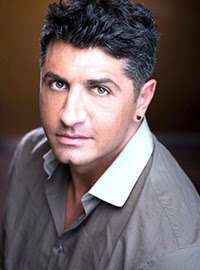
By Vic Gerami
For the last six years, much of my life and career has revolved around one mission: fighting for Artsakh, Armenia, and the Armenian people during one of the darkest chapters in our modern history.
Over the last six years, I devoted much of my work to advocacy for Artsakh and Armenia through journalism, documentaries, public education, coalition building, and community organizing. During that time, I worked with elected officials, activists, media outlets, and others to raise awareness about the humanitarian crisis and the broader information war surrounding Armenia and Artsakh.
But throughout those years, one reality weighed heavily on me.
Too often, Armenians undervalue or overlook the work of their own people while instinctively elevating outside voices as more legitimate, prestigious, objective, or worthy of attention.
This is not written out of bitterness, nor is it a request for praise or validation. I do not advocate for Artsakh because I expect applause. I do it because it is morally necessary and because our people were being ethnically cleansed while much of the world looked away.
Yet I repeatedly found myself confronting a broader issue that extends beyond my own experiences. I often saw greater enthusiasm, support, and access extended to outside voices while Armenians who had dedicated years of work, sacrifice, resources, and emotional energy to the same cause frequently struggled to receive the same level of engagement or acknowledgment
One experience in particular stayed with me. While producing my first documentary on the Artsakh Genocide during Azerbaijan’s genocidal attack and the forced displacement of Armenians from Artsakh, a project that ultimately required multiple trips to Armenia for interviews, footage, and research, I repeatedly reached out to the Armenian and Artsakh governments. My goal was not simply access for the sake of access. I wanted to ensure the documentary included Armenian and Artsakh voices and perspectives directly from those involved.
Over the course of the film’s year-and-a-half production, I sent emails, made calls, and followed up persistently. My multiple requests to conduct interviews, either in person or via Zoom, went unanswered. It was a confusing experience because, at the same time, I had been able to secure interviews with seven members of Congress, a senior member of the British House of Lords, and other elected officials and public figures, many of whom were not Armenian.
Later, after my documentary had already been completed, I came across what had been presented and promoted as a documentary film about the attack on Artsakh by a relatively unknown foreign journalist. After watching it, I felt it was a watered-down and euphemistic piece with little substance that, in my view, largely whitewashed Azerbaijan’s crimes against humanity and failed to accurately reflect the gravity of what had happened. Several of the same Armenian officials I had unsuccessfully attempted to reach had participated in that project. I later learned that some of those interviews had taken place while I myself was in Armenia making my film.
I do not share this example out of resentment or to question another journalist’s opportunity. Every journalist deserves access and support. What stayed with me was something broader: why did it seem easier for outside voices to gain engagement than for Armenians who had devoted years of work, advocacy, and personal investment to the same cause?
I am not referring solely to interviews or formal collaborations. I mean something broader: support, engagement, willingness to work together, acknowledgment and investment in one another within our community.
This is not about whether any individual owes another person an opportunity or platform. It is about whether we unintentionally create a culture where outside validation carries greater weight than our own voices.
Communities survive and grow not only through activism, but through collective support, solidarity and acknowledgment of those who step forward during difficult times. Recognition is not about ego. It is about building a culture where people feel encouraged to continue contributing, creating, advocating, and leading.
Sometimes it seems that a non-Armenian repeating our story can receive greater enthusiasm than Armenians who have spent years immersed in that work and those struggles themselves.
This dynamic does not strengthen us. It weakens us.
Over the years, I have also come to recognize that some of the resistance, distance, or lack of support I encountered was likely connected to the fact that I am openly gay. That reality was communicated to me directly and indirectly through social media attacks, community gossip, private conversations, and feedback from others who observed it themselves.
I do not raise this point to seek sympathy, nor to divide. I raise it because honesty matters. If we are going to have meaningful conversations about justice, dignity, prejudice, and collective growth, those conversations must also begin within our own communities.
A people who ask the world to recognize their humanity should also strive to ensure that every Armenian willing to fight for the nation, its history, and its survival is valued equally, regardless of personal identity or background.
The tragedy of Artsakh did not happen solely because of violence on the ground. It also happened because of global indifference, failed institutions, propaganda and the inability of truth to compete with power and money. Armenians cannot afford to replicate smaller versions of that indifference within our own communities.
If there is one lesson I have learned from these years, it is that we must do better at standing beside one another while the work is still being done, not only after history has already been written.
Despite everything, I remain hopeful. I remain committed. I still believe in the power of advocacy, journalism, coalition building, education, and truth. I still believe narratives can change. I still believe people can grow.
And I still believe that if Armenians truly learn to value, support, and uplift one another with the same passion we often reserve for outside validation, we will emerge stronger, wiser, and more united than before.
Vic Gerami is an award-winning journalist, documentary filmmaker, and founder of Truth And Accountability League (TAAL), working at the intersection of media, human rights, and public accountability.