Omar Sharif changed his name and religion for the woman he loved, acted in major Armenian movie
By Tereza Uloyan
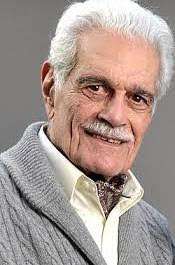
Omar Sharif changed his religion, his name, and the public identity he had been born with for one reason.He wanted to marry the woman he loved.Decades later, long after the marriage had ended, he still said she was the only woman he had ever truly loved.He was born Michel Demitri Shalhoub in Alexandria, Egypt, in 1932.His family was prosperous, Lebanese-Syrian, and Catholic.He grew up in an Egypt with one of the most vibrant film industries in the region, so successful that Cairo’s cinema world was often called “Hollywood on the Nile.”But acting was not originally the plan.Sharif studied mathematics and physics at Cairo University.His family expected him to eventually enter his father’s lumber business.Then cinema pulled him somewhere else entirely.In 1954, Egyptian director Youssef Chahine cast the young actor opposite Faten Hamama in The Blazing Sun.Hamama was already one of the biggest stars in Egyptian cinema.They fell in love while making the film.But in 1950s Egypt, their relationship faced an enormous obstacle.Faten Hamama was Muslim.Michel Shalhoub was Christian.An interfaith marriage between them was essentially impossible within the social and religious expectations surrounding them.Sharif made his choice.He converted to Islam.He also adopted the name Omar Sharif.The decision was made specifically so that he and Faten could marry.They did in 1955.In the process, the young actor changed not only his religion but the name by which the entire world would eventually know him.Then his career moved far beyond Egypt.In 1962, director David Lean cast Sharif as Sherif Ali in Lawrence of Arabia.It changed everything.The role earned him an Academy Award nomination and made him the first Arab actor to achieve genuine worldwide movie stardom.His entrance in the film became one of the most memorable introductions in twentieth-century cinema.And Hollywood wanted more.In 1965 came Doctor Zhivago.Then Funny Girl in 1968.By the end of the decade, Omar Sharif was one of the most recognizable actors on the planet.He spoke six languages.He moved easily between different cultures and film industries.And his roles crossed extraordinary boundaries.A Mongolian emperor.A Russian poet caught in revolution.Arab princes.European aristocrats.Romantic leads.Men from worlds completely different from the Alexandria into which Michel Shalhoub had been born.But international success came with a cost.During the Nasser era, Egypt imposed strict travel restrictions.For an actor whose career now required constant movement between countries and studios, those restrictions became increasingly difficult.Sharif grew frustrated.Eventually, he effectively placed himself in self-imposed exile in Europe.Professionally, it allowed him to continue working.Personally, it created distance from home.And from Faten.The marriage came under increasing strain.They eventually divorced in 1974.But Sharif never seemed to speak of her as simply an ex-wife.Years later, he said publicly that Faten Hamama remained the only woman he had ever truly loved.The woman for whom he had once changed his faith and his name remained, in his own memory, unmatched.And acting was not the only world in which Omar Sharif became famous.Away from film sets, he developed an extraordinary reputation as a contract bridge player.He became one of the game’s elite international competitors.For years, he wrote syndicated newspaper columns about bridge.He published books about it.There were people who knew Omar Sharif not primarily as Doctor Zhivago, but as one of the finest bridge players of his generation.Then, decades after the height of his Hollywood fame, he surprised audiences again.In 1991, he accepted an offer to act in the movie called “Mayrig” – “Mother” in Armenian, directed by French-Armenian famous director Henri Verneuil that tells the true story about his own family and how they built their new life in France after escaping the Armenian Genocide in Western Armenia. According to historical reports surrounding the film’s release and its bold depiction of the Armenian Genocide, Sharif’s involvement led to an entry ban against him by the Turkish government.In 2003, Sharif starred in Monsieur Ibrahim.The performance became a major late-career triumph.He won Best Actor honors at Venice and received a César Award, proving that even after the enormous films that had defined his youth, he could still deliver work worthy of international recognition.By then, the journey had stretched across more than half a century.Alexandria.Cairo.Hollywood.Europe.Film sets across continents.Bridge tournaments.A life lived almost permanently between cultures.Then came illness.Sharif was diagnosed with Alzheimer’s disease in 2012.On July 10, 2015, he died in Cairo after suffering a heart attack.He was eighty-three years old.The life that ended there had begun with a young Catholic boy named Michel Shalhoub, expected to enter his father’s lumber business.Instead, he became Omar Sharif.He changed his religion for love.Changed his name for marriage.Left his home country because the demands of global fame made staying increasingly difficult.Became one of the first truly international Arab movie stars.And spent decades crossing boundaries of language, religion, culture, and identity that most people never attempt to cross even once.The marriage did not last.The name did.The fame did.And so did his memory of the woman for whom he had changed everything.Omar Sharif spent much of his life moving between worlds.But when he spoke about love, he kept returning to one person.Faten Hamama.The woman who had known him before the rest of the world knew Omar Sharif.