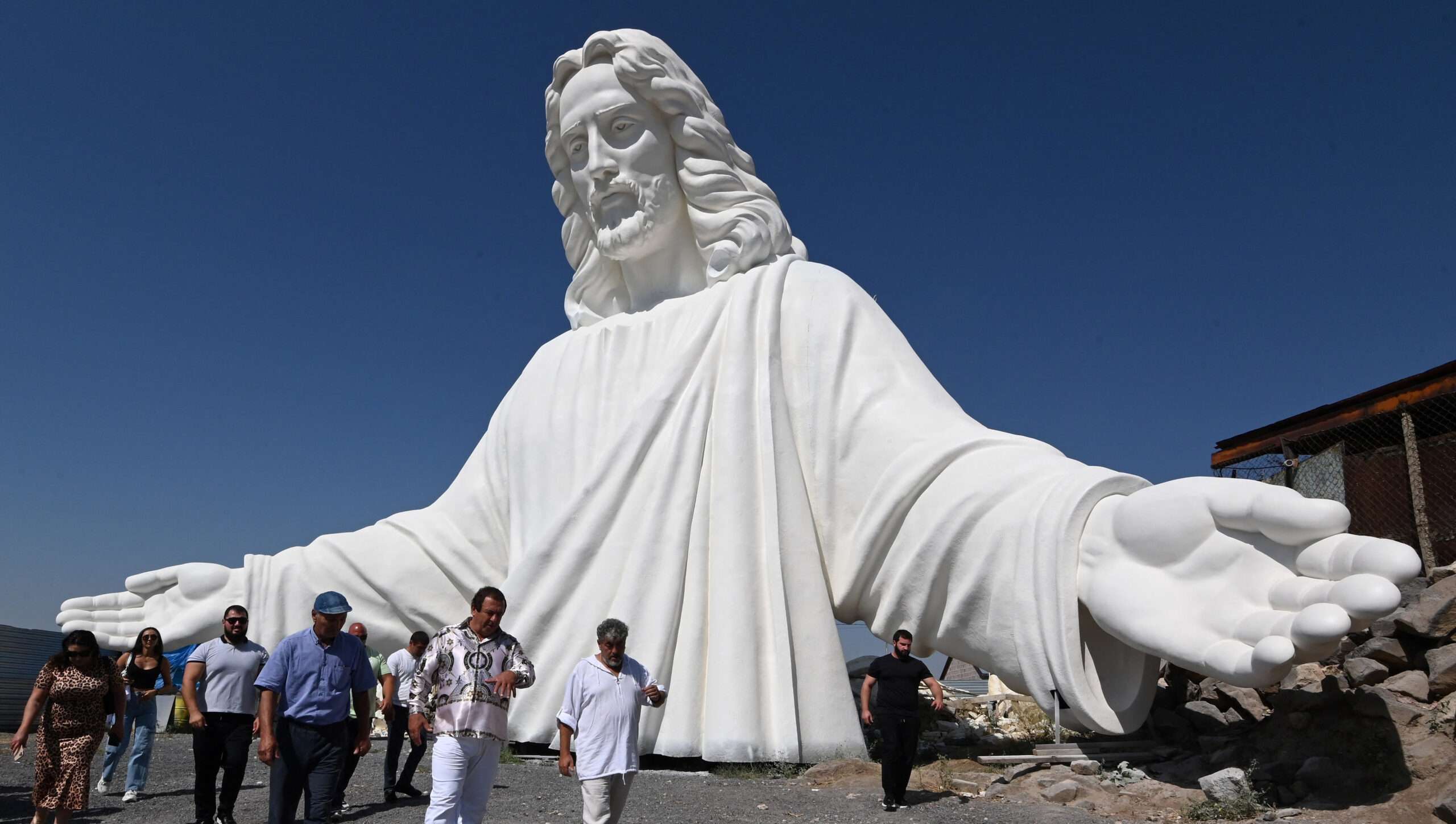
The road was bumpier than I had expected and as my taxi chugged uphill, weaving around street dogs, I felt a little embarrassed. I had asked my driver to take me from the center of Yerevan, Armenia’s capital, to Zovuni, a village to the city’s north. It is not somewhere visitors usually go. Lately, however, a giant sculpture has been drawing crowds. Towering over the villagers’ homes was the top section of a statue depicting Jesus Christ. In a yard behind it stood his midriff and his legs. Soon they will be taken to the top of a nearby mountain and assembled like Lego. Pedestal included, it will be one of the tallest statues of Jesus in the world.
The Armenian Apostolic Church, which forbids making such statues, has taken a dim view of the structure. But that has not stopped Gagik Tsarukyan, one of Armenia’s richest men, from pressing ahead with it.
Mr Tsarukyan, who leads a minor pro-Russian party called Prosperous Armenia, has said he hopes the edifice will unite Armenia in “difficult times”. The country is moving towards peace with Azerbaijan after a series of crushing defeats since 2020. I had read about Mr Tsarukyan’s project in local news outlets. And as someone interested in the role of money, religion and nationalism in Armenian politics ahead of the country’s election on June 7th, I felt it was worth going to see.
Mr Tsarukyan’s party itself is too small to be especially relevant. In a poll from February, just 3% of respondents said they would vote for it. But the forces it embodies—Russia-friendly sentiment, oligarchic power and nationalism—are looming large over the campaign.
The most popular opposition party, Strong Armenia, is led by Samvel Karapetyan, another oligarch, who is under house arrest for calling for the government to be overthrown (a charge he denies). He has criticized Nikol Pashinyan, Armenia’s prime minister since 2018, for turning the country’s foreign policy towards the West. When I interviewed Mr Karapetyan in his glitzy mansion in the hills above Yerevan last week, he accused the government of being afraid of Azerbaijan and conceding to too many of its demands. He argues that Armenia should maintain good relations with Russia, its traditional partner, and styles himself as a defender of church elites, who have clashed with Mr Pashinyan over Armenia’s military defeats.
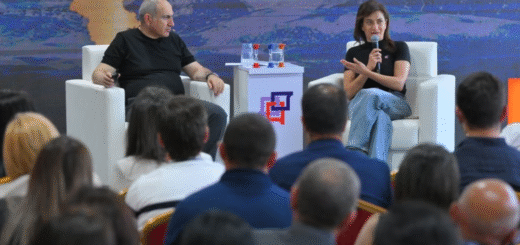
In the days before I met Mr Karapetyan, a very different vision for Armenia was on display in the capital. On May 4th Yerevan hosted a meeting of the European Political Community, a gathering of leaders from countries in and around the European Union. The following day Armenia held its first bilateral summit with the EU and opened the Yerevan Dialogue, an annual talkfest, where Emmanuel Macron gave an address. The French president showered Mr Pashinyan with praise. “I know that for a long time many believed Armenia’s fate could only be under Russia’s supposedly protective wing,” said Mr Macron. Now Armenia was on “a democratic path…of peace…and of prosperity possible without imperial hegemony”.
Together, the events made up a kind of unofficial pre-election rally for Mr Pashinyan and his open, pro-European vision for Armenia. Mr Pashinyan will almost certainly win on June 7th: his Civil Contract party is ahead of Strong Armenia by more than 15 percentage points in the polls. Nevertheless, after the election, he will have to temper the week’s optimism with realism. Armenia is a long way from ever becoming a member, or even a candidate for membership, of the EU. Its economy is still heavily dependent on Russia: in the short term, Mr Pashinyan will need to focus on gradually building up trade with the EU and other countries, such as Turkey. Lots more work needs to be done to reform the country’s institutions, which decayed under strongman rule before Mr Pashinyan came to power.
If he can do that, he may convince more Armenians to set aside nationalist sentiment and historic sympathies for Russia and win them over to his idea of a more liberal, pro-European future. But doing so will take time. Until then, Armenia will remain a country divided.