Erdogan and Ocalan: A Kurdish settlement under American auspices
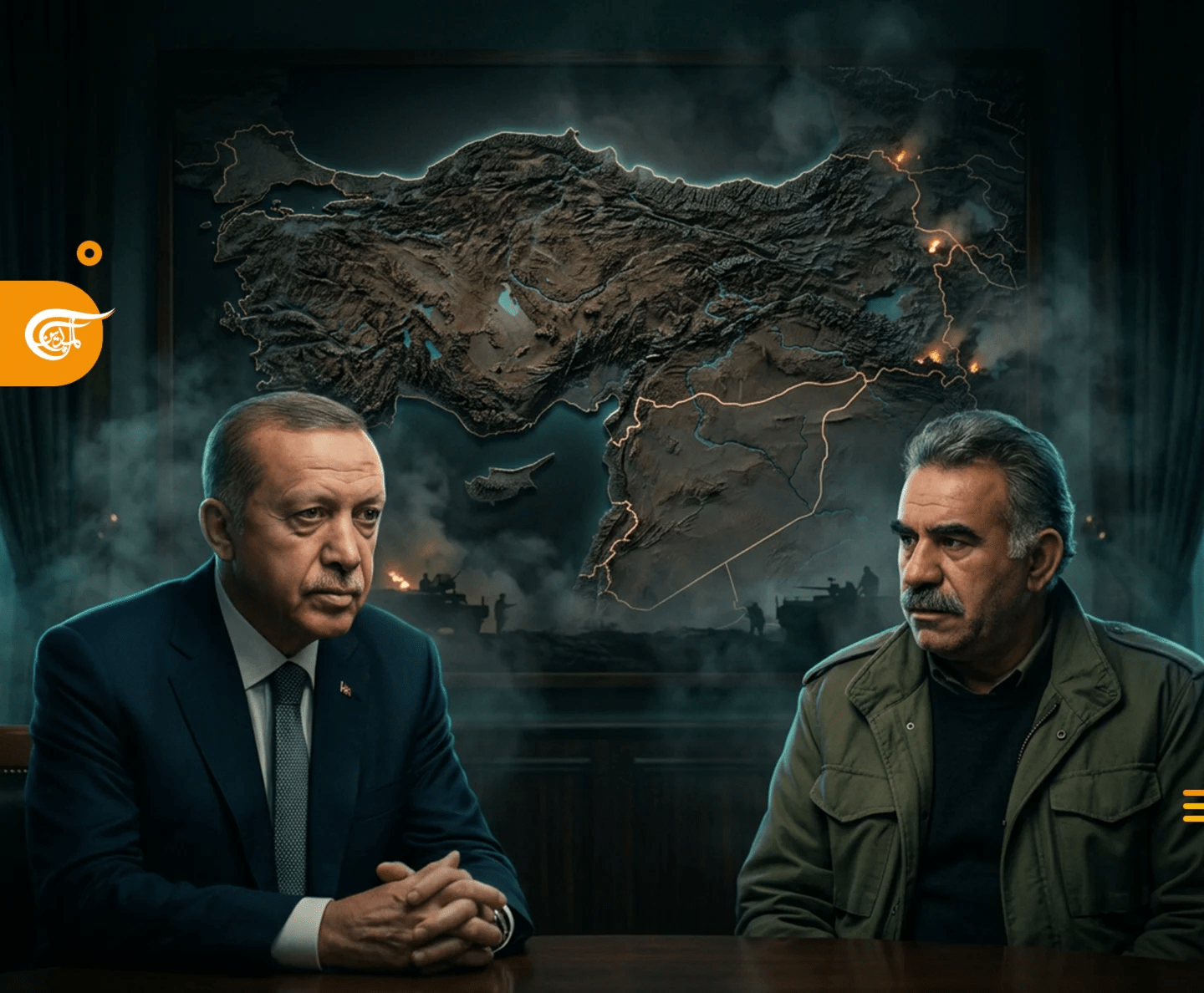
On the 106th anniversary of the Treaty of Sèvres, which aimed to establish a Kurdish state in southeastern Turkey and which was rejected by Mustafa Kemal Ataturk after the establishment of the Turkish Republic in October 1923, fate willed that the Turkish state under President Erdogan should enter through the gateway of the final solution to the Kurdish issue through the law approved by Parliament, which aims to pardon the Kurdistan Workers’ Party (PKK) fighters and later its leaders, including Abdullah Ocalan, who has been detained since February 1999.
This development came approximately 22 months after Devlet Bahçeli, leader of the Nationalist Movement Party (MHP), delivered a speech on October 22, 2014, in which he called on Abdullah Öcalan to address parliament and announce a cessation of armed struggle and the permanent dissolution of the party—which Öcalan did in March of the following year. It was also reported that he had previously met with British National Security Advisor Jonathan Powell, who, along with President Clinton, played a key role in resolving the Irish border dispute in 1998.
The months following Devlet Bahçeli’s speech witnessed a series of dramatic developments in both domestic and foreign policy. Most significant was the fall of the Assad regime 46 days later, with President Trump repeatedly acknowledging that he and President Erdoğan had orchestrated Assad’s downfall and installed al-Sharaa as president of Syria. This suggests that both Bahçeli and Erdoğan were aware of Assad’s impending demise and had taken precautions regarding potential developments related to the Kurdish issue in Syria, a situation in which Turkey played a central role by supporting the armed opposition against the Assad regime.
Washington exploited all these developments, transporting Mazloum Abdi by military helicopter from Qamishli to Damascus to sign, on March 11, 2025—three months after Assad’s fall—a partnership agreement between the new Syrian state and the Kurds. Despite Ankara’s objections to this agreement, which it initially sought to obstruct, the intense American pressure exerted by Ambassador Tom Barrack was sufficient to ensure the final agreement’s implementation. This was supported by Masoud Barzani, a close ally of President Erdoğan, who found himself compelled to give the green light to the new course of action after realizing that Washington was determined to finalize this process in a way that served its regional interests, given the strategic weight of the Kurdish issue in the overall developments in the region.
Recalling the letter that President Trump sent to President Erdogan on October 9, 2018, eight years ago, in which he told him, “Don’t be stupid and stop being stubborn. Sit down with General Abdi and agree with him on all the details,” the opposition accused President Erdogan of obeying President Trump’s instructions and yielding to the demands of Abdullah Ocalan, who was said to have finalized the general amnesty law, which may include the former co-chairs of the Peoples’ Democratic Party, Selahattin Demirtaş and Figen Yüksekdağ, who have been in prison for 10 years. The Supreme Constitutional Court has repeatedly demanded their release, but the government has not complied.
While information speaks of a new American project to address the Kurdish problem, taking advantage of the close relations between Ankara, Damascus and Iraqi Kurdistan, and despite the traditional differences between the Barzani family, which is loyal to Washington and close to Turkey, and the Talabani family, which is close to Iran and more acceptable to the Turkish Kurdistan Workers’ Party.
After the Kurdistan Workers’ Party (PKK) became the most acceptable in American calculations, provided that it served American agendas, especially against Iran, which President Erdogan seems to have noticed, he initiated dialogue, coordination and cooperation with the party’s leader, Abdullah Ocalan, and some expect him to be Türkiye’s Mandela.
He exploited the current circumstances in Turkey, Syria, Iran, and the region in general, after the Kurdish People’s Protection Units (YPG) transformed into a formidable military force thanks to American, French, British, German, and Italian support during the so-called Arab Spring years, in which President Erdoğan played a key role in coordination and cooperation with Washington. Everyone knows that the US wants Ankara to assist it in all its regional and international projects and plans, especially after President Trump stated more than once that he “likes President Erdoğan very much because he always does everything he asks of him.”
This explains Ambassador Tom Barrack’s remarks about “Turkey’s need to return to Ottoman rule” and his reminder that “President Erdoğan derives his political legitimacy from President Trump,” without anyone daring to respond, just as no one dared to respond to Trump’s letter to Erdoğan eight years ago. In any case, and regardless of how the amnesty law, which will soon include Öcalan, develops, it seems clear that Ankara is closely monitoring the integration of the Kurdish People’s Protection Units (YPG) into the Syrian military and security institutions. This comes amid reports that the Syrian Democratic Forces (SDF) and all Kurdish entities east of the Euphrates will be dissolved following the appointment of Mazloum Abdi and several of his associates to high-ranking positions in Damascus, including the vice presidency and ministerial posts. Ankara is closely monitoring this issue through its direct dialogue with Damascus, as President Erdoğan seeks to have the loudest and most influential voice in determining the fate of the Kurdish question regionally, in coordination with President Trump. This is contingent on the Kurds in the region, particularly Abdullah Öcalan, complying with his demands, but without specifying the ultimate goal: the establishment of an independent Kurdish state. Ultimately, this would come at the expense of the four countries—Syria, Iraq, Turkey, and Iran—which, especially Turkey, would find it difficult to accept such a state, given the widespread opposition it would face from Turkish nationalist sentiment. This is something President Erdoğan is unconcerned with. The opposition argues that his primary concern is securing the support of Kurdish voters to amend the constitution, thus enabling him to run for a third or fourth presidential term, or perhaps even indefinitely. It is worth recalling President Erdogan’s efforts to get rid of the current secular constitution, so that he can Islamize the Turkish state and nation, which is no longer on the list of democratic countries in the world, especially after all types of political and media opposition were eliminated and President Erdogan took control of all the Turkish state’s agencies and facilities, most importantly the army, intelligence, security, media, judiciary, and all the financial institutions that guaranteed and continue to guarantee his remaining in power, despite the serious financial and economic crises that brought the country to the brink of bankruptcy.
All of this seems to be outside the purview of President Erdoğan, who hopes President Trump will help him realize the dream of the late President Turgut Özal. Özal, after Saddam Hussein’s defeat in the 1991 Gulf War, sought to annex northern Iraq to Turkey with the consent of Kurdish leaders Masoud Barzani and Jalal Talabani. Erdoğan’s ambitions, however, were far grander. At the outset of the Arab Spring, he invoked the map of the 1920 National Pact, which envisioned northern Syria and Iraq as part of Turkish territory. This map appears to have been, and remains, central to the decision-making process regarding the future of the Kurdish people, who have failed to unify their ranks, not only nationally but also within each of the Kurdish states. Since Sykes-Picot, the Balfour Declaration, and the Treaty of Sèvres, these regions have been the focus of attention for all, particularly the Zionist-American alliance. Everyone knows that this alliance does not want Kurds, Arabs, Turks, and Persians to ever meet, even for the bare minimum of common interest. This requires everyone to be more transparent, credible, and committed to moral and humanitarian principles in order to live together in dignity and honor, after everyone recognizes the national rights of the Kurds. Otherwise, luck will not favor any of the Kurds, Arabs, Turks, Persians, or other peoples of the region to be rid of the evil of the common enemy, which is the Zionist-American alliance that has returned to its traditional talk about Kurdish rights, while it has always betrayed them. It destroyed the Kurdish Republic of Mahabad in Iran, then the Kurdish revolution in Iraq after the Shah betrayed them in 1975, and finally when the American intelligence, along with the Israeli Mossad, kidnapped Öcalan from the Kenyan capital and handed him over to Ankara on February 14, 1999. And now it is asking Erdoğan to release him, but without telling us all, and the Kurdish nation in particular, why and what it is doing all this for!