Master Khachkar Carver Narine Poladian Visits Lorik Fund’s Artsakh Tsil Arts Studio in Gyumri
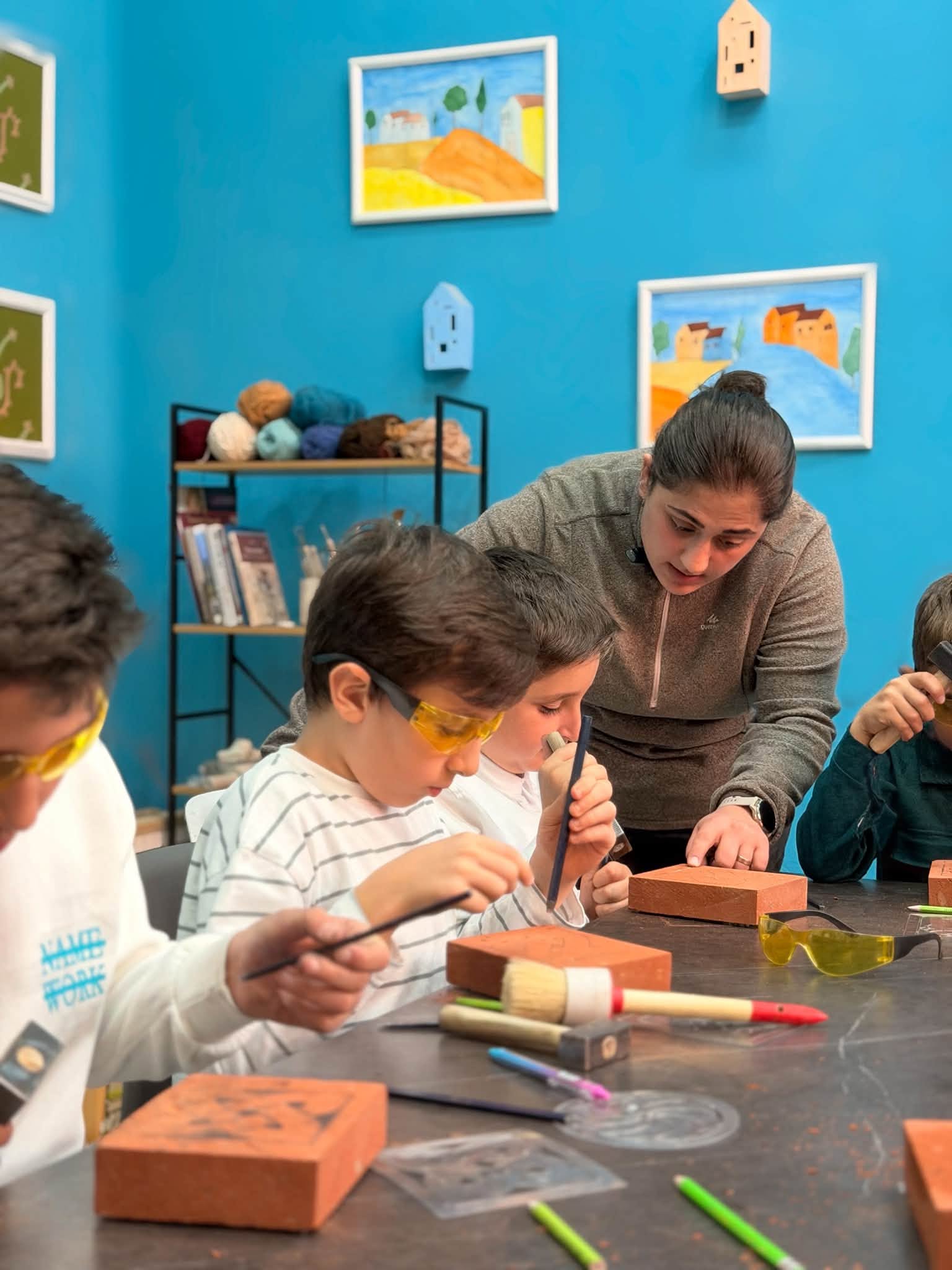
GYUMRI, ARMENIA — Lorik Humanitarian Fund’s Artsakh Tsil Arts Studio welcomed master khachkar carver Narine Poladian for a special visit dedicated to one of Armenia’s oldest and most distinctive artistic traditions.
Originally from Lebanon, Poladian repatriated to Armenia in 2018. During her visit, she shared her knowledge and experience with the studio’s young artists, who have been learning and practicing the traditional Armenian art of khachkar (cross-stone) making for several months.
The visit was part of Artsakh Tsil Arts Studio’s ongoing efforts to introduce children to traditional Armenian arts and crafts through hands-on education and opportunities to learn from experienced artisans.
Khachkars, intricately carved stone crosses featuring traditional Armenian patterns and designs, have been an important expression of Armenian cultural and religious identity for centuries. The art of Armenian cross-stone carving was inscribed on UNESCO’s Representative List of the Intangible Cultural Heritage of Humanity in 2010.
The studio’s efforts to preserve and pass down this tradition extend well beyond its classroom in Gyumri. During the summer of 2026, Artsakh Tsil Arts Studio traveled to 31 villages across Armenia, bringing khachkar-making workshops and other cultural activities directly to children in rural communities. Village after village, children were introduced to traditional Armenian crafts, weaving, embroidery, music, dance, and puppet performances, many experiencing these activities for the first time.
Originally established in Artsakh, Artsakh Tsil Arts Studio reopened its doors in Gyumri in November 2024, continuing its mission of preserving Armenian cultural traditions through art and education. Welcoming both local children and those from families forcibly displaced from Artsakh, the studio provides all classes and activities completely free of charge. Lorik Humanitarian Fund covers the studio’s full operating costs, ensuring that every child has the opportunity to participate.
Operating six days a week the studio offers a wide range of artistic and cultural activities, from pottery and painting to traditional Armenian crafts, dance, and khachkar making.
Poladian’s visit offered the children an opportunity to build on what they had already learned while gaining insight from a master artisan dedicated to preserving the craft. It also reflected the studio’s broader mission: keeping Armenian traditions alive by passing them directly to the next generation.
About Lorik Humanitarian Fund
Lorik Humanitarian Fund is a U.S.-based 501(c)(3) nonprofit organization supporting Armenian families and communities through housing assistance, educational scholarships, small business development grants, health assistance, sports programs, and cultural preservation initiatives. Its Artsakh Tsil Arts Studio in Gyumri provides free arts education to children while promoting the preservation of Armenian cultural heritage.
Media Contact Lorik Humanitarian Fund Email: [email protected] Website: www.LorikHF.org