Syria’s Armenians Between Uncertainty and Renewal: A Field Report from Aleppo and Kessab
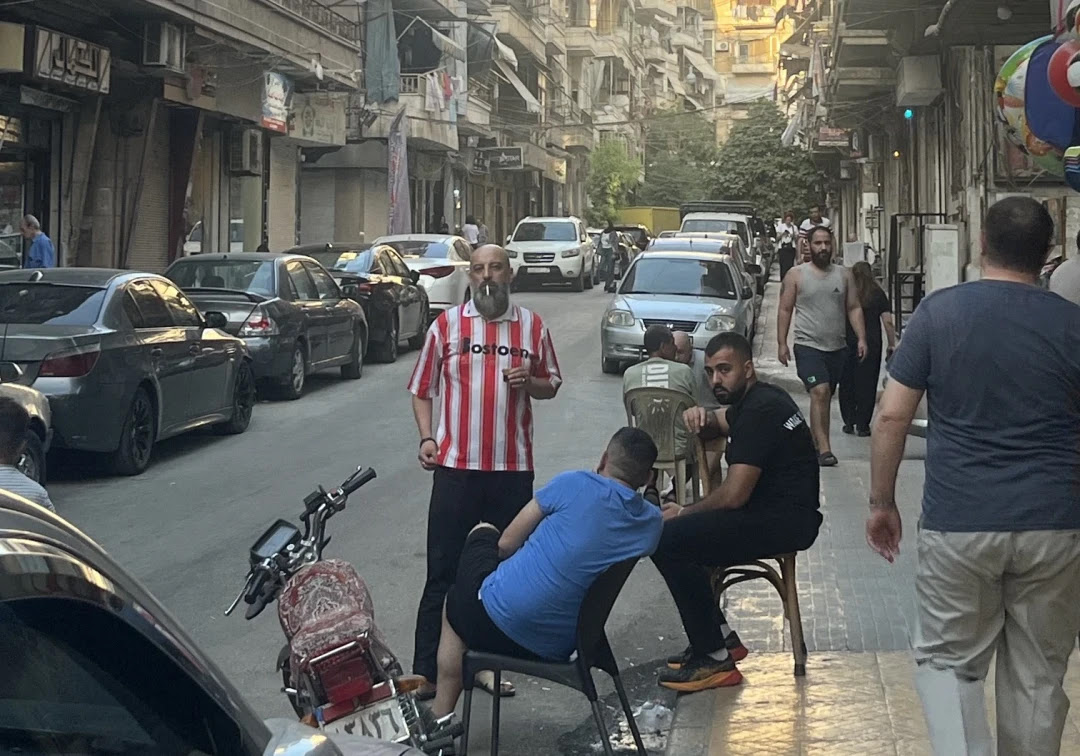
Sixteen years had passed since my last visit to Syria, a country once central to both my Armenian identity and my connection to the Arab world.
Returning was an emotional shock. My relationship with Syria goes back much further than those 16 years. My father’s family has roots in Aleppo, although our more distant origins are elsewhere, and another branch of the family belongs to the older Armenian presence in Syria. I first traveled to the country in 1996 and returned many times afterward, sometimes for extended stays. Syria was where I improved my Armenian and learned Arabic. It was also where two important parts of my identity came together: my Armenian identity and my attachment to the Arab cultural world.
This time, I went mainly to Aleppo and Kessab. What I found was a country that had changed profoundly, and an Armenian community that had survived war, economic collapse, the 2023 earthquake and years of emigration, but at an enormous cost.

The struggle to keep Aleppo’s Armenian community viable
For decades, three things sustained Aleppo’s Armenian community.
The first was stability. Syria was an authoritarian state, and much was negative about that system, but it provided a certain degree of predictability.
The second was prosperity. Aleppo has historically been an important commercial crossroads, and Armenians were deeply integrated into its economic life. Many Armenian families built successful businesses and enjoyed a relatively secure middle-class existence.
The third was numbers. Aleppo was not simply an Armenian community abroad; it was one of the great centers of Armenian life. It produced teachers, editors, clergy, intellectuals and community leaders who later served Armenian communities around the world.
That human reservoir has now been dramatically depleted. Before the war, Syria had at least 60,000 Armenians, and around 90 percent of them lived in Aleppo. The demographic decline is visible everywhere. You feel the absence of people — young people in particular.
The overwhelming majority of Syria’s Armenians have left since the war began. What remains is perhaps around a tenth of the prewar population. The demographic decline is visible everywhere. You feel the absence of people — young people in particular.
That matters because a community cannot survive through buildings and institutions alone. It needs people capable of renewing those institutions. When teachers, professionals, clergy and young families disappear, the problem becomes one of basic viability.

The psychological exhaustion is also considerable. People endured years of war, shortages of electricity, fuel and heating, the COVID-19 pandemic, an economic collapse and then the earthquake, which left visible damage across Aleppo.
Many of those who remain are there not necessarily because they consciously chose to stay. Some lack the financial means to start over elsewhere. Others own homes or property and fear losing what they have if they leave.
For parents, the dilemma is particularly difficult. Even if they endured these conditions themselves, they naturally ask whether they want their children to face the same future.
This is perhaps the greatest long-term threat to the community.
Christians are waiting for the new authorities to earn their trust
Political stability is also a serious concern.
Syria has entered a new political phase, but trust in the new authorities remains limited among many Armenians and other Christians. People are watching developments closely and asking what kind of state will ultimately emerge.
There is anxiety because of the Islamist background of some of the forces now exercising authority and because of violence that has affected other minority communities. Christians look at what has happened to Alawites and Druze and naturally wonder whether they could one day face similar dangers.

At the same time, I do not want to present the situation as uniformly catastrophic.
There is more freedom of speech than under the old regime. You can criticize the president. The omnipresent portraits of the president and his family that once dominated public space have disappeared. Social networks are open, and public discussion is much freer.
The real question is which currents inside the new system will become dominant. There are clearly more radical elements, but there are also Sunni forces that are conservative without necessarily being extremist, as well as currents linked to the traditional Muslim Brotherhood opposition.
For Christians, therefore, the issue is not simply whether Syria has changed. It is whether the new authorities can build sufficient confidence to convince minorities that they have a place in the country.
In Aleppo, the atmosphere appeared somewhat more relaxed than in Damascus. Armenian and Christian neighborhoods continue to function. People can go to restaurants, drink alcohol and live relatively normally.
Community leaders have also maintained channels of communication with the authorities. Armenian Apostolic, Catholic and Evangelical leaders are generally more measured and pragmatic than the pessimism one sometimes hears at the grassroots level.
Their approach is essentially: we must remain engaged, we must talk to the authorities, and we must wait and see what kind of system develops.
I think that approach is necessary.
Turkey is becoming a major force in Aleppo
One of the clearest changes I observed is the scale of Turkey’s presence.
Turkey is increasingly influential in Aleppo politically, economically and symbolically. Turkish companies are becoming involved in reconstruction and business activity. The Turkish consulate has a strong presence, and Ankara clearly sees Aleppo as a city with historical and strategic interests.
There is also increasing emphasis on Aleppo’s Ottoman heritage.
Some of that historical connection is real. Aleppo was, of course, an important Ottoman city. But the danger comes when one layer of the city’s history begins to overshadow others — its Arab character and the contribution of communities such as the Armenians.
For Armenians, Turkey’s role therefore creates an obvious uneasiness.
But here again, reality is more complicated than a simple story of threat.
A stronger Turkish presence may also boost economic activity and, in some circumstances, improve day-to-day security. I was told, for example, about contacts between Turkish officials and Armenian businesspeople in Aleppo to discuss possible cooperation.
I cannot independently verify every such account, but the fact that these conversations are even being discussed tells us something about the new environment.
Armenians cannot simply pretend Turkey is absent. It is becoming one of the central players shaping Aleppo’s future. The community will have to understand how to operate in that reality while protecting its own institutions, memory and interests.
Economic collapse may be as dangerous as political instability
Even if the security environment improves, Syria faces another enormous problem: the economy.
Wages are extremely low, inflation has eroded purchasing power, and basic services remain unreliable. Electricity is scarce. Gas and fuel remain difficult to obtain. The country needs enormous investment simply to restore normal economic life.
For an Armenian family deciding whether to remain, these are not abstract economic indicators. They determine whether children can be educated, whether a household can be heated and whether a young person can imagine building a career.
That is why economic recovery is directly connected to the demographic future of the Armenian community.
Political guarantees alone will not persuade people to stay if they cannot make a living.
The community has already lost a large proportion of its economically active population. If the remaining young people see no professional future, the demographic decline will continue regardless of improvements in security.
There are some encouraging signs. Aleppo’s airport is becoming active again and air connections are slowly returning. Greater connectivity could help revive commerce and tourism.
But the gap between those first signs of recovery and the reality of everyday life remains enormous.
Armenian institutions have survived, but the old model cannot simply continue
One of the most impressive things in Aleppo is that Armenian institutions still function.
Churches, schools, community organizations, and charitable structures continue to support families. The Armenian prelacy, for example, has helped households repair earthquake-damaged homes and has supported families with schooling, basic expenses and energy solutions such as solar systems.
This institutional resilience should not be underestimated.
In a country where the state often cannot provide basic support, Armenian structures have become an essential social safety net.
But I also believe the traditional model of Armenian community preservation has reached its limits.
For decades, the basic philosophy was to preserve the community almost like a fortress: maintain the schools, churches, clubs, political organizations and cultural associations, and protect Armenian life from outside pressures.
That model developed under a very different political system.
Syria is changing. Whether it becomes genuinely democratic is another question, but society is more open, information circulates differently, and younger generations interact with the wider world in ways the old institutional model cannot control.
We cannot simply reproduce the structures and mentality of the past and expect the same results.
Armenian institutions must remain strong, but they also need to become more open and better able to participate in Syrian public life.
Even politically, Armenians need to engage with people who may not come from their own traditional circles. If there is an Armenian member of parliament who is Arabic-speaking or who was not the candidate preferred by established Armenian structures, refusing to engage with that person would be a mistake.
The community cannot afford isolation.
Kessab was more encouraging than I expected
The situation in Kessab was somewhat more positive than I had imagined.
Kessab suffered enormously during the war, particularly when Islamist and Turkey-backed armed groups entered the area in 2014 and residents were forced to flee. The community later returned, but its permanent population is much smaller than before.
Today, fewer than around a thousand Armenians may remain there permanently.
Yet there are reasons for cautious optimism.
Tourism has begun to revive, and Kessab still has considerable potential as a summer destination. Historically, people traveled there from Aleppo, Lebanon and elsewhere in the region, and a recovery of tourism could create economic opportunities.
The authorities in Latakia province also appear relatively constructive. Local officials seem interested in keeping the Armenian population in the area and supporting economic activity.
I even heard that families associated with conservative Sunni circles from nearby areas send their children to the Armenian school in Kessab.
Again, these details complicate the picture. Syria today is neither simply safe nor simply dangerous. Cooperation exists alongside deep uncertainty.
Kessab’s future will depend heavily on whether tourism, transportation and cross-regional economic links recover.
Syria has become an arena for competing regional powers
It is impossible to understand Syria’s future by looking only at domestic politics.
The country is now at the center of intense competition among regional and international powers. Turkey has enormous influence, particularly in the north. Saudi Arabia and Qatar are important political and financial actors. Israel is pursuing its own security agenda. Russia wants to preserve what remains of its military and strategic presence. The United States views Syria largely through the prism of Iran, Hezbollah, Israel and the wider regional balance.
This competition may become one of the biggest obstacles to rebuilding a coherent Syrian state.
Different minorities are also searching for external protectors. The Druze have their own calculations. Alawites look toward outside actors, including Russia. The Kurds have their own autonomous structures and do not want to surrender them without guarantees.
Christians are in a different position. They are geographically dispersed. No single Christian territorial zone can provide political or military autonomy.
That makes the survival of a pluralistic and territorially united Syrian state particularly important for them.
My concern is that foreign powers often view Syria primarily through their own strategic priorities rather than through the needs of Syrian society.
For Washington, for example, Iran and Hezbollah may be more important considerations than the long-term viability of Christian communities. Israel has its own strategic objectives. Turkey has its own. The Gulf states have theirs.
If Syria becomes merely a field in which these powers settle their rivalries, minorities will remain vulnerable even if the central government becomes more stable.
Syria needs space to rebuild itself as a state.
Armenians must become participants in the new Syria
This brings me to what I think is one of the most important questions for Armenians.
We cannot remain cut off from Syrian society.
For too long, Armenian communal thinking has sometimes treated survival as a matter of maintaining our own schools, churches and associations while limiting interaction with the political and cultural life around us.
That is no longer sufficient.
Armenians are Arabic-speaking citizens of Syria. They have deep roots in Aleppo and elsewhere. They have business networks, cultural capital, multilingual skills and connections with Europe, Armenia and the wider diaspora.
Those are assets.
The community should use them to become an active participant in Syria’s reconstruction.
That means building relationships with new political actors, engaging with Syrian civil society, working with other Christian communities and strengthening ties with Muslims willing to support a pluralistic Syria.
Our Armenian identity should not be built against Syrian identity.
The two can reinforce one another.
We have to demonstrate that preserving an Armenian presence in Syria is not only good for Armenians. It is good for Syria because it helps preserve the country’s pluralism and its historical character.
How to make Aleppo an Armenian cultural center again?
My family has a personal project that fits this vision.
In 2002, we established the Yegavian Library in Aleppo, named after my father. It was created to strengthen Armenian studies in the city.
Its collection includes Armenian periodicals, older Armenological works, Mekhitarist publications and more recent books. Around 80 percent of the collection is in Armenian, with the rest in Arabic and Western languages.
I now want to revitalize it.
But I do not want it to be only a library for Armenians.
It should be a place where Armenians and non-Armenians meet, where Syrians can learn about Armenian history and culture and where Armenians can engage more deeply with the society around them.
There is still remarkable ignorance about Armenians in Syria. Some Syrians do not even fully understand that Armenians are Christians or how deeply Armenian history is connected to the history of the country.
Cultural institutions can help bridge that gap.
I would also like to see a revival of Francophone culture. French has declined dramatically in Syria, including in many Christian schools, yet an appetite remains for stronger connections with France and the Francophone world.
Armenians are well positioned to serve as a bridge.
My dream may sound slightly utopian, but I would like Aleppo to become once again an important center of Armenian intellectual and cultural life — something like a new Venice or a new San Lazzaro, a place where Armenian language, scholarship and culture can be cultivated and transmitted.
Aleppo has already played that role in our history.
Its Armenian churches, schools, printing traditions, institutions and neighborhoods are part of the DNA of the diaspora. Even Armenians who never lived there often feel connected to it.
Aleppo was also one of the final stations of the deportation routes during the Armenian Genocide. It therefore carries the memory of catastrophe. But it also represents rebirth. Armenians reached the city as survivors and built one of the most dynamic communities of the modern diaspora.
That is why I do not think we should look at Aleppo only through the lens of decline.
Yes, the community is dramatically smaller. Yes, the political environment is uncertain. Yes, the economic crisis is severe.
But cities and communities can recover after extraordinary destruction.
The question is whether we are willing to think beyond the immediate crisis and invest in the long term.
For me, preserving an Armenian presence in Aleppo is not an exercise in nostalgia.
It is a question of whether one of the most important centers of Armenian diasporic civilization can reinvent itself for a new century.