Turkey Is the Weak Link in Trump’s Economic War on Iran
With a military blockade in place in the Strait of Hormuz, the Trump administration is pivoting toward economic warfare against the Islamic Republic. The Treasury Department has provided the United Arab Emirates and Oman with a list of banks in their jurisdictions that enable Iranian illicit activity. This early warning — extended to China and Hong Kong — is intended to make clear that any financial support for Tehran will trigger U.S. repercussions. The key challenge now is inconsistent enforcement, particularly regarding Turkey.
The Turkish regulatory and commercial environment remains a critical conduit for Tehran’s access to hard currency and for sustaining global financial channels.
A network of Iranian-linked exchange houses operates outside the formal banking system in major cities such as Istanbul and Ankara. These entities often allow users to transfer funds without opening bank accounts, offering near-instant settlement with minimal documentation — hallmarks of Iran’s shadow banking architecture. Because Iran is barred from the global SWIFT financial messaging system, these currency exchange houses have become highly attractive tools for evading sanctions with limited regulatory oversight.
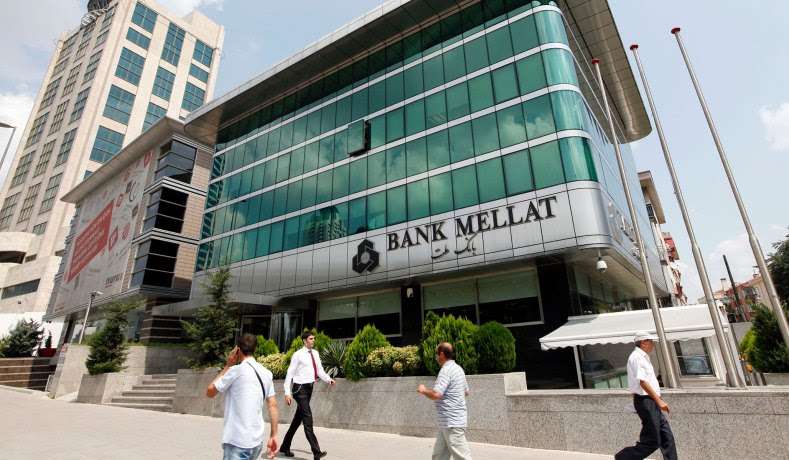
Bank Mellat’s lending largely stays in Iran, so its branches in Turkey act as extensions of the Iranian system. The bank holds deposits linked to its Tehran headquarters and the sanctioned Central Bank of Iran. Its 2024 annual report states it can rely on capital support from Iran. Turkey’s permissive environment allows Bank Mellat to operate, weakening U.S. sanctions enforcement.
The pass that Turkey has seemingly received is worse when one considers the Trump administration’s decision not to punish other Turkish financial entities that have helped Iran evade U.S. sanctions, which were supported and facilitated by the government of Turkey.
In 2019, Turkish public lender Halkbank was indicted in the U.S. for running a brazen sanctions evasion scheme. At least two of the bank’s employees were convicted during Trump’s first term for their involvement in efforts to purchase illicit Iranian natural gas, paid for with gold. By March 2026, Trump’s Justice Department decided to enter into a deferred prosecution agreement with Halkbank — one of the largest violators of U.S. sanctions on Iran.
According to findings by the U.S. Treasury Department and the Justice Department, Halkbank facilitated at least $13 billion in transactions on behalf of Iran between March 2012 and July 2013, with some estimates placing the total closer to $20 billion. A portion of those funds is believed to have supported Tehran’s regional proxy network.
Congressional reports suggest that, from 2012 to 2018, Iran spent about $16 billion each year to back militant clients across the Middle East. Treasury guidelines allow civil penalties up to twice the value of illicit proceeds, which could expose Halkbank to fines of up to $40 billion. Separately, Kuveyt Türk Bank is now facing litigation in the U.S. District Court for the Eastern District of New York over allegations that it routed Hamas-linked dollar transactions through U.S. banks.
Turkish President Recep Tayyip Erdoğan has pursued direct policies to promote the survival of Iran’s regime. This is somewhat understandable: There is little doubt that the Iran war is placing a severe strain on the foundations of Turkey’s economy. Every $10 increase in global oil prices is estimated to widen the country’s current account deficit by roughly $3 to $5.1 billion. Turkey already grapples with one of the highest inflation rates in the world — currently exceeding 30 percent annually — intensifying pressure on Erdoğan’s government to rein in rising consumer prices. Additionally, Ankara is justifiably concerned about a potential for Iranian refugee flows, which would heighten existing levels of frustration for the Erdoğa government.
Legitimate worries aside, however, Erdoğan prefers the survival of the Tehran regime. For him, a weakened but still Islamist regime in Tehran may be more strategically useful than a democratic government that could realign Iran with the West.
Iran’s network of regional proxies has long shaped the balance of power in the Middle East. As long as groups like Hezbollah in Lebanon and Hamas in Gaza remain armed and active, Israel faces persistent security pressure.
In this environment, a perpetually threatened Israel creates space for Erdoğan to cast Turkey as a central diplomatic and political actor. By inserting itself into moments of crisis, Ankara can seek to elevate its role as a regional power broker.
Washington should intensify enforcement against Iran-linked financial networks in Turkey. This includes targeting exchange houses, front companies, and urging Ankara to shut down sanctioned entities, such as Bank Mellat. The Treasury and Justice departments should be prepared to invoke Section 311 of the Patriot Act to designate institutions like Kuveyt Türk as primary money-laundering concerns. This would cut them off from the U.S. financial system and send a clear signal: No bank — Turkish or otherwise — can use American financial channels to fund Iranian terror without consequence.
Sinan Ciddi is a senior fellow at the Foundation for Defense of Democracies and director of the Turkey program. Ahmad Sharawi is a senior research analyst at FDD.