Vance’s Armenia Visit Has Left a Mess. April 24 Is His Chance to Clean It Up
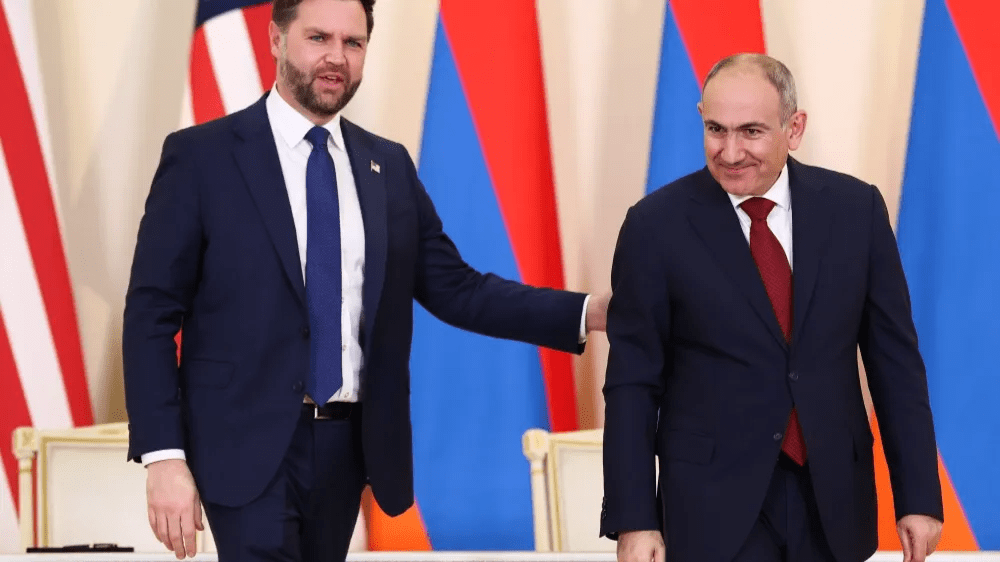
This Friday marks April 24 — Armenian Genocide Remembrance Day, when the world commemorates the systematic annihilation of 1.5 million Christian Armenians by Ottoman Turkey between 1915 and 1918. For the Trump Administration, the day arrives at an uncomfortable moment: two months after Vice President J.D. Vance’s visit to Yerevan — the highest-level stopover by any U.S. administration official since Armenia gained independence in 1991 — the visit has left most Armenians and Armenian Americans not reassured, but deeply unsettled.
The problems began before Vance’s plane left the tarmac. A bilateral nuclear cooperation agreement — intended to reduce Armenia’s ruinous dependence on Russian energy — was overshadowed by a translation fiasco in which the Armenian government rendered Vance’s reference to a $5 billion nuclear power station as part of a $9 billion U.S. investment in Armenia. For a country that cannot borrow $5 billion without triggering a debt crisis, the mistranslation was either a deliberate act of political theater by Pashinyan’s government or a sign of stunning incompetence. Either way, Washington let it happen without correction.
Then came the visit to the Armenian Genocide Memorial, where Vance and the Second Lady laid a wreath — a gesture of genuine significance. A social media post from the Vice President’s team explicitly referenced “the 1915 Armenian genocide.” Within hours, the post was deleted, apparently to avoid contradicting Administration policy toward Turkey. The deletion was noticed immediately. House Speaker Emerita Nancy Pelosi and prominent Democrats pounced. A moment of grace had been converted, through clumsy White House management, into a political liability.
Most troubling, however, was what Vance chose not to say. He made no mention of the right of return for the 120,000 Armenian refugees ethnically cleansed from Nagorno-Karabakh in September 2023. He said nothing about the dozens of Armenian prisoners of war still held in Azerbaijani jails. These are not obscure grievances. They are the central humanitarian wounds of a nation that has endured more than its share of them.
Three days after Vance’s departure, Armenia’s Prosecutor General — a loyalist of Prime Minister Nikol Pashinyan — launched criminal proceedings against Catholicos Karekin II, the head of the Armenian Apostolic Church. The timing prompted widespread speculation in Armenia and the diaspora that the move had at minimum not been discouraged by Vance during his “friendly” visit with Pashinyan.
Since then, Pashinyan’s behavior has grown more erratic and more revealing. Standing at the podium of the National Assembly — Armenia’s parliament — he declared that if opposition alliances such as the “Armenia” bloc or Prosperous Armenia enter parliament after the June 7 elections, it would mean there are enough “dogs and jackals” in the country willing to vote for them. This is not the language of a democratic leader. It is the language of a man who knows his approval rating has collapsed to single digits and fears the voters accordingly.
In another episode that shocked Armenians everywhere, Pashinyan confronted an Artsakh refugee mother and her child in the Yerevan subway — and called them “deserters.” The woman had fled ethnic cleansing. The Prime Minister who oversaw the capitulation that made her a refugee called her a coward.
Two days ago, a court extended the house arrest of Samvel Karapetyan — Armenia’s leading opposition businessman and a principal financial supporter of the church — for an additional three months. The extension, on charges widely described in Armenia as fabricated, ensures that Karapetyan cannot campaign in person as the leader of Strong Armenia party ahead of June 7.
He is not alone in detention: Varuzhan Avetisyan, the leader of the National Democratic Alliance — Armenia’s largest pro-Western opposition party, which has cultivated close ties with influential Republican members of the U.S. House of Representatives — has been imprisoned since May 2023 on similar charges of attempting to overthrow the constitutional order.
Together, their imprisonment reflects a systematic effort to decapitate every organized challenge to Pashinyan before the vote. It is precisely the pattern that Transparency International’s Anti-Corruption Center has described as “widespread abuse of administrative resources” calling into question the freedom and fairness of the upcoming elections.
The administration Vance represents has shown — most recently in Budapest — that embracing strongmen yields political costs, not strategic dividends. The stakes in Armenia are higher still: the Trump administration’s own TRIPP corridor — a 99-year U.S.-controlled infrastructure project through southern Armenia that Tehran has denounced as a NATO “viper” on Iran’s northern border — requires a reliable partner in Yerevan to succeed. Pashinyan, a convicted felon who mocks the United States from his own parliament floor, visits Vladimir Putin regularly, and signed a strategic partnership with China days after leaving the White House, is not that partner.
April 24 offers the Administration a straightforward off-ramp from the mess the Vance visit created. Three steps would go far.
First, use the Commemoration to reaffirm what Presidents Reagan and Biden both did: recognize the Armenian Genocide as such. Turkey’s threats on this issue have never materialized into action — history shows they will not this time either.
Second, issue a clear statement condemning Pashinyan’s assault on the Armenian Apostolic Church and calling for the release of its jailed clergy and supporters, including Karapetyan and Avetisyan. Eight prominent diaspora Armenian leaders have already made this call publicly. The Administration should join them.
Third, announce a U.S. election monitoring mission for June 7. Free and fair elections are the only legitimate path out of Armenia’s political crisis. Signaling now that Washington is watching would raise the cost of the fraud that Pashinyan is visibly preparing.
The Armenian American community — large, civically engaged, and paying close attention — will remember in November 2026 whether this Administration stood with the world’s first Christian nation when it mattered. April 24 is the moment to begin making that case.
Dr. David A. Grigorian is a research fellow at Harvard University’s Kennedy School of Government, a non-resident fellow at the Center for Global Development, and a 22-year veteran of the International Monetary Fund.