Why Every Armenian-American Household in LA Should Have CPR Training
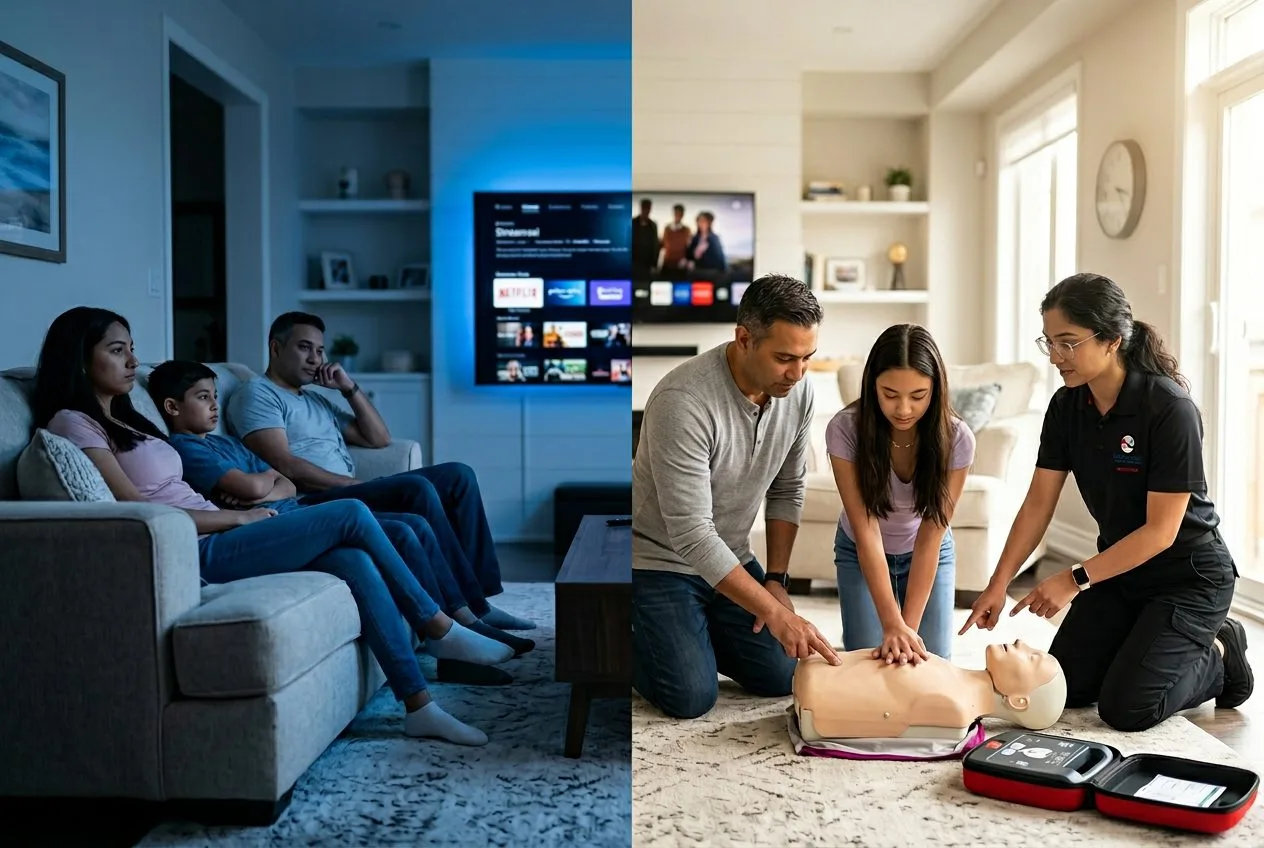
When someone goes into cardiac arrest, the first few minutes are everything. Bystanders who act — who actually know what to do — can more than double a person’s chance of survival before paramedics arrive. That’s not a minor edge. That’s the difference between life and death.
For families across Los Angeles, getting CPR certification Los Angeles is one of the most practical, community-minded steps you can take. And for the Armenian-American community in particular, which has always placed tremendous value on family bonds, multigenerational households, and showing up for one another, it deserves a real conversation.
Why Does Cardiac Arrest Happen So Suddenly?
Cardiac arrest isn’t the same as a heart attack, though people often confuse the two. A heart attack is a circulation problem — a blockage. Cardiac arrest is an electrical problem. The heart’s rhythm is disrupted, and it stops pumping effectively. It can happen to someone who seemed perfectly healthy. It can happen during a community gathering, a family meal, or a church event.
According to the American Heart Association, nearly 350,000 out-of-hospital cardiac arrests occur in the United States each year. Fewer than 12% of victims survive. The single biggest predictor of survival? Whether a bystander performed CPR before EMS arrived.
Los Angeles County is one of the most populous regions in the country. Emergency response times in dense urban areas can stretch past eight minutes in some neighborhoods. Eight minutes is a long time when a brain begins sustaining damage within four to six minutes of losing oxygen. If someone near you collapses, the 911 operator isn’t the only resource you have — you are.
What Does a CPR and First Aid Course Actually Cover?
Modern CPR training is designed to be accessible, not overwhelming. A standard CPR/AED Level C course typically covers:
- Hands-only and full CPR technique for adults, children, and infants
- AED operation — automated external defibrillators are now found in many public spaces, and knowing how to use one dramatically improves outcomes
- Choking relief for both conscious and unconscious victims
- Recognition of cardiac arrest vs. other emergencies
Many courses now use a blended learning format — online theory completed at your own pace, followed by a hands-on in-person skills session. This makes it far more manageable for working professionals and busy parents who can’t commit to a full-day classroom block.
Standard First Aid courses go further, adding wound care, fracture management, stroke recognition, and other skills that are genuinely useful in daily life — not just workplace scenarios.
Is This Relevant to the Armenian Community Specifically?
In short: yes. Armenian-Americans in Los Angeles have high rates of multigenerational living. Grandparents, parents, and young children often share the same home or spend significant time together. The likelihood that a cardiac event will occur in a family setting — not a hospital, not near a trained professional — is real.
Beyond the home, the community’s rich social fabric means large gatherings are common: church events, cultural festivals, weddings, community fundraisers. Any of these settings could be where you’re called upon to act. Most people hesitate not because they don’t care, but because they’ve never trained. That hesitation is the gap that CPR training fills.
There’s also the professional angle. Many Armenian-Americans in the LA metro work in healthcare, education, construction, hospitality, and corporate environments where CPR certification is either required or strongly encouraged by employers. Under OSHA guidelines, many workplaces are expected to have trained first aid personnel on site. Certifications earned through accredited programs like American Red Cross or the American Heart Association are accepted by employers across California.
How Hard Is It to Get Certified?
This is where many people are pleasantly surprised. CPR certification through an accredited provider typically takes just a few hours for the in-person skills component, and the blended learning option means much of the background knowledge is covered online beforehand.
Certifications are valid for two years, after which a renewal course — shorter than the original — keeps your skills current. Some providers offer evening and weekend sessions to accommodate working schedules. If you’ve been putting it off because it seemed like a large time commitment, the modern format has largely removed that barrier.
Coast2Coast First Aid Training offers American Red Cross–certified CPR, AED, and Standard First Aid courses through a blended learning model, with flexible scheduling designed to fit around real life.
What About Children — Should Teenagers Learn CPR Too?
Absolutely. In fact, older children and teenagers are often ideal CPR learners. Their comprehension is strong, their retention is good, and they spend time in schools, sports settings, and social environments where emergencies can happen. Many US states are now incorporating CPR instruction into high school curricula for exactly this reason.
Teaching a teenager CPR isn’t just about safety — it’s about equipping the next generation with confidence and competence. The value of that extends well beyond any single emergency.
If you are looking for CPR and first aid certification near University Park, the South Union Avenue corridor, or surrounding areas of Los Angeles, you may reach out to Coast2Coast First Aid & Safety in that area.
FAQS
Q: How long does CPR certification in Los Angeles take?
A: Most CPR/AED courses can be completed in a single session of two to four hours for the in-person component. Blended learning options let you complete the theory portion online first, which shortens the classroom time significantly.
Q: Is CPR certification required for my job in California?
A: Many California employers in healthcare, education, childcare, and construction require valid CPR certification. OSHA guidelines also recommend — and in some settings require — trained first aid personnel on-site. Check with your employer or licensing body for your specific field.
Q: How often do I need to renew my CPR certification?
A: CPR and first aid certifications issued through American Red Cross or American Heart Association–accredited providers are generally valid for two years. Renewal courses are shorter than the original and can often be completed in under two hours.
Q: Can I take a CPR course if I have no medical background?
A: Yes. CPR courses are designed for the general public — no prior medical training is needed. Instructors guide participants through every technique step by step, and the blended learning format allows you to review theory at your own pace before the hands-on session.
Q: What is the difference between CPR and Standard First Aid?
A: CPR training focuses on cardiac arrest response, including chest compressions, rescue breathing, and AED use. Standard First Aid is a broader course that also covers wound care, fracture management, stroke recognition, choking response, and other common emergency scenarios.